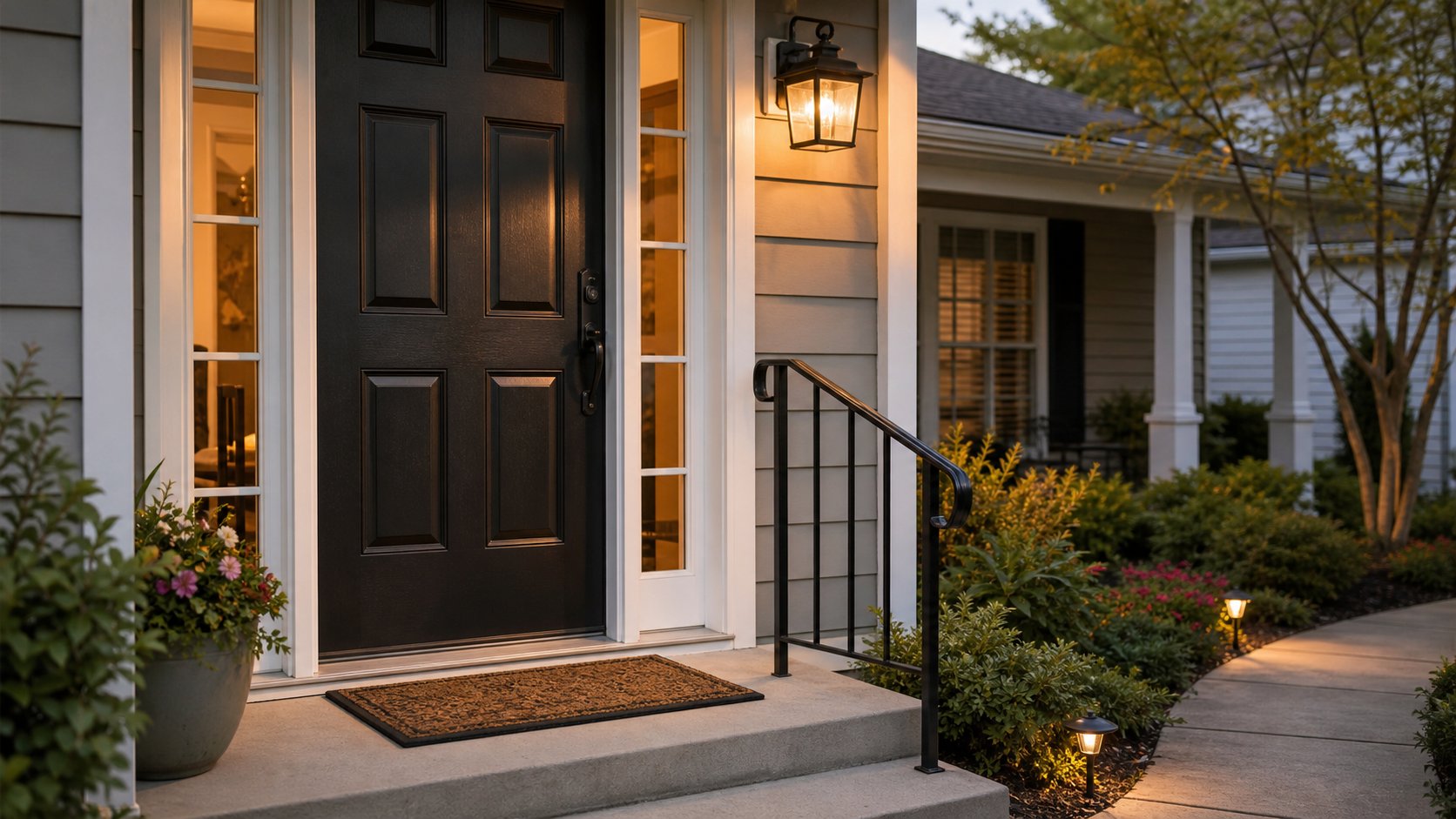
Front Door Safety for Seniors Living Alone: Locks, Lighting, and Simple Alerts
If you are helping an older parent live alone, the front door deserves attention. It is where your parent enters, leaves, greets visitors, receives packages, and handles keys.
Front door safety for seniors is not only about a stronger lock or camera. Often, the biggest improvements are brighter lighting, a secure mat, an easier lock, and a backup access plan.
Quick Answer
The most important front door safety checks for a senior living alone are good lighting, a clear non-slip surface, an easy lock, visibility before opening, a trusted backup access plan, and simple alerts that support daily life without adding complexity.
Why the Front Door Deserves Its Own Safety Check
The front entrance combines several risks. A parent may be carrying groceries, stepping over a threshold, turning a stiff key, checking who is outside, or reaching for a package.
This article focuses only on the entrance area. For a broader whole-home review, use a room-by-room home safety checklist. For stairs, bathrooms, nighttime routines, and product comparisons, those topics deserve their own guides.
A good front door review answers four practical questions:
- Can your parent get in and out without fighting the lock or door?
- Can they see the path, step, visitor, and key area clearly?
- Is the surface stable, dry, and free of trip hazards?
- Is there a safe backup plan if family or help needs access?
The goal is not control. The goal is easier entry and exit.
Quick Front Door Safety Review for Families
Start with a 10-15 minute walk-through during daylight. Then repeat it after dark. Many entrance problems are invisible in the afternoon but obvious at night.
Stand where your parent normally stands. Try the lock. Open the door. Step onto the porch. Check whether the mat moves and whether the house number, step edge, and visitor area are easy to see.
Family Tip:
Ask your parent what feels annoying before changing anything. A lock that looks fine to you may feel stiff to arthritic hands. A bright light that seems useful may feel harsh if it shines into the eyes.
Front Door Risks and Simple Improvements
| Risk at the front door | Why it matters | Simple improvement |
|---|---|---|
| Poor lighting | Makes keys, steps, visitors, and packages harder to see | Add reliable porch or path lighting |
| Loose mat | Can slide, curl, or bunch up underfoot | Use a low-profile non-slip mat |
| Hard-to-turn lock | Can delay entry, exit, or family access | Repair, lubricate, or simplify the lock |
| Package in the walkway | Creates a trip hazard near the door | Choose a clear delivery spot |
| Unclear visitor visibility | Makes it harder to decide whether to open | Add a peephole, window, or simple alert |
| No backup access | Family may not be able to help quickly | Agree on a trusted key plan |
Make the Lock Easy and Reliable
An entrance lock should be secure, but it also needs to be usable. A strong lock that is too stiff, confusing, or hard to reach may create daily stress.
Check whether your parent can unlock and open the door while carrying a small bag. Notice whether the key sticks, the deadbolt catches, or the door has to be lifted to close.
Avoid Locks That Are Too Stiff or Confusing
Some families respond to safety worries by adding more locks. That can backfire if the system becomes hard to use.
Avoid setups that require a complicated sequence, tiny buttons, hard twisting, or multiple steps that your parent dislikes. If a lock is difficult from inside the home, treat that as a priority before adding any smart device.
Important Safety Check:
A front door should not trap a person inside or make leaving the home difficult. If the door is hard to open from the inside, the first step is repair or professional review, not another gadget.
Choose Comfortable Door Hardware
Door hardware should match the person using it. A lever-style handle may be easier than a round knob for some older adults, especially if grip strength is limited.
If your parent rents, lives in a condo, or belongs to an HOA, check what changes are allowed before replacing hardware.
Fix a Door That Sticks
A sticking door is more than an annoyance. It can cause a person to push, pull, twist, or step awkwardly.
Common causes include humidity, misaligned hardware, worn weatherstripping, or a settling frame. If your parent has to shoulder the door, lift it, or slam it, it is time to address the problem.
Improve Lighting and Visibility
Lighting is one of the simplest front door safety improvements. It helps your parent see keys, steps, visitors, packages, wet surfaces, and level changes.
Porch Lighting
Check whether the porch light actually covers the places your parent uses: the key area, threshold, step, handrail, and walking path. A decorative light may look nice but still leave the step edge in shadow.
If an older adult comes home after dusk, lighting should be easy to activate before they reach the door. That may mean an evening light, timer, or motion-activated fixture.
Motion-Activated Lighting
Motion lights can help near the entry, especially when hands are full. They depend on power, placement, bulbs, sensors, and weather exposure, so test them from the real walking path.
If lighting problems are part of a broader evening routine, connect this review with nighttime safety for seniors rather than trying to solve every nighttime hazard at the front door.
Seeing Visitors Before Opening
A senior living alone should have a comfortable way to see who is outside before opening. This might be a peephole at the right height, a sidelight window, a chime, or a simple smart doorbell.
The right option depends on your parent’s comfort. Some people like video alerts. Others prefer a familiar peephole and a clear rule: do not open the door to unexpected visitors.
Remove Trip Hazards at the Entry
The front entrance is a small area, but it can collect hazards: mats, packages, wet leaves, uneven surfaces, shoes, pet items, garden tools, and seasonal decorations.
Doormats and Thresholds
A doormat should stay flat. If it curls, slides, bunches, or catches a shoe, replace it or remove it.
The threshold also matters. A high or dark threshold can be easy to miss, especially with poor lighting.
Water, Rain, Snow, and Ice
Weather changes the front door. Rain can make the porch slick. Snow can hide step edges. Ice may collect where gutters drip. Leaves can become slippery when wet.
There is no universal fix because climate varies. Snowy areas may need a shoveling or salting plan. Rainy areas may need better drainage, cover, or slip-resistant surfaces.
Steps, Ramps, and Railings
Front steps deserve attention, but this article is not a full stair safety guide. Focus only on the immediate entrance: the step into the home, a short porch step, or a small ramp.
Check whether the edge is visible, the surface feels stable, and a handhold is available where needed. If a ramp, railing, or structural change is being considered, get appropriate professional guidance.
For a deeper review of stairs and railings beyond the entry, use a stair safety guide for elderly parents.
Create a Safer Key and Access Plan
Key management is one of the most practical parts of front door safety. Families want security, but they also need a trusted way to help if a parent is locked out or unable to reach the door.
Spare Keys
Avoid hiding a key under the mat, in a flowerpot, or in another obvious spot near the entrance. Those places are too easy to guess.
A safer plan might involve a trusted neighbor, nearby family member, property manager, or secure key solution appropriate for the home.
Trusted Family or Caregiver Access
Decide who may enter, when they may enter, and how they should communicate first. Access should feel respectful, not intrusive.
Write down who has a key, who to call first, what to do if an elderly parent does not answer the phone, and what to do if the key does not work. Review the plan after any lock change.
Emergency Access
Emergency access should be planned carefully. Homes, buildings, leases, gates, and local practices differ.
Do not rely on a hidden key or smart lock alone. If there are serious mobility or emergency concerns, discuss safe access planning with appropriate local professionals or service providers.
Handle Visitors and Deliveries Safely
The front door is also where sales visits, unexpected knocks, and packages appear. The goal is a calm, consistent response.
Unknown Visitors
Create a simple rule your parent is comfortable with: if the visitor is unexpected, do not open immediately. Look first, ask who it is, and call family if unsure.
This removes pressure from the moment without making the home feel frightening.
Packages and Trip Hazards
Packages should not block the door swing, step, mat, or walking path. If your parent receives deliveries often, choose a visible package spot away from the walking line.
If packages pile up, your parent may need help with delivery timing, groceries, or mail handling.
Doorbells and Simple Alerts
A working doorbell, louder chime, simple door sensor, or smart doorbell may help. A smart doorbell can support visitor awareness, but it is not a complete safety plan.
If you want to compare features, setup friction, and caregiver access, see our smart doorbells for elderly parents guide. Here, the question is simpler: does the alert reduce stress?
When a Device Is Not Enough:
A doorbell alert cannot fix a loose mat, poor lighting, a sticking lock, or a blocked walkway. Start with the physical entryway before adding more technology.
A Simple Family Scenario
This example is fictional, but it reflects a common family visit.
Maria visits her father on a Sunday afternoon. His porch light works, but it does not brighten the step. The doormat curls at one corner. The deadbolt takes two tries to turn. Packages are often left directly in front of the door.
Instead of changing everything, they do a short review together. They replace the mat, choose a clear package spot, test a brighter porch bulb, and decide that Maria will keep a spare key. Her father still controls his home, but the entrance is easier to use.
Front Door Safety Checklist
Use this checklist during a short visit:
- Check that the porch light works.
- Look at the entrance after dark.
- Make sure the mat is flat, low-profile, and secure.
- Keep packages out of the walking path.
- Check that the threshold is easy to see.
- Confirm any step edge is visible.
- Test the lock from outside and inside.
- Make sure the handle is comfortable to use.
- Check whether the door sticks.
- Confirm a safe way to see visitors.
- Review the spare key plan.
- Decide who has trusted access.
- Check that emergency access is realistic.
- Test any doorbell, chime, or alert.
- Repeat the review monthly or after weather changes.
Frequently Asked Questions
What is the first thing to check at the front door for an elderly parent?
Start with the physical entryway: lighting, mat, threshold, step, and lock. These are often easier to fix than technology issues.
Are smart doorbells useful for seniors living alone?
They can help if your parent is comfortable with alerts and the device is set up correctly. They do not replace lighting, a safe surface, a working lock, or a family access plan.
Should a senior hide a spare key outside?
Hiding a key under a mat, planter, or obvious outdoor spot is usually not a good plan. Use trusted access through family, a neighbor, building management, or another secure method.
How can I make the entrance safer at night?
Check the porch light, path light, step visibility, and key area. Motion lighting may help, but test it from the real walking path.
What front door hazards increase fall risk?
Loose mats, wet surfaces, poor lighting, clutter, high thresholds, unclear step edges, packages, and lack of support near a step can make the entrance harder to use safely.
What should we do if the front door is hard to open?
Treat it as a priority. Check whether the lock, latch, hinges, weatherstripping, or frame needs repair. Get help before adding more devices.
Are smart locks a good choice for older adults?
Sometimes, but only if the system feels easy and reliable. Smart locks depend on batteries, setup, codes, connectivity, and comfort. A repaired simple lock may be better.
How should families plan emergency access?
Decide who can access the home, how they should communicate first, and what backup exists if the usual key fails. Housing rules, building access, and local services vary.
Bottom Line
Front door safety for seniors is mostly about small, practical improvements: a clear path, a stable mat, good lighting, an easy lock, a way to see visitors, and a trusted backup access plan. Smart devices can support that plan, but they should not replace physical fixes or family communication. Walk through the entrance together, first in daylight and then after dark, and fix the easiest hazards first.
Next Step
During your next visit, spend 10-15 minutes walking through the front entrance with your parent. Try the lock, step on the mat, check the lighting, look at the package area, and agree on one small improvement to make before the week ends.