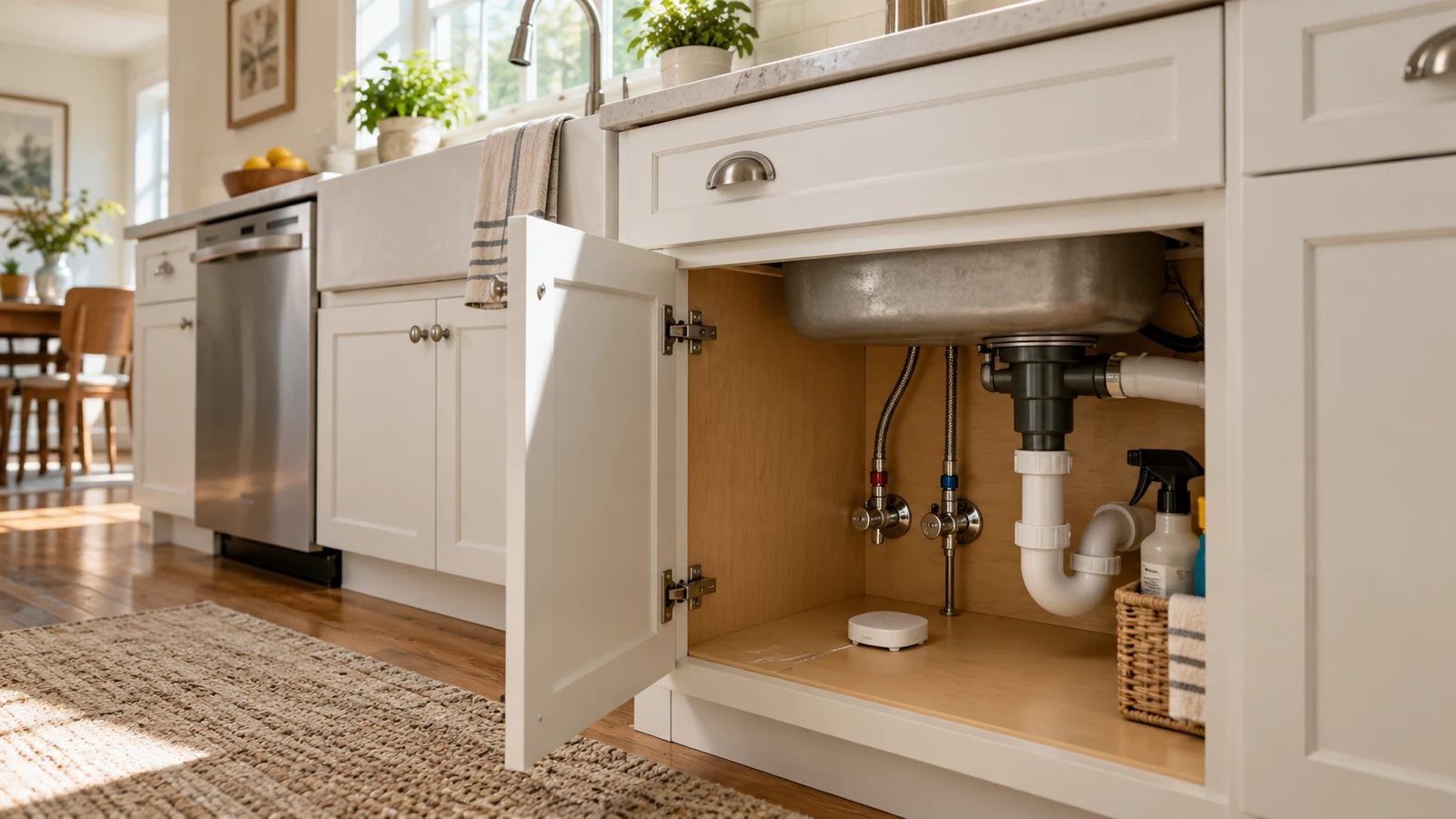
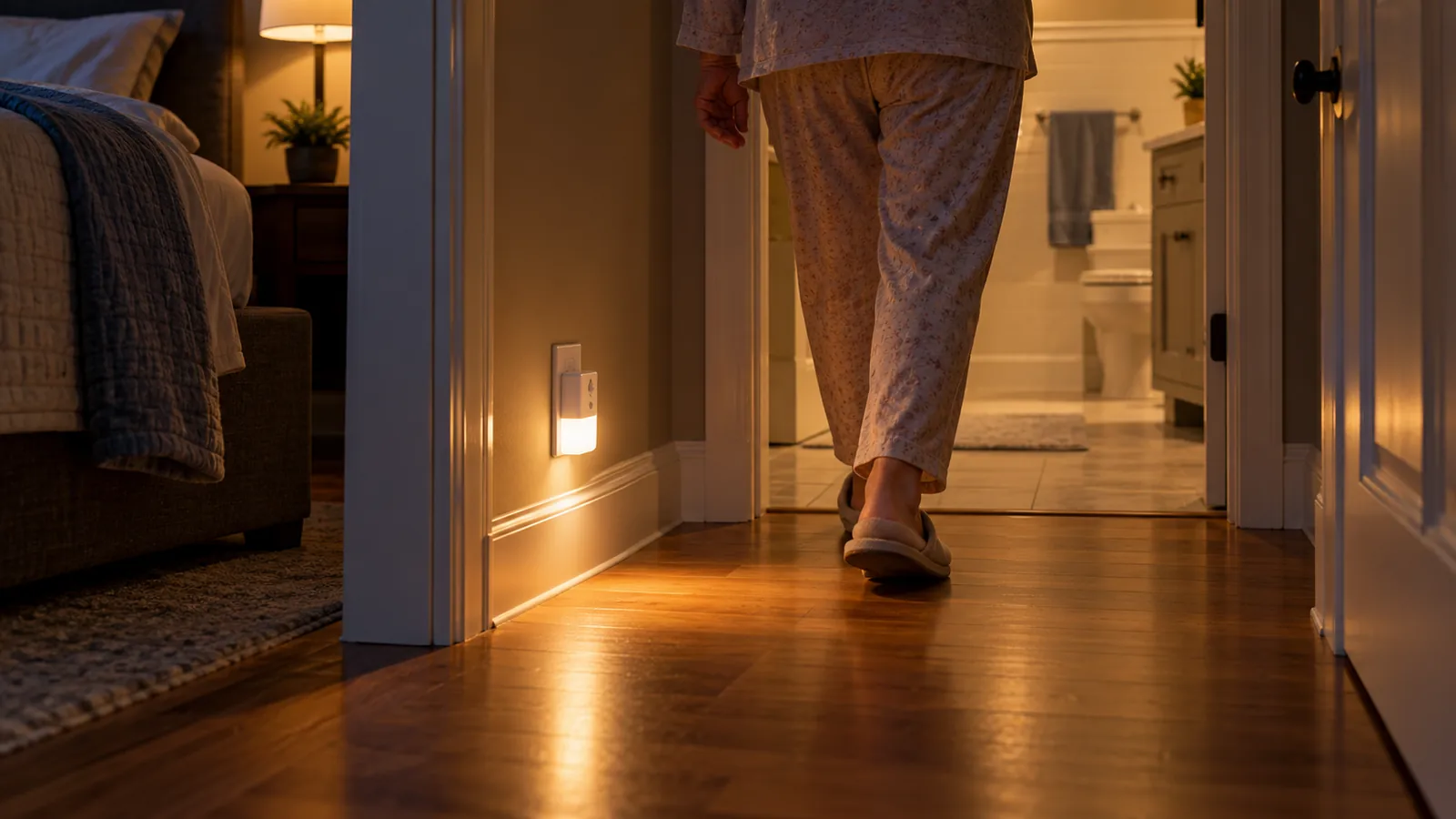
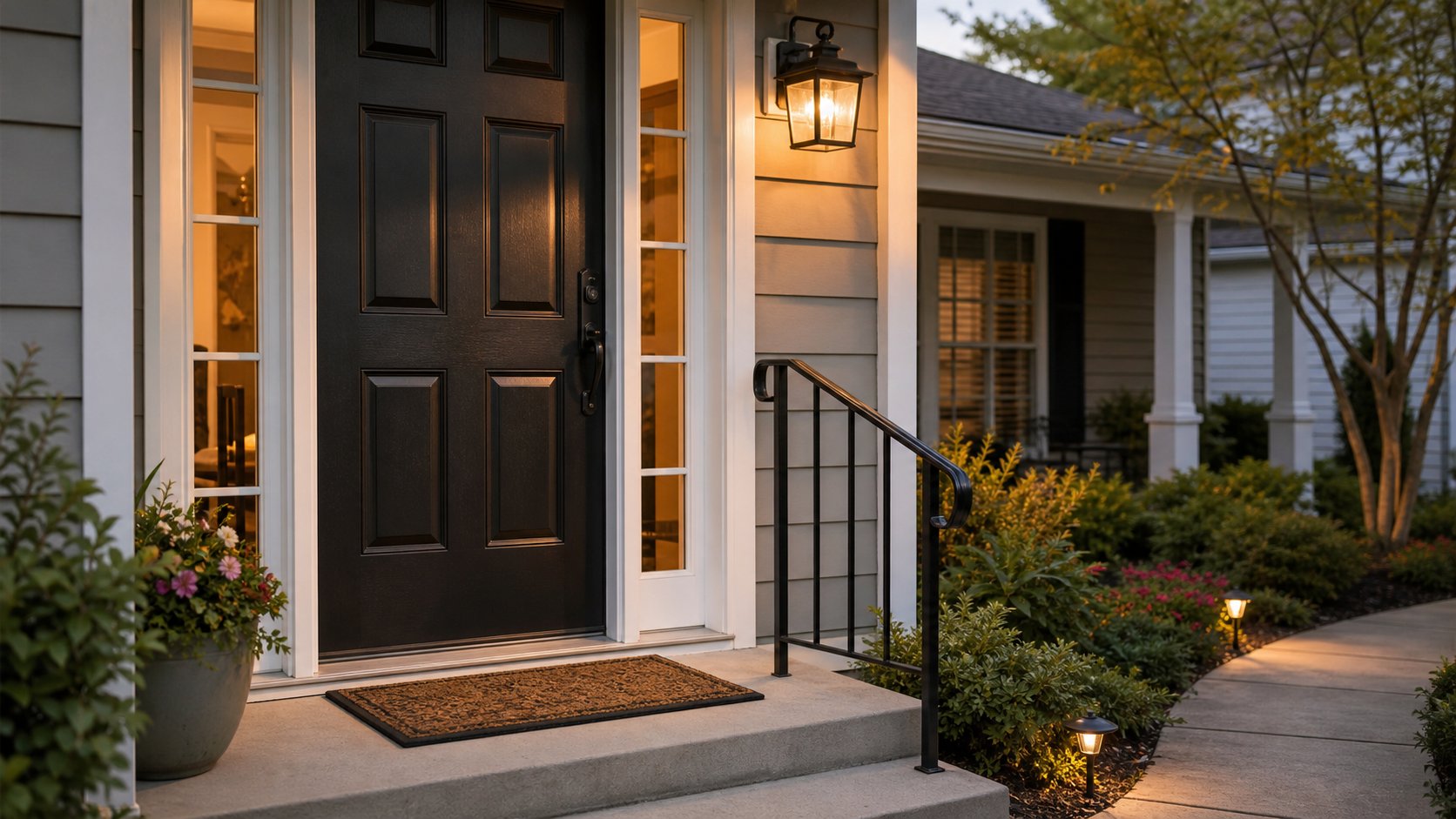
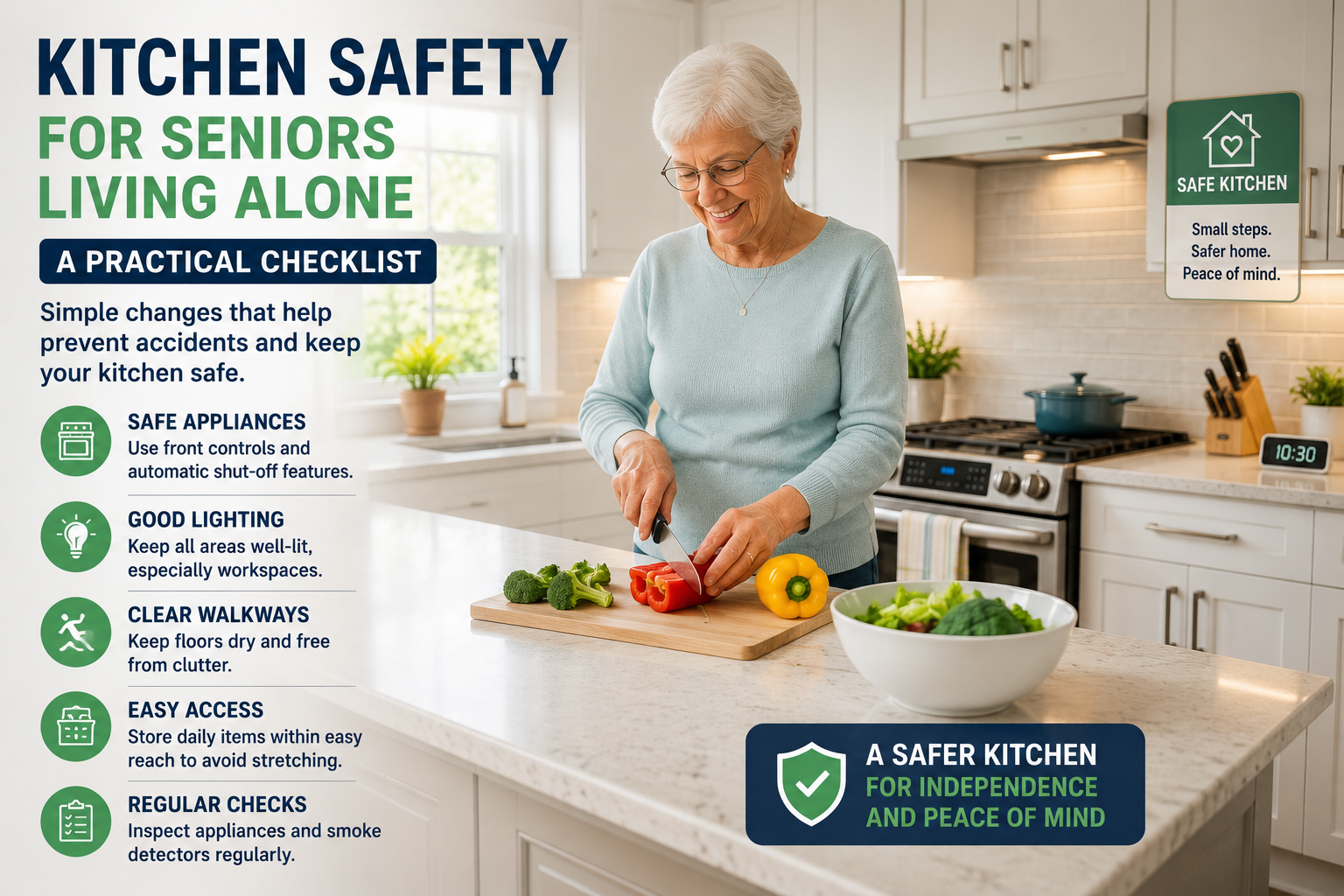
Older woman preparing food in a bright senior-friendly kitchen with clear walkways, safe appliances, accessible storage, and good lighting

Kitchen Safety for Seniors Living Alone: A Practical Family Checklist

Kitchen Safety for Seniors Living Alone: A Practical Family Checklist

Quick Answer

Kitchen safety for seniors starts with clear counters, good lighting, easy-reach storage, safer cooking routines, stable flooring, working smoke alarms, and reducing the need to bend, stretch, or rush. Families should focus first on the tasks an elderly parent actually does every day.

The kitchen is often the room where independence matters most. It is where a parent makes coffee, prepares meals, takes medication with breakfast, washes dishes, and keeps daily routines. That is why kitchen safety should feel supportive, not restrictive.

This article focuses on kitchen-only risks. For a wider safety review, see our guide to making a home safer for an elderly parent living alone.

Table of Contents

  • Why kitchen safety matters
  • Kitchen safety checklist
  • What to look for
  • Highest-priority changes
  • Decision path
  • FAQ

Why Kitchen Safety Matters

Kitchens combine heat, water, sharp tools, heavy items, slippery floors, and time pressure. A senior may be perfectly capable of cooking but still benefit from a safer layout and simpler routines.

The goal is to reduce friction around daily meals while preserving independence.

Kitchen Safety Checklist

  • Clear walkways between sink, stove, refrigerator, and table.
  • Move daily items to waist-to-shoulder height.
  • Remove step stools unless a professional recommends otherwise.
  • Check that floors are not slippery when wet.
  • Keep cords away from walking paths and water.
  • Review stove and oven habits.
  • Confirm smoke and carbon monoxide alarms work.
  • Improve task lighting at counters and stove.
  • Use lightweight cookware when possible.
  • Keep emergency contacts visible and easy to access.

What to Look For

Area Why It Matters What to Check
Storage Reaching and bending can add risk Daily items within comfortable reach
Flooring Spills can make slipping more likely Wet areas, rugs, mats, transitions
Stove Heat and distraction can create hazards Controls, routines, forgotten burners
Lighting Food prep needs clear visibility Counter shadows, stove lighting, night access
Walkway Kitchens are high-traffic rooms Pet bowls, trash cans, cords, stools

Highest-Priority Changes

Make daily items easy to reach

Move coffee, bowls, plates, medication-related supplies, and favorite foods to comfortable shelves. Avoid high cabinets and low storage for daily items.

Improve lighting

Under-cabinet or task lighting can make cutting, pouring, reading labels, and checking food easier.

Reduce floor hazards

Remove loose mats or use secure non-slip options. Clean spills quickly and review whether pet bowls create obstacles.

Review cooking routines

Look for forgotten burners, heavy pans, or tasks that require rushing. A simpler routine may be safer than a new gadget.

Use reminders carefully

Voice reminders can help with timers and routines. For basic phrases, see our Alexa commands for seniors guide.

Decision Path

  • If the issue is reaching: reorganize storage first.
  • If the issue is slipping: review mats, spills, footwear, and flooring.
  • If the issue is forgotten cooking: simplify routines and consider timers or supervised planning.
  • If the issue is low vision: improve task lighting and label readability.
  • If there have been fires, burns, or major confusion: seek professional guidance.

When Products May Not Be Enough

Kitchen tools can help, but repeated burns, unsafe stove use, confusion, dizziness, or major mobility changes need a larger safety conversation. This article is educational and not medical advice.

For broader planning, use our aging in place checklist.

Frequently Asked Questions

What is the biggest kitchen risk for seniors?

It depends on the person, but common issues include slipping, reaching, heavy cookware, poor lighting, and forgotten stove use.

Should seniors living alone keep using the stove?

Many can, but families should review habits honestly. If there are repeated safety concerns, seek professional guidance.

How can I make kitchen storage safer?

Keep daily items at easy height and avoid storage that requires bending deeply or climbing.

Are smart devices useful in the kitchen?

Timers, reminders, and smart plugs may help some routines, but they should not replace safe habits or supervision where needed.

What should I check first?

Start with walkways, lighting, storage, stove habits, and floor surfaces.

30-Minute Kitchen Review

  • Walk the main route from refrigerator to sink to stove.
  • Remove obstacles from the floor.
  • Move three daily items to easier storage.
  • Check task lighting.
  • Review stove and timer habits.
  • Ask your parent what feels hardest during meal prep.
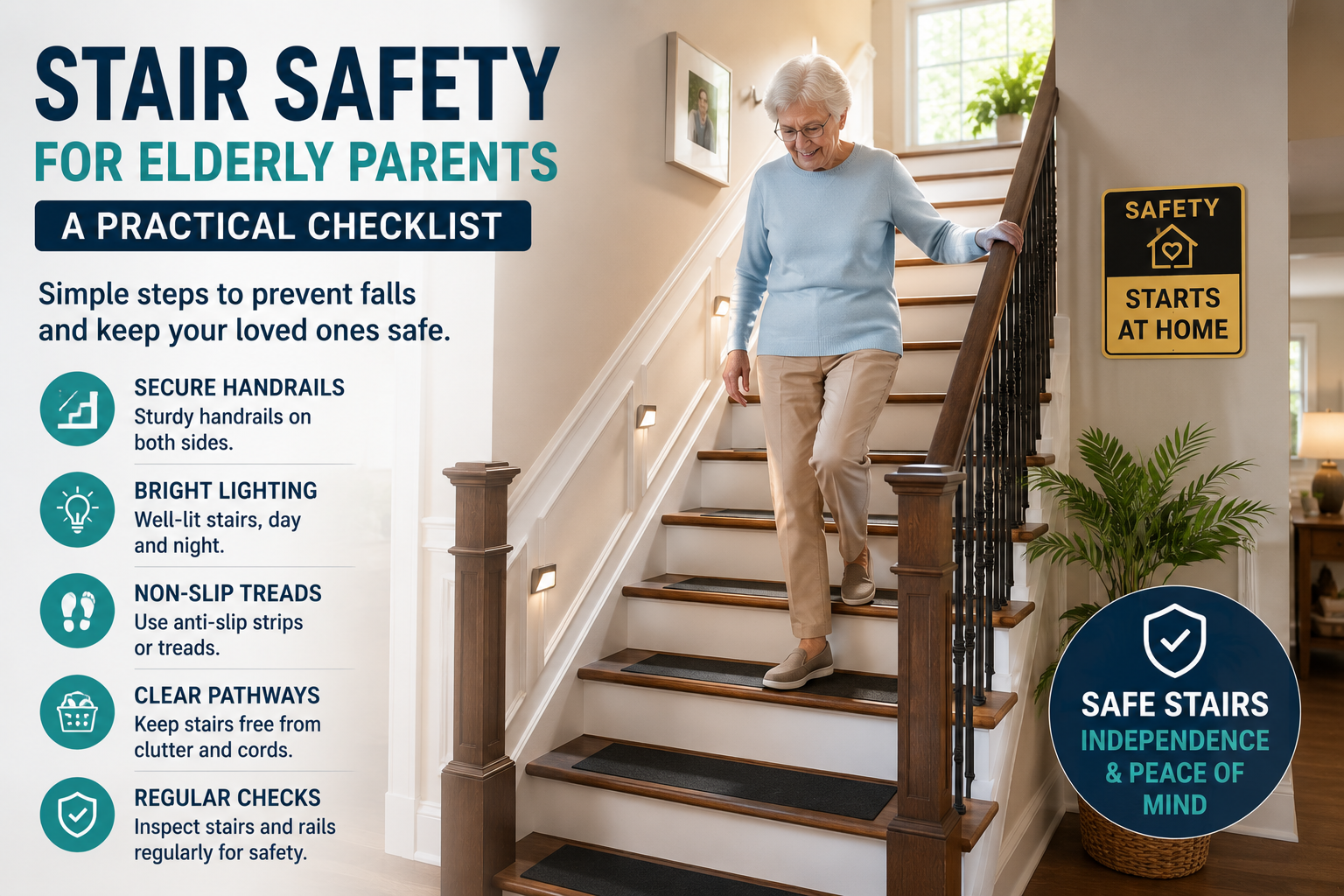
Senior woman using a well-lit staircase with secure handrails, non-slip treads, and clear pathways for safer movement at home

Stair Safety for Elderly Parents: A Practical Checklist for Families

Stair Safety for Elderly Parents: A Practical Checklist for Families

Quick Answer

Stair safety for elderly parents starts with secure handrails, bright lighting, visible step edges, clear stairs, non-slip surfaces, and careful attention to how your parent actually uses the stairs. If there have already been falls or major balance changes, seek professional assessment.

Stairs can become stressful before a family realizes there is a serious issue. A parent may pause longer, grip the wall, avoid carrying laundry, or choose not to go upstairs as often. Those small changes are worth noticing.

This article is stair-specific. For a whole-home review, use our room-by-room home safety checklist for seniors.

Table of Contents

  • Why stairs deserve attention
  • Stair safety checklist
  • What to look for
  • High-priority changes
  • Decision path
  • FAQ

Why Stairs Deserve Special Attention

Stairs require balance, strength, vision, timing, and confidence. Lighting, rail height, footwear, distractions, pets, and carrying objects can all affect safety.

Families should avoid assuming a staircase is fine just because it has always been there. Needs change over time.

Stair Safety Checklist

  • Check that handrails are secure and easy to grip.
  • Make sure lighting covers the full staircase.
  • Remove clutter from every step.
  • Check for loose carpet, slippery treads, or uneven edges.
  • Make step edges easy to see.
  • Review footwear used on stairs.
  • Watch whether your parent carries heavy items.
  • Check top and bottom landings.
  • Confirm light switches are reachable at both ends.
  • Ask whether stairs feel harder at certain times of day.

What to Look For

Feature Why It Matters What to Check
Handrails Support during ascent and descent Secure mounting, grip comfort, both sides if possible
Lighting Step depth and edges must be visible No shadows, reachable switches, nighttime visibility
Step surface Slippery or loose surfaces increase risk Carpet, tread, nosing, worn areas
Clutter Objects on stairs create trip hazards Laundry, shoes, packages, pet toys
Landing Transitions require turning and balance Clear space, lighting, rug edges

Highest-Priority Changes

Secure handrails

A handrail that moves, feels too thin, or stops too early is not reliable. Consider professional installation where needed.

Improve lighting

Good stair lighting should show every step. Shadows can make depth harder to judge.

Make step edges visible

Contrast can help seniors see where one step ends and the next begins, especially in low light.

Remove stair clutter

Stairs should not be used as temporary storage. Even one object can change footing.

Review daily routines

If laundry, medication, or meals require frequent stair trips, look for ways to reduce unnecessary carrying.

Decision Path

  • If grip is the issue: start with handrail security and shape.
  • If visibility is the issue: improve lighting and step contrast.
  • If slipping is the issue: review tread surface and footwear.
  • If carrying items is the issue: change routines or add storage on each level.
  • If falls have occurred: seek professional guidance.

When Stairs May No Longer Be Practical

Sometimes stair improvements are not enough. Repeated falls, dizziness, severe fatigue, or fear of stairs may require a bigger plan, such as moving daily activities to one level or consulting a professional.

For broader fall-risk planning, see our fall prevention checklist for seniors.

Frequently Asked Questions

Are handrails enough to make stairs safe?

Not always. Handrails help, but lighting, surface, clutter, footwear, and mobility also matter.

Should stairs have handrails on both sides?

Two handrails can help some seniors, but layout and installation matter. A qualified installer can advise.

How can I make stairs easier to see?

Improve lighting, reduce shadows, and consider contrast at step edges.

What should be removed from stairs?

Remove shoes, laundry, packages, decorations, cords, and pet items.

When should we stop using stairs?

If stairs are causing repeated falls, fear, or major fatigue, consult a professional and consider one-level living options.

30-Minute Stair Review

  • Walk the stairs slowly with lights as normally used.
  • Check each rail for movement.
  • Remove every object from the stairs.
  • Look for shadows and worn spots.
  • Ask your parent where they feel least confident.
  • Prioritize one repair, one lighting fix, and one routine change.
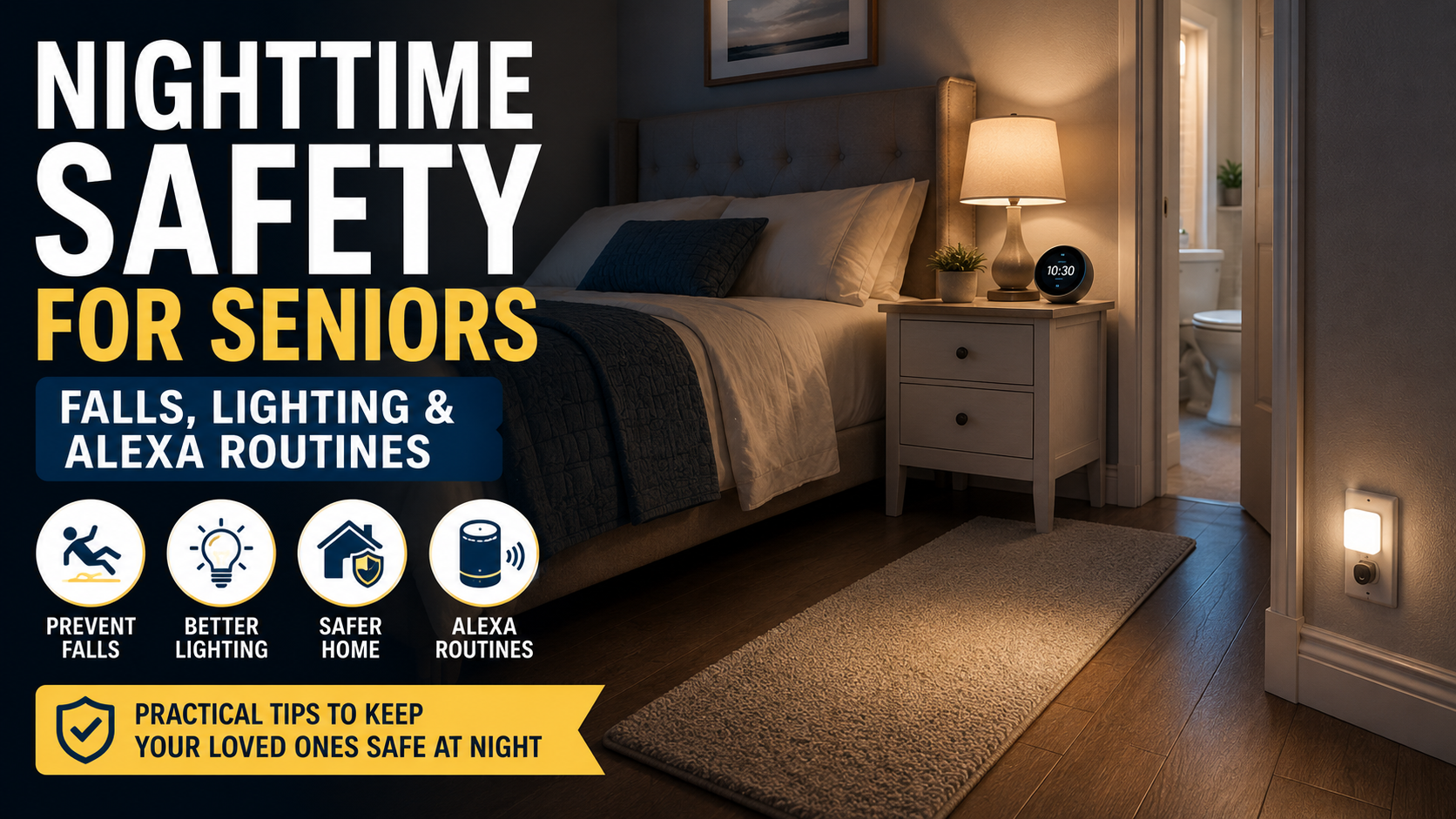
Senior-friendly bedroom with warm nighttime lighting, illuminated walkway, and Alexa routine support for safer movement at night

Nighttime Safety for Seniors at Home: A Practical Evening Checklist

Nighttime Safety for Seniors at Home: A Practical Evening Checklist

Quick Answer

Nighttime safety for seniors starts with clear walking paths, soft lighting, easy bathroom access, stable support, and simple evening routines. Families should focus first on the bedroom-to-bathroom route, loose rugs, poor lighting, clutter, footwear, and anything an older parent may reach for when tired or half-awake.

Many families first notice nighttime safety issues in small ways. A parent leaves the bedroom lights off to avoid waking fully. They walk to the bathroom slowly, hold furniture for balance, or step around shoes, rugs, laundry, or cords. The home may feel safe during the day but much harder to navigate after dark.

This guide focuses only on nighttime routines and movement at home. For a broader safety review, use our room-by-room home safety checklist for seniors.

Table of Contents

  • Why nighttime can be harder
  • Nighttime safety checklist
  • What to look for
  • Highest-priority changes
  • Decision path
  • FAQ
  • 30-minute evening review

Why Nighttime Can Be Harder for Older Adults

At night, ordinary obstacles can become more difficult to see and avoid. A rug edge, a pet toy, a laundry basket, or a dark hallway may increase risk because the person is tired, moving more slowly, or trying not to turn on bright lights.

Nighttime safety is not about making the home look clinical. It is about making the most common evening and overnight movements easier: getting out of bed, finding glasses or a walker, reaching the bathroom, turning on lights, and returning to bed without rushing.

Nighttime Safety Checklist for Seniors

  • Clear the path from bed to bathroom.
  • Remove loose rugs, shoes, cords, baskets, and low furniture from the route.
  • Add soft motion lights near the bed, hallway, bathroom entry, and toilet area.
  • Keep glasses, phone, water, and mobility aids in the same place every night.
  • Make sure slippers or shoes have secure backs and non-slip soles.
  • Check that the bathroom floor is dry before bedtime.
  • Use night lights that turn on quickly enough.
  • Keep the toilet route simple and predictable.
  • Review whether furniture is being used as support.
  • Consider voice-controlled lights if switches are hard to reach.

What to Look For

Area Why It Matters What to Check
Bedroom Most nighttime trips start here Bed height, lighting, footwear, glasses, phone, mobility aid location
Hallway Dark paths can hide obstacles Rugs, cords, furniture corners, light switches, motion lighting
Bathroom entry Transitions can be awkward when tired Door swing, threshold, mat placement, floor dryness
Toilet area Standing and turning require balance Lighting, support, toilet height, nearby clutter
Return path People may be groggy after waking Consistent route, no new objects, soft lighting back to bed

Highest-Priority Changes

Improve the bed-to-bathroom route

Walk the route at night with the same lighting your parent normally uses. If you cannot see the floor clearly, the lighting needs improvement.

Add soft motion lighting

Motion lights can help if they turn on quickly and do not glare. Test them from the bed, hallway, and bathroom doorway.

Remove small obstacles

Nighttime safety often improves when families remove things rather than add products. Shoes, baskets, cords, stools, and loose rugs should not sit in the walking path.

Make bathroom access easier

Bathroom trips are one of the most common overnight movements. Keep the route simple, dry, well lit, and free of loose mats or clutter. A dedicated bathroom checklist can be linked here after that article is live.

Use simple voice support carefully

Voice assistants may help with lights or reminders, but they should not replace safe flooring, support, or family planning. For basic voice phrases, see our Alexa commands for seniors guide.

Decision Path

  • If the main issue is darkness: start with motion lighting and visible switches.
  • If the main issue is tripping: remove rugs, cords, clutter, and unstable furniture.
  • If the main issue is bathroom urgency: review the shortest safe route and whether bathroom support is adequate.
  • If the main issue is standing from bed: review bed height, footwear, and mobility support.
  • If there have already been falls: seek a professional home safety or healthcare assessment.

When Products May Not Be Enough

Lighting, mats, and smart devices can add support, but repeated falls, dizziness, confusion, sudden weakness, or major balance changes require professional guidance. This article is educational and is not medical advice.

Nighttime safety also belongs inside a broader aging plan. Our aging in place checklist can help families review daily routines, support, communication, and home layout together.

Frequently Asked Questions

What is the most important nighttime safety change for seniors?

For many homes, the most important first change is a clear, well-lit route from bed to bathroom.

Are night lights enough?

Sometimes, but they should be bright enough to show the floor without creating glare. Motion lights may work better in hallways or bathrooms.

Can Alexa help with nighttime safety?

Alexa can help turn on lights or start simple routines, but it should not replace safe flooring, support, or emergency planning.

Should rugs be removed at night?

Loose rugs or curled edges should be removed or replaced with secure, flat, non-slip options.

What if my parent has already fallen at night?

Do not rely only on products. Ask a healthcare professional, occupational therapist, or qualified home safety specialist for guidance.

30-Minute Evening Review

  • Walk from bed to bathroom with nighttime lighting only.
  • Remove anything from the route that touches your foot.
  • Check whether lights turn on before the first step.
  • Place glasses, phone, and mobility aids consistently.
  • Ask your parent what feels hardest after dark.
  • Write down the top three fixes and start with the simplest one tonight.
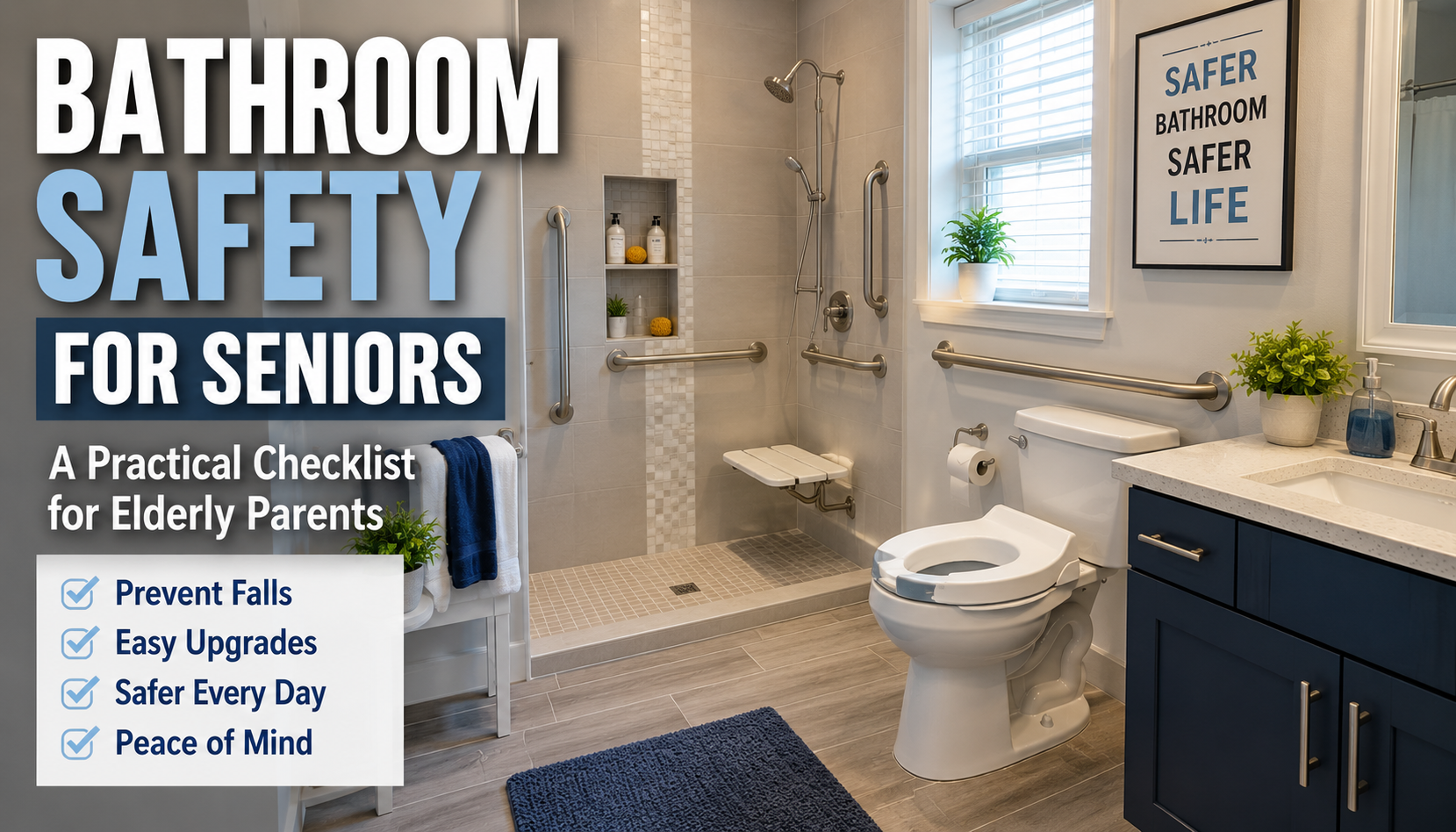
Senior-friendly American bathroom with grab bars, walk-in shower, shower seat, non-slip flooring, and bright lighting

Bathroom Safety for Seniors: A Practical Checklist for Elderly Parents

Bathroom Safety for Seniors: A Practical Checklist for Elderly Parents

Quick Answer

Bathroom safety for seniors starts with reducing slips, improving support, making the room easier to see at night, and keeping daily items within easy reach. For many families, the highest-priority changes are properly installed grab bars, non-slip surfaces, a stable shower chair, better lighting, and a clear path in and out of the bathroom.

A family may first notice the problem in small moments. An older parent hesitates before stepping into the tub. Getting up from the toilet takes more effort than it used to. Wet flooring feels more intimidating. A towel, bath mat, or shampoo bottle that once seemed harmless suddenly feels like one more thing that could get in the way.

This guide is for adult children who want to make a bathroom safer for an elderly parent without turning the project into a full remodel. The goal is not to make dramatic promises or create fear. The goal is to identify common bathroom hazards, make practical improvements, and know when a family should ask for professional guidance.

If you are doing a full-home review, start with our room-by-room home safety checklist for seniors. This article goes deeper on one specific room: the bathroom.

Table of Contents

Why Bathrooms Are High-Risk for Older Adults

Bathrooms combine several conditions that may increase risk for seniors: water, hard surfaces, tight spaces, changing positions, low lighting, and sometimes rushing. A person may be stepping over a tub wall, turning on a wet floor, reaching for a towel, or standing up from a low toilet in a small area with very little room to recover balance.

That does not mean every bathroom is unsafe. It means the bathroom deserves a careful review. Small changes can add a layer of safety and make everyday routines feel less stressful for an older adult.

Bathroom safety also connects closely with broader fall prevention. If your family is reviewing the whole home, our fall prevention checklist for seniors can help you identify risks beyond the bathroom.

Bathroom Safety Checklist for Seniors

Use this checklist while standing inside the bathroom with your parent if possible. Try to observe the room as it is actually used in the morning, at night, and after bathing.

  • Check whether the floor becomes slippery when wet.
  • Remove loose rugs or replace them with secure, non-slip options.
  • Confirm that bath mats do not slide or bunch up.
  • Look for stable grab bars near the shower, tub, and toilet.
  • Make sure towel bars are not being used as support handles.
  • Check whether the shower or tub entry requires stepping too high.
  • Consider whether a shower chair would reduce fatigue while bathing.
  • Review whether the toilet is too low for comfortable sitting and standing.
  • Improve lighting at the doorway, vanity, shower area, and nighttime route.
  • Keep soap, shampoo, towels, and daily items within easy reach.
  • Move cords, scales, hampers, and storage baskets away from walking paths.
  • Check whether the bathroom door can be opened easily in an urgent situation.
  • Review water temperature to reduce the chance of accidental scalding.
  • Confirm that frequently used items are not stored too high or too low.
  • Ask your parent what feels hardest, most tiring, or most worrying.

Highest-Priority Bathroom Safety Changes

Properly installed grab bars

Grab bars are often one of the most important bathroom safety changes for seniors. They can provide support when stepping into a shower, turning around, standing from the toilet, or stabilizing after bathing.

Important: incorrectly installed grab bars may be more dangerous than none. A bar that pulls loose can create false confidence and lead to a serious fall. Where appropriate, use qualified installation and make sure bars are anchored correctly into suitable wall structure.

Non-slip surfaces

Wet tile, smooth tubs, and loose mats can make slipping more likely. Non-slip bath mats, adhesive strips, textured flooring, or secure shower surfaces can help reduce that risk. The key is stability: anything placed on the floor should stay flat and should not slide when weight shifts.

Shower chair or bath seat

A shower chair can help seniors who become tired while standing, feel unsteady while washing, or need a more controlled bathing routine. It should be stable, sized for the space, and used with a layout that still allows safe entry and exit.

Raised toilet seat when appropriate

If standing up from the toilet has become difficult, a raised toilet seat or toilet safety frame may help. This is most useful when the main issue is the transition from sitting to standing. Families should choose stable options and avoid anything that wobbles.

Better lighting

Bathroom lighting should make the floor, toilet, shower edge, and doorway easy to see. Nighttime lighting matters because many falls happen when someone is tired, half-awake, or trying not to turn on bright lights. Motion night lights can help, but they should be tested to make sure they turn on quickly enough.

Clutter removal

A bathroom does not need to be empty, but walking paths should be clear. Extra baskets, scales, cords, laundry, cleaning supplies, and decorative items can create unnecessary obstacles in a small room.

Accessible storage

Daily items should be easy to reach without bending deeply, stretching overhead, or stepping onto anything. Store shampoo, soap, towels, medication-related supplies, and grooming items at comfortable height.

Water temperature controls

Review whether hot water becomes too hot too quickly. Anti-scald settings or temperature control devices may add a layer of safety, especially if an older adult has slower reaction time or reduced sensation.

Door access

Bathroom doors should be easy to open, and families should think about what would happen if a parent needed help inside. This does not mean removing privacy. It means avoiding locks or layouts that make assistance difficult during a real problem.

What to Look For

Feature Why It Matters What to Check
Grab bars Support during transfers and turning Secure installation, correct placement, no loose movement
Flooring Wet floors can make slipping more likely Non-slip surface, flat mats, no curling edges
Shower or tub entry Stepping over a high edge can be difficult Height, available support, fatigue, confidence entering
Toilet height Low seating can make standing harder Effort needed to sit and stand, nearby support
Lighting Visibility affects balance and confidence Night route, shower area, doorway, shadows
Storage Reaching and bending can add risk Daily items at comfortable height and distance
Door access Help may be needed quickly Door swing, lock type, blocked access, privacy balance

Room Zones to Review

Bathtub and shower

The bathtub or shower is usually the first area to inspect. Look at how your parent enters, exits, turns, reaches for soap, rinses, and dries off. Watch for hesitation, grabbing towel bars, leaning on glass doors, or avoiding the shower altogether.

Helpful changes may include grab bars, non-slip flooring, a shower chair, a handheld showerhead, or a lower-threshold entry when remodeling is already being considered. Keep the focus on the specific difficulty your parent is experiencing.

Toilet area

The toilet area matters because sitting down and standing up require strength, balance, and confidence. If your parent pushes on the sink, towel rack, or wall to stand, that is a sign the area may need better support.

A raised toilet seat, toilet safety frame, or nearby grab bar may help, depending on the layout and the person’s mobility. Stability is more important than appearance.

Sink and vanity

The sink area should be easy to use without bending, stretching, or leaning heavily on unstable surfaces. Keep daily items close, remove clutter, and make sure the area is well lit.

If your parent takes medication or does grooming tasks at the sink, consider whether they have enough space and support to do those tasks calmly.

Floor and walkway

The walking path should be simple and predictable. Remove laundry piles, scales, trash cans, cords, and loose rugs from the route between the door, toilet, shower, and sink.

Check the floor when it is dry and when it is damp. Some surfaces feel safe until they are wet.

Lighting and entry

Good lighting is especially important at night. The route into the bathroom, the floor, and the toilet area should be visible before a person has to step fully into the room.

Motion lights, brighter bulbs, illuminated switches, or a soft night light may help. Test any lighting change at the actual time your parent normally uses the bathroom overnight.

Bathroom Safety Decision Path

If bathroom changes are part of a wider fall-prevention review, families should also look at stair fall risks before treating one room as the whole problem.

  • If the main issue is slipping: start with non-slip surfaces, secure mats, better drying routines, and checking whether the shower or tub floor becomes slick.
  • If the main issue is standing up: review toilet height, grab bar placement, shower chair options, and whether a professional should assess transfers.
  • If the issue is nighttime visibility: start with the route to the bathroom, motion lighting, door visibility, and removing floor obstacles.
  • If the issue is reaching: move daily items to easy height and avoid storage that requires bending, stretching, or stepping on anything.
  • If there have already been falls: seek professional assessment rather than relying only on products or quick fixes.

Professional Installation Warning

Some bathroom safety changes are simple. Others should be treated more carefully. Grab bars, wall-mounted supports, shower modifications, and some toilet safety products may need qualified installation or professional advice.

Incorrectly installed grab bars may be more dangerous than none because they can fail exactly when a person depends on them. If you are unsure what is behind the wall, where the bar should go, or whether the product is appropriate, get help from a qualified installer, contractor, occupational therapist, or relevant professional.

When Products May Not Be Enough

Bathroom products can add support, but they cannot solve every situation. If your parent has repeated falls, dizziness, sudden mobility changes, balance problems, confusion, or difficulty transferring safely, the next step should be professional guidance.

An occupational therapist, healthcare professional, or qualified home safety specialist may be able to recommend changes based on how your parent actually moves, not just how the bathroom looks. This article is educational and should not be treated as medical advice.

Bathroom improvements also work best as part of a broader plan. Our aging in place checklist can help families review routines, safety, support, communication, and technology together.

Frequently Asked Questions

What is the most important bathroom safety change for seniors?

For many families, the most important first change is secure support where the parent needs it most, often near the shower, tub, or toilet. Properly installed grab bars, non-slip surfaces, and better lighting are usually high-priority items.

Where should grab bars be installed?

Common locations include the shower or tub entry, inside the shower area, and near the toilet. The right placement depends on the bathroom layout and how the person moves. Grab bars should be properly anchored and installed where they will actually be used.

Are shower chairs safe for elderly adults?

A stable shower chair can be helpful for seniors who tire while standing or feel unsteady while bathing. It should fit the shower area, stay firmly in place, and allow safe entry and exit. If transfers are difficult, ask a professional for guidance.

How can I make a bathroom safer without remodeling?

Start with practical changes: remove loose rugs, improve lighting, add secure non-slip surfaces, keep daily items within reach, clear the walkway, and consider properly installed grab bars. Many useful improvements do not require a full remodel.

What bathroom flooring is safest for seniors?

There is no single perfect flooring for every home, but bathroom flooring should be slip-resistant, even, easy to see, and not covered by loose rugs that slide or curl. Families should test how the surface feels when damp, not only when dry.

How do I talk to an elderly parent about bathroom safety?

Start with comfort and independence, not fear. You might say, “I want to make this room easier and more comfortable for you to use.” Ask what feels difficult before suggesting products. That keeps the conversation respectful and practical.

Final Action Plan: A 30-Minute First Inspection

If you only have half an hour, use this simple first pass:

  • Stand at the doorway and check whether the path is clear.
  • Look for loose rugs, slippery mats, cords, clutter, or storage on the floor.
  • Turn the lights on and check for shadows around the toilet, shower, and walkway.
  • Ask your parent to show how they enter the shower or tub, without rushing.
  • Check whether they use towel bars, sink edges, or walls for support.
  • Review whether soap, shampoo, towels, and daily items are easy to reach.
  • Check whether the toilet feels too low or difficult to stand from.
  • Look at the door and consider whether help could reach them if needed.
  • Write down the top three issues instead of trying to fix everything at once.
  • Decide which items are simple family fixes and which need professional help.

Bathroom safety for seniors is not about creating a perfect room overnight. It is about reducing obvious hazards, adding reliable support, and helping an elderly parent use the bathroom with more confidence. Start with the biggest daily friction point, make one improvement, and then review the room again as needs change.

For the next step, compare this bathroom review with our broader guide on how to make a home safer for an elderly parent living alone.

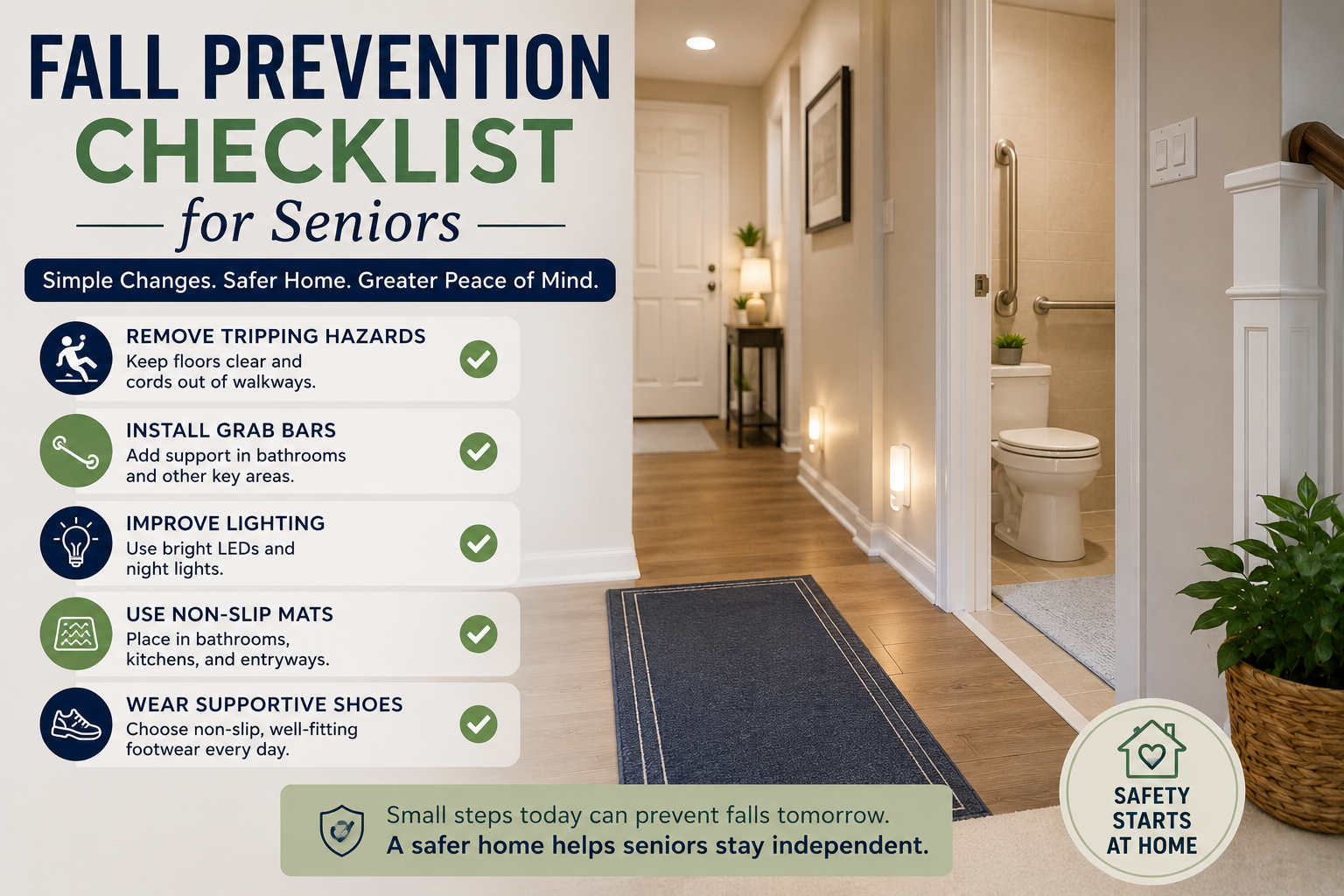
Fall prevention checklist for seniors showing a safe home with grab bars, non-slip mats, good lighting and practical safety tips

Fall Prevention Checklist for Seniors: A Room-by-Room Safety Guide

Fall Prevention Checklist for Seniors: A Room-by-Room Safety Guide

Quick Answer

A good fall prevention checklist for seniors should focus on the places where falls are most likely to happen: entrances, bathrooms, bedrooms, kitchens, hallways, stairs, and outdoor walkways. Families should look for loose rugs, poor lighting, clutter, slippery floors, missing handrails, unstable furniture, high thresholds, and items stored out of easy reach.

The safest approach is simple: remove trip hazards, improve lighting, add hand support where needed, keep everyday items within reach, and review the home room by room. Fall prevention does not have to make a home feel clinical. Small, practical changes can make a parent’s home safer while still helping them feel independent.

For a broader safety review beyond falls, start with our room-by-room home safety checklist for seniors. This guide goes deeper on one specific issue: preventing falls at home.

Table of Contents

  • Why falls are a major home safety risk
  • Common causes of falls at home
  • Room-by-room fall prevention checklist for seniors
  • Simple safety products that can help
  • Printable fall prevention checklist
  • Frequently asked questions

Why Falls Are One of the Biggest Risks for Older Adults

Falls are one of the most common safety concerns for older adults living at home. The goal is not to scare families. The goal is to notice small hazards before they turn into emergencies.

A fall can happen during ordinary moments:

  • Walking to the bathroom at night
  • Reaching for a pan in the kitchen
  • Stepping over a threshold
  • Carrying laundry down stairs
  • Getting out of bed too quickly
  • Walking across a wet bathroom floor
  • Opening the front door while holding bags

Many fall risks are not dramatic. They are small, repeated friction points in the home. A rug corner curls up. A hallway is too dim. A towel is stored too high. A parent keeps using a wobbly chair for support because it has always been there.

That is why a room-by-room fall prevention checklist can help. It gives families a calm way to review the home, make simple changes, and support aging in place without turning the house upside down.

If your family is planning long-term home safety, pair this checklist with our aging in place checklist.

Common Causes of Falls at Home

Most falls at home are not caused by one single problem. They often happen when several small risks come together.

Fall RiskWhy It MattersFirst Fix to Consider
Poor lightingMakes steps, rugs, pets, cords, and thresholds harder to seeAdd night lights or motion sensor lights
Loose rugsEdges can curl or slideRemove rugs or secure them with non-slip backing
ClutterCreates obstacles in walking pathsClear floors and simplify layouts
Slippery floorsBathrooms, kitchens, and entryways can become slickUse non-slip mats and clean spills quickly
Missing hand supportSeniors may grab unstable furnitureAdd grab bars or handrails where appropriate
Items stored too high or lowReaching and bending can affect balanceMove daily items to waist-to-shoulder height
Pets and cordsEasy to trip over unexpectedlyReroute cords and create safer pet routines
RushingUrgency increases risk, especially at nightImprove access, lighting, and bathroom paths

Families should also consider health, vision, footwear, medications, and mobility changes. This article focuses on the home environment, not medical advice. If falls, dizziness, balance changes, or medication side effects are a concern, speak with a qualified professional.

Room-by-Room Fall Prevention Checklist for Seniors

Bathroom checks often deserve extra attention, so families should also review how to reduce bathroom fall risks before treating the checklist as complete.

Use this checklist slowly. You do not have to fix everything in one day. Start with the rooms your parent uses most often and the paths they walk every day.

Entrance

The entrance is often overlooked, but it can be risky because people are carrying keys, mail, groceries, bags, or packages.

Risks

  • Uneven thresholds
  • Loose mats
  • Poor lighting
  • Wet or slippery flooring
  • Shoes left near the door
  • Packages blocking the walkway
  • No place to sit while removing shoes

What to check

  • Can your parent enter without stepping over clutter?
  • Is the doorway bright enough at night?
  • Does the doormat slide?
  • Is there a stable surface for balance?
  • Are shoes stored safely, not scattered on the floor?

Easy improvements

  • Use a low-profile, non-slip mat.
  • Add a motion sensor porch light.
  • Keep the entry floor clear.
  • Place a sturdy chair or bench nearby if your parent changes shoes.
  • Make sure packages are moved quickly.
  • Repair or mark uneven thresholds if needed.

Example: If your mother carries groceries inside and sets them near the door, create a small landing spot at waist height. That may reduce bending, twisting, and stepping around bags.

Living Room

The living room should be comfortable, but comfort can create hidden fall risks: low tables, cords, soft rugs, pets, and furniture arranged too tightly.

Risks

  • Coffee tables in walking paths
  • Extension cords
  • Loose rugs
  • Low furniture
  • Poor lighting near seating
  • Unstable chairs used for support
  • Pet toys on the floor

What to check

  • Is there a clear path from the chair to the hallway?
  • Can your parent stand up from their favorite chair without pulling on a table?
  • Are cords tucked away?
  • Are rugs flat and secure?
  • Is there enough light near the chair?

Easy improvements

  • Remove unnecessary small tables from walking paths.
  • Route cords behind furniture.
  • Use lamps that are easy to turn on, or add smart plugs.
  • Choose stable seating with arms.
  • Keep remote controls, glasses, and phones within reach.
  • Remove or secure loose rugs.

Smart plugs and voice-controlled lights can help if your parent has trouble reaching switches. For broader technology ideas, see our guide to smart home devices that help seniors stay independent.

Kitchen

Kitchen falls often happen because of reaching, bending, spills, or moving too quickly while cooking.

Risks

  • Wet floors
  • Items stored too high
  • Heavy pots in low cabinets
  • Step stools
  • Poor lighting under cabinets
  • Loose floor mats
  • Cluttered counters

What to check

  • Can your parent reach everyday dishes without stretching?
  • Are heavy items stored at a safe height?
  • Are spills cleaned quickly?
  • Are mats flat and non-slip?
  • Is the path between sink, stove, and refrigerator clear?

Easy improvements

  • Move daily items to waist-to-shoulder height.
  • Store heavy cookware where it can be lifted safely.
  • Avoid step stools unless specifically recommended and safely used.
  • Use non-slip mats only if they stay flat.
  • Add under-cabinet lighting if the counter area is dim.
  • Keep commonly used items on lower shelves, not top cabinets.

Example: If your father uses a chair to reach a high cabinet, that is a major warning sign. Move the items he uses most often to a safe shelf immediately.

Bathroom

The bathroom is one of the most important rooms to review because water, hard surfaces, and movement in small spaces can increase fall risk.

Risks

  • Wet floors
  • Slippery tub or shower
  • No grab bars
  • Low toilet height
  • Poor nighttime lighting
  • Towels or toiletries out of reach
  • Loose bath mats

What to check

  • Is there a secure handhold near the shower or tub?
  • Does the bath mat slide?
  • Can your parent reach soap and towels without bending or twisting?
  • Is the toilet easy to sit on and stand from?
  • Is the bathroom path lit at night?

Easy improvements

  • Install properly mounted grab bars.
  • Use non-slip strips or mats in the shower.
  • Add a night light or motion sensor light.
  • Keep towels and toiletries within easy reach.
  • Remove loose rugs.
  • Consider a shower chair if recommended by a professional.

Do not rely on towel bars as grab bars. They are not designed to hold body weight.

Bedroom

Many falls happen at night or early morning when a person is sleepy, the room is dark, or they stand up too quickly.

Risks

  • No light within reach
  • Clutter near the bed
  • Loose slippers
  • Bed height too high or too low
  • Cords near the nightstand
  • Rugs beside the bed
  • Urgent trips to the bathroom

What to check

  • Can your parent turn on a light before getting up?
  • Is there a clear path from bed to bathroom?
  • Are slippers supportive and easy to put on?
  • Is the bed stable?
  • Are phone, glasses, and water within reach?

Easy improvements

  • Add a bedside lamp or voice-controlled light.
  • Use motion sensor night lights.
  • Remove rugs beside the bed if they slide.
  • Keep the floor clear.
  • Place essentials on a stable nightstand.
  • Make sure footwear has a non-slip sole.

Example: A simple motion light between the bedroom and bathroom may be more useful than an expensive gadget if nighttime bathroom trips are the biggest concern.

Hallways

Hallways connect the home. If they are narrow, dim, or cluttered, they can become fall-risk zones.

Risks

  • Poor lighting
  • Clutter along the wall
  • Loose runners
  • Uneven flooring
  • Pets lying in the path
  • Laundry baskets or boxes

What to check

  • Is the hallway bright from end to end?
  • Are there any cords crossing the path?
  • Are rugs or runners secure?
  • Can your parent walk through without turning sideways?
  • Are handrails needed in long hallways?

Easy improvements

  • Add plug-in or motion sensor night lights.
  • Remove hallway runners if they curl or slide.
  • Keep laundry and boxes out of walking paths.
  • Repair uneven flooring.
  • Add contrast tape to thresholds if visibility is poor.

Hallway lighting is one of the simplest upgrades for aging in place fall prevention.

Stairs

Stairs deserve special attention because a small misstep can have serious consequences.

Risks

  • Missing or loose handrails
  • Poor lighting
  • Items left on steps
  • Worn carpeting
  • Uneven stair edges
  • No contrast between steps
  • Carrying too much at once

What to check

  • Is there a sturdy handrail?
  • Is lighting strong at top and bottom?
  • Are steps clear every day?
  • Are stair edges easy to see?
  • Is carpet secure?
  • Does your parent avoid stairs because they feel unsafe?

Easy improvements

  • Install or repair handrails.
  • Add bright lighting at both ends.
  • Keep stairs completely clear.
  • Use contrast strips if step edges are hard to see.
  • Avoid storing items on stairs.
  • Consider whether important items can be moved to one level.

If stairs are becoming a daily concern, it may be time to discuss larger home modifications with a professional.

Garage

Garages often combine poor lighting, uneven surfaces, tools, boxes, and steps.

Risks

  • Clutter
  • Oil or water on the floor
  • Poor lighting
  • Uneven steps into the house
  • Tools or cords
  • Heavy storage items

What to check

  • Is the path from car to door clear?
  • Is there enough light?
  • Are tools stored safely?
  • Is the step into the house easy to see?
  • Are floors dry and clean?

Easy improvements

  • Clear a wide walking path.
  • Add brighter overhead lighting.
  • Mark steps with contrast tape.
  • Store tools on shelves or wall hooks.
  • Keep frequently used items at easy height.
  • Clean spills quickly.

Example: If your parent parks in the garage and walks through a narrow path between boxes, that path should be widened before adding any new technology.

Outdoor Areas

Outdoor falls can happen because of weather, uneven ground, steps, poor lighting, or rushed movement.

Risks

  • Uneven walkways
  • Wet leaves
  • Ice or snow
  • Poor porch lighting
  • Loose railings
  • Garden hoses
  • Cracked pavement

What to check

  • Is the walkway even?
  • Are railings secure?
  • Is the porch bright at night?
  • Are hoses or tools stored away?
  • Are steps easy to see?
  • Is there a plan for leaves, rain, ice, or snow?

Easy improvements

  • Add outdoor motion lighting.
  • Repair cracks and uneven surfaces.
  • Keep hoses and tools out of paths.
  • Add or repair railings.
  • Use non-slip outdoor mats.
  • Arrange help for snow, ice, or heavy yard tasks if needed.

Outdoor safety is especially important for seniors who still drive, garden, walk the dog, or get the mail independently.

Simple Safety Products That Can Help

Products do not replace judgment, but the right simple tools can reduce risk.

ProductWhat It Helps WithBest Place to Use It
Grab barsStable support near wet areasBathroom, shower, toilet
Motion sensor lightsBetter visibility without reaching for switchesHallways, bedroom, bathroom, entry
Non-slip matsReducing slipping on wet floorsShower, tub, entry
Night lightsSafer nighttime movementBedroom, bathroom path, hallway
HandrailsSupport on stairs or stepsStairways, outdoor steps
Medical alert devicesCalling for help after a fall or emergencyWorn by the senior
Smart lightsVoice or scheduled lightingBedroom, hallway, living room

Grab bars

Grab bars should be properly installed into secure supports. Do not rely on towel bars, shower doors, or furniture for body weight.

Motion sensor lights

Motion sensor lights are helpful because they work even when someone forgets to turn on a switch. They are especially useful between bedroom and bathroom.

Non-slip rugs and mats

If a rug cannot be secured, remove it. A beautiful rug is not worth keeping if it creates daily fall risk.

Night lights

Night lights are inexpensive and practical. Use them in hallways, bathrooms, bedrooms, and entry areas.

Handrails

Handrails should be sturdy, easy to grip, and placed where the person naturally reaches.

Medical alert devices

For seniors with higher fall risk, a medical alert device may be more appropriate than relying on phones, voice assistants, or family calls alone.

Smart cameras as support

Smart cameras may help some families monitor entrances or shared areas, but they raise privacy concerns. They should be used carefully, with consent, and never as a substitute for human care.

Printable Fall Prevention Checklist

This section is designed so families can later turn it into a printable PDF.

Quick home review

  • Remove loose rugs or secure them properly
  • Clear all walking paths
  • Add night lights between bedroom and bathroom
  • Improve lighting at entrances and stairs
  • Move daily items to easy reach
  • Check bathroom grab bars and non-slip surfaces
  • Keep floors dry
  • Remove cords from walkways
  • Make stair edges visible
  • Keep phones or help options accessible

Entrance

  • Non-slip mat
  • Clear doorway
  • Bright light
  • Stable place for bags or shoes
  • No packages blocking path

Living room

  • Clear path to seating
  • Cords tucked away
  • Stable chair with arms
  • Rugs removed or secured
  • Lamp or smart light easy to use

Kitchen

  • Heavy items stored safely
  • No step stool dependence
  • Spills cleaned quickly
  • Non-slip mat if needed
  • Good counter lighting

Bathroom

  • Grab bars installed where needed
  • Non-slip shower surface
  • Night light
  • Towels and toiletries within reach
  • No loose bath rugs

Bedroom

  • Light reachable from bed
  • Clear path to bathroom
  • Supportive footwear nearby
  • No loose rugs
  • Essentials on stable nightstand

Hallways and stairs

  • Bright lighting
  • No clutter
  • Secure handrails
  • Step edges visible
  • No items stored on stairs

Outdoors

  • Walkways even and clear
  • Railings secure
  • Porch light working
  • Hoses and tools stored away
  • Weather plan for ice, snow, leaves, or rain

Common Mistakes Families Make

Mistake 1: Only checking the bathroom

Bathrooms are important, but falls can happen anywhere. Bedrooms, hallways, stairs, and entrances also matter.

Mistake 2: Leaving rugs because they look nice

If a rug slides, bunches, curls, or catches a foot, it is a risk. Secure it properly or remove it.

Mistake 3: Buying gadgets before fixing basics

Smart lights are helpful, but they will not fix a cluttered hallway or loose stair rail.

Mistake 4: Forgetting nighttime routines

Many falls happen when someone is tired or walking in low light. Check the path from bed to bathroom first.

Mistake 5: Not involving the parent

Your parent needs to feel respected. Walk through the home together when possible. Ask what feels difficult, slippery, dark, or frustrating.

Mistake 6: Ignoring medication-related fall risk

Some medication schedules or side effects may affect alertness, dizziness, or bathroom urgency. Do not make medical assumptions, but do talk with a qualified professional if you notice changes. For reminder tools, see our guide to medication reminder devices for seniors.

Mistake 7: Treating fall prevention as a one-time project

Homes change. Health changes. Habits change. Review the checklist again every few months or after any fall, illness, hospital stay, or mobility change.

Voice assistants are not fall detection systems, but simple voice commands that may help in urgent situations can be useful as an extra support layer when a senior already feels comfortable using Alexa.

Quick Tips for Families

  • Start with the bedroom-to-bathroom path.
  • Remove one fall hazard today, even if the full project takes longer.
  • Improve lighting before buying complicated devices.
  • Put daily items within easy reach.
  • Watch how your parent actually moves through the home.
  • Ask what feels unsafe instead of assuming.
  • Keep safety changes subtle and respectful.
  • Revisit the home after any change in mobility, vision, medication, or confidence.

For a wider home safety strategy, read how to make a home safer for an elderly parent living alone.

Frequently Asked Questions

How can seniors reduce the risk of falling?

Seniors can reduce fall risk by keeping walkways clear, improving lighting, removing loose rugs, using stable footwear, adding grab bars or handrails where needed, keeping daily items within reach, and reviewing the home regularly. Families should also discuss balance, vision, medication, or dizziness concerns with qualified professionals.

What room causes the most falls?

Bathrooms are often one of the highest-risk rooms because of water, hard surfaces, and movement in small spaces. However, falls can also happen in bedrooms, hallways, stairs, kitchens, entrances, and outdoor areas. The safest approach is to check the entire home.

Should older adults remove rugs?

Older adults should remove rugs that slide, curl, bunch, or create a tripping edge. If a rug is important, it should be low-profile and securely backed. When in doubt, removing a risky rug is usually safer than trying to work around it.

What lighting is best for fall prevention?

The best lighting is bright, even, and easy to activate. Motion sensor lights, night lights, bedside lamps, and smart lights can help seniors see paths clearly, especially from bedroom to bathroom, at entrances, and near stairs.

When should I consider home modifications?

Consider home modifications when your parent has trouble using stairs, getting in or out of the shower, standing from the toilet, walking through the home, or recovering after a fall. Larger modifications may require advice from an occupational therapist, contractor, or qualified professional.

What causes most falls in seniors at home?

Falls often happen because of a mix of factors: poor lighting, loose rugs, clutter, slippery floors, stairs, reaching or bending, pets, cords, medication effects, vision changes, balance issues, or rushing. Home changes can reduce environmental risks, but health-related concerns should be reviewed professionally.

What should I remove from the house to prevent falls?

Start with loose rugs, clutter in walking paths, cords across floors, unstable furniture, slippery mats, and items stored on stairs. Also remove or relocate anything your parent has to step over, reach awkwardly for, or walk around every day.

What safety devices really help prevent falls?

Simple devices often help most: grab bars, night lights, motion sensor lights, handrails, non-slip shower surfaces, stable seating, and medical alert devices for higher-risk seniors. Smart lights and smart plugs can also help by making lighting easier to control.

Conclusion

Fall prevention for seniors is not about making a home feel restrictive. It is about helping an older adult move through familiar spaces with more confidence.

Start with the highest-risk paths: entrance, bedroom to bathroom, stairs, hallway, and shower. Remove loose rugs, improve lighting, add stable support, and keep everyday items within easy reach.

Then review the home again over time. A fall prevention checklist is not a one-time task. It is part of supporting safer aging in place.

For the next step, use this article alongside our room-by-room home safety checklist for seniors and the broader aging in place checklist.

Room-by-room home safety checklist for seniors in an elderly parent's home

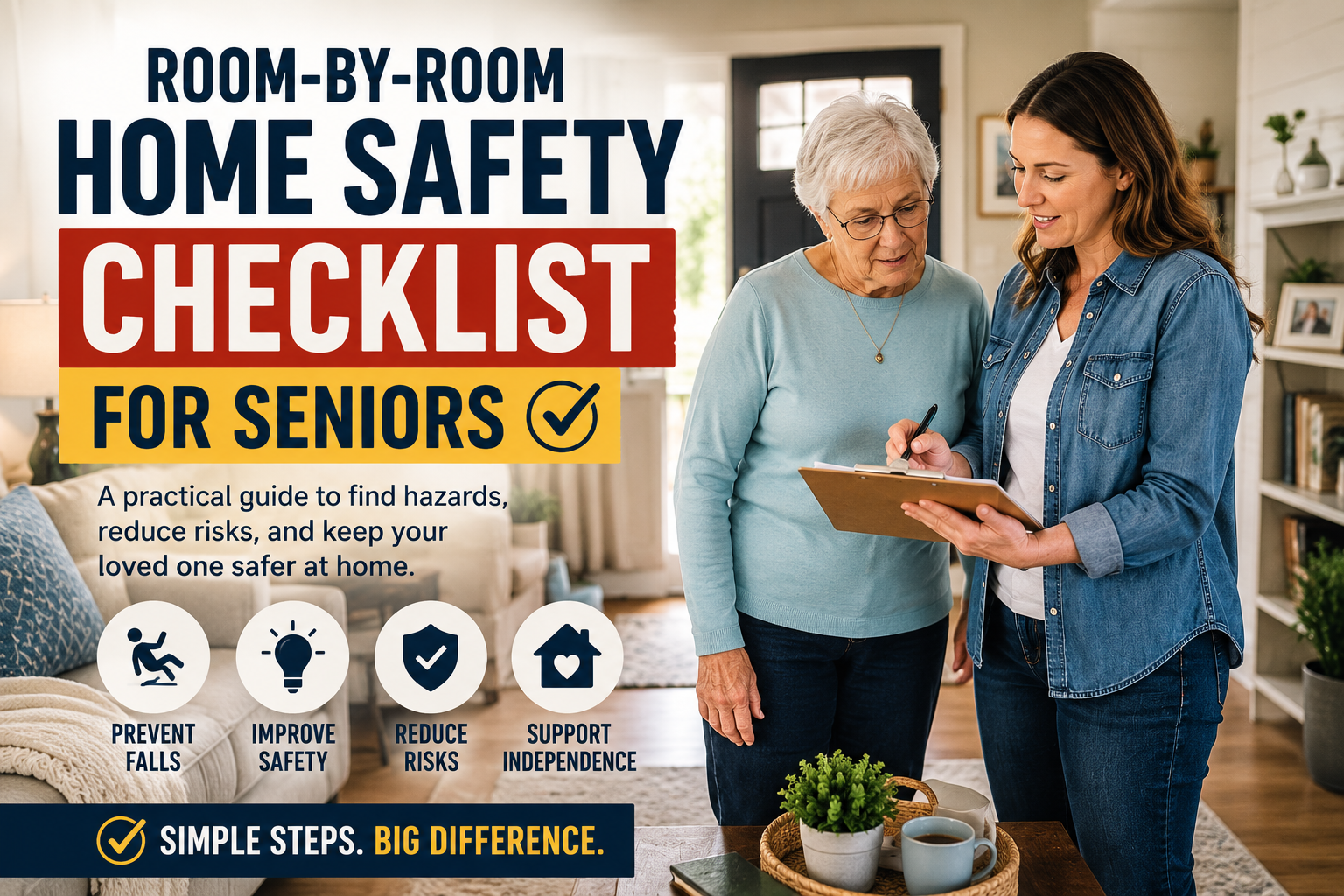
Room-by-Room Home Safety Checklist for Seniors

Room-by-Room Home Safety Checklist for Seniors

If you are helping an older parent stay at home longer, a home safety checklist for seniors becomes much easier to use when you take a room-by-room approach. Instead of trying to solve home safety as one big issue, you can walk through the house one space at a time, spot the most meaningful risks, and decide what to fix first.

That practical approach matters. Many families know they should make the home safer, but they are not sure where to begin. A room-by-room inspection gives you something concrete to do during a visit. It also helps you focus on what your parent actually uses every day instead of buying random gadgets that may not solve the real problem.

Quick Answer: A room by room home safety checklist for seniors helps families identify fall risks, lighting problems, bathroom hazards, and daily safety issues before they become emergencies. The best approach is to inspect each room in order, fix high-risk hazards first, and then add simple technology only where it genuinely improves safety or independence.

This guide is built as a room-by-room walkthrough, not a broad discussion of senior safety. If you want a wider overview of planning, routines, and long-term support, our guide to making a home safer for an elderly parent living alone is the best companion piece. And if you are also thinking about longer-term decisions, this aging in place checklist helps you step back and review the bigger picture.

Table of Contents

  1. How to use this checklist
  2. Room-by-room home safety checklist for seniors at a glance
  3. Entryways
  4. Living Room
  5. Kitchen
  6. Bathroom
  7. Bedroom
  8. Hallways
  9. Stairs
  10. Outdoor Areas
  11. What to fix first
  12. FAQ
  13. Conclusion

How to Use This Checklist

The goal is not to judge the home. The goal is to notice friction, risk, and unnecessary effort.

As you move through each room, ask three simple questions:

  1. Is there a trip, slip, or fall risk here?
  2. Is anything hard to reach, hard to see, or hard to use?
  3. Would a simple change make daily life safer without making the home feel clinical?

If you want a more specific room-by-room fall safety check, our dedicated fall prevention guide goes deeper on the hazards most likely to lead to stumbles and home injuries.

It helps to observe real routines when possible. Watch how your parent answers the door, gets up from a chair, makes coffee, uses the bathroom at night, or carries laundry. Those ordinary moments reveal more than a quick visual scan. If your family is also looking at hands-free support for reminders, lighting, or quick check-ins, our guide on how Alexa can help seniors live independently explains where voice assistance fits most naturally.

Family Tip: Bring a notebook or phone and write down problems in the order you see them. Families usually remember the dramatic hazards, but they forget the small repeated issues like poor night lighting, awkward reaching, or a chair that is too low to stand from easily.

Room-by-Room Home Safety Checklist for Seniors at a Glance

Room Main Risk What to Check First Fix
Entryways Trips, poor lighting, visitor safety Mats, steps, railings, locks, visibility Remove slipping hazards and improve lighting
Living Room Falls during daily movement Rugs, cords, furniture spacing, seating height Clear walking paths and stabilize seating
Kitchen Reaching, bending, heat, clutter Shelf height, rugs, task lighting, appliance access Move daily items to easy-reach storage
Bathroom Slips and transfer difficulty Shower entry, grab support, mats, night lighting Add non-slip support and safe grab points
Bedroom Nighttime falls Bed height, path to bathroom, bedside lighting Clear the night path and add light
Hallways Repeated daily trip hazards Lighting, clutter, flooring transitions Keep pathways fully open and well lit
Stairs High-consequence falls Handrails, visibility, carrying loads Repair railings and reduce stair dependence
Outdoor Areas Uneven surfaces and poor visibility Paths, steps, debris, mailbox route Improve traction, lighting, and support

Entryways

The front and back doors are often overlooked, but they matter because they combine balance, lighting, weather, visitors, and security.

Check these points

  • Is the path to the door clear and even?
  • Are there loose mats, raised thresholds, or cracked steps?
  • Is there strong lighting at the door and on the walkway?
  • Are railings stable and easy to grip?
  • Can your parent see who is outside before opening the door?
  • Is the lock easy to use without hand strain?

First fixes to prioritize

  • Replace slippery or curled-up mats.
  • Improve lighting at the doorstep and along the path.
  • Repair unstable steps or railings.
  • Add a clearly visible house number for emergency access.
  • Consider a simpler lock or keyless entry if keys are becoming difficult.

Helpful technology

If front-door uncertainty is part of the problem, a smart doorbell can help. It gives families and seniors a better view of who is outside without rushing to open the door. Our guide to the best smart doorbells for elderly parents in 2026 is useful if that becomes a priority.

Living Room

The living room is usually where older adults spend a large part of the day, so small hazards here create repeated risk.

Check these points

  • Are there rugs that slide or bunch up?
  • Are power cords crossing walking paths?
  • Is there enough space between furniture to move safely?
  • Is seating too soft, too low, or hard to stand up from?
  • Is the remote, lamp, phone, or charger within easy reach?
  • Is glare making it harder to read or move around confidently?

Quick checklist

  • Clear walking path
  • Stable seating with arm support
  • Good evening lighting
  • No cords across the floor
  • Phone or emergency contact tool within reach

Common Mistake: Families often focus on dramatic risks like stairs and ignore the chair, rug, or lamp setup used ten times a day. Repeated small hazards in the living room can create more risk than a problem area used only occasionally.

Kitchen

The kitchen is one of the most important rooms in any room by room home safety checklist for seniors because it combines heat, sharp tools, standing, reaching, and distractions.

Check these points

  • Are frequently used items stored too high or too low?
  • Does your parent need a stool to reach daily items?
  • Are there rugs near the sink or stove?
  • Is the lighting strong enough over work surfaces?
  • Are knobs, handles, and appliances easy to use?
  • Is there clutter on counters that reduces workspace?

First fixes to prioritize

  • Move everyday dishes, food, and cookware to easy-reach shelves.
  • Remove the need for step stools when possible.
  • Improve task lighting over prep and cooking areas.
  • Keep floors dry and clutter-free.
  • Simplify the setup around the kettle, microwave, or coffee maker if those are used every day.

Watch for hidden risk

Sometimes the issue is not cooking skill. It is fatigue, multitasking, or bending. A parent may still cook well but struggle when lifting heavy pans, reaching overhead, or remembering whether something was left on.

Bathroom

If the bathroom is the highest-risk room in the home, review bathroom safety for seniors in more detail before choosing products or larger changes.

Bathrooms deserve extra attention because they combine slippery surfaces, quick position changes, and privacy. Families often underestimate how risky this room becomes after one bad night, one dizzy moment, or one rushed shower.

Check these points

  • Is the floor slippery when wet?
  • Is there support near the toilet and shower?
  • Is stepping into the tub or shower difficult?
  • Are towels, toiletries, and toilet paper easy to reach?
  • Is the lighting strong enough at night?
  • Is the bath mat stable and non-slip?

Bathroom safety checklist

  • Safe shower entry
  • Reliable grip support
  • Good night lighting
  • No slippery rugs or mats
  • Daily items within easy reach

If bathroom risks are showing up together with wider home hazards, it helps to zoom out and review the bigger strategy in our guide on how to make a home safer for an elderly parent living alone.

Bedroom

The bedroom affects safety more than many families expect because night movement is often when balance is worse and reaction time is slower.

Check these points

  • Is the bed too high or too low?
  • Is there a clear path from bed to bathroom?
  • Is a lamp easy to reach without twisting or leaning?
  • Is a phone or emergency alert device nearby?
  • Are clothes, shoes, and essentials easy to access?
  • Is there clutter near the bed or dresser?

First fixes to prioritize

  • Clear the nighttime path completely.
  • Add soft bedside lighting or motion-activated lighting.
  • Keep supportive shoes or slippers nearby.
  • Place emergency contacts, phone chargers, and call tools where they are truly usable.
  • Reduce bending and reaching in closets or drawers by moving the most-used items higher.

Hallways

For evening routines, families can also improve safety after dark by reviewing nighttime lighting, hallway paths, and bedroom-to-bathroom movement together.

Hallways often get ignored because they seem simple, but they connect the most-used parts of the home. If a hallway is dim, narrow, or cluttered, the risk repeats all day.

Check these points

  • Is the hallway well lit from one end to the other?
  • Are there narrow points caused by furniture, baskets, or storage?
  • Are transitions between flooring surfaces smooth?
  • Are night lights needed?

First fixes to prioritize

  • Add lighting where shadows make walking harder.
  • Remove decorative furniture that narrows the path.
  • Keep hallway floors clear at all times, not just when guests visit.

Stairs

If the home has stairs, this section needs a careful review even if your parent usually does fine.

For a deeper review, use our stair safety for elderly parents guide after you finish this room-by-room inspection.

Check these points

  • Are handrails present on at least one side and solidly attached?
  • Are the stair edges visible?
  • Is the lighting bright enough at both top and bottom?
  • Are items being carried up and down regularly?
  • Is your parent avoiding the stairs or moving differently on them?

First fixes to prioritize

  • Improve visibility on each step.
  • Repair loose railings immediately.
  • Remove objects stored on stairs.
  • Reorganize the home to reduce the need for repeated stair use.

Outdoor Areas

Outdoor safety affects independence more than many families realize. A parent who feels unsteady outside may start avoiding mail, fresh air, neighbors, and appointments.

Check these points

  • Are paths uneven, cracked, or poorly lit?
  • Are leaves, hoses, or garden items creating hazards?
  • Is there stable support at steps or ramps?
  • Is the route to the mailbox or car safe?
  • Does the door area feel secure after dark?

First fixes to prioritize

  • Improve pathway lighting.
  • Clear seasonal debris quickly.
  • Repair uneven surfaces.
  • Add stable support where needed.
  • Make sure shoes used outside have good traction.

What to Fix First

Not every issue has to be solved at once. Start with the problems that combine high risk and high frequency.

  1. Bathroom slipping and transfer risks
  2. Nighttime lighting problems
  3. Entryway and front-door safety
  4. Rugs, cords, and clutter in main walking paths
  5. Stair instability or repeated stair strain

After that, look at what creates daily frustration. A fix that removes repeated struggle often improves both safety and confidence. If the checklist suggests the home needs support beyond room hazards alone, review the broader aging in place checklist for families. Optional smart tools can also help once the basics are handled, and our guide to smart home devices that help seniors stay independent is a good next step.

FAQ

What is a room by room home safety checklist for seniors?

It is a practical way to inspect each part of the home for fall risks, lighting problems, hard-to-reach items, and everyday safety issues that affect older adults.

How is this different from a general senior home safety guide?

A general guide explains principles. A room-by-room checklist is more tactical. It helps families walk through the home and identify specific issues in each space.

Which room should families check first?

Bathrooms are often the highest priority because they combine wet surfaces, transfers, bending, and privacy. Entryways, bedrooms, and stairs are also common high-risk areas.

Do families need smart devices right away?

No. Start by removing hazards and improving lighting, layout, and access. Technology works best after the main physical risks are already under control.

How often should a room by room home safety checklist for seniors be repeated?

A good rule is every few months, or anytime there is a fall, hospitalization, major health change, or a visible shift in balance and routine.

Conclusion

A room by room home safety checklist for seniors turns a vague concern into a practical review. Instead of asking whether the home feels generally safe, families can inspect each space, identify the highest-risk problems, and make useful changes in the right order.

That approach is more realistic, more respectful, and usually more effective. It helps older adults stay independent without making the home feel medical or overcontrolled, and it gives families a clearer path forward: notice the risks, fix the obvious ones first, and build from there.

Smart doorbell for elderly parents showing video alerts and front door safety features

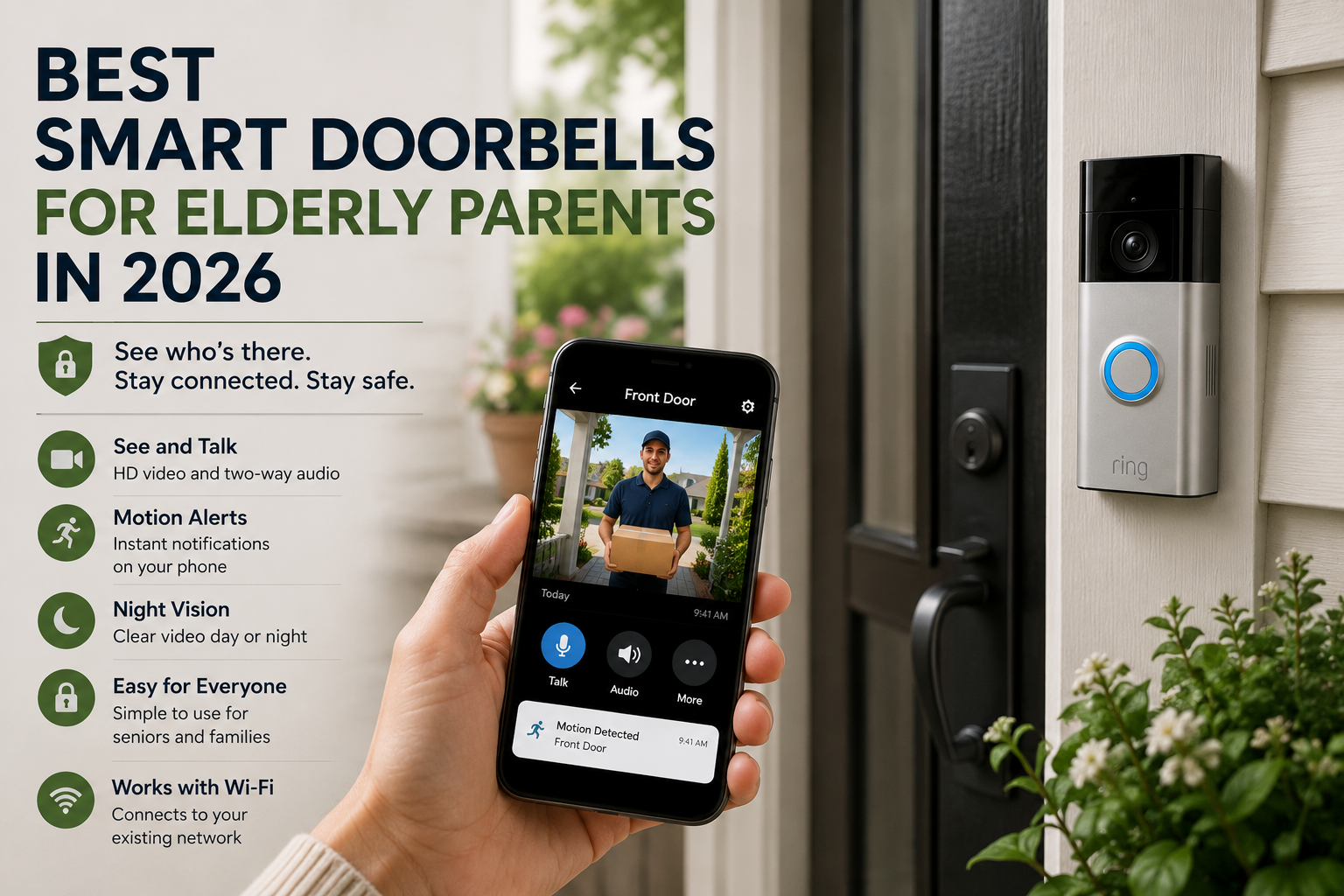
Best Smart Doorbells for Elderly Parents in 2026

Best Smart Doorbells for Elderly Parents in 2026

Choosing a smart doorbell for an older parent is rarely about gadgets for the sake of gadgets. Most families are trying to solve a more human problem: how do you help someone answer the door safely, avoid scams, and feel less vulnerable without making daily life more complicated? A good smart doorbell can support that goal, but only if it fits the way your parent actually lives.

That matters because the best device on paper is not always the best one in practice. A model with dozens of settings may look impressive, but if the app is confusing or the alerts are too noisy, it can create friction instead of peace of mind. For many families, the right choice is the one that makes the front door easier to manage while respecting independence.

In this guide, we will break down what makes certain smart doorbells a better fit for elderly parents, which features matter most, and how to decide whether a video doorbell belongs in a broader aging-in-place plan. If you are still building a full safety strategy, this guide pairs well with How to Make a Home Safer for an Elderly Parent Living Alone and What Is Aging in Place and Why More Families Are Choosing It.

Table of Contents

  • Why smart doorbells matter for older adults
  • Who benefits most from a smart doorbell
  • The features that actually matter
  • How to choose the best smart doorbell for your family
  • Setup, privacy, and daily use
  • When a smart doorbell is not the first device to buy
  • Frequently asked questions

Why smart doorbells matter for older adults

The front door is one of the most stressful parts of living alone for many older adults. It is where package deliveries happen, where neighbors stop by, and where unwanted visitors sometimes show up. It is also where hesitation can become a safety issue. Someone with arthritis may move slowly. Someone with hearing loss may miss the knock. Someone with memory concerns may open the door before thinking through whether it is safe.

A smart doorbell can help by making the first decision easier. Instead of opening the door immediately, the person inside can see who is there, speak through two-way audio, or ignore the visitor altogether. Adult children can also receive alerts when needed, which adds a layer of oversight without requiring constant in-person supervision.

This is one reason smart doorbells often fit naturally into the same category as locks, lighting, sensors, and other smart home devices that help seniors stay independent. They reduce small daily risks, and small risks are what usually add up over time.

Who benefits most from a smart doorbell

Not every older adult needs one. The biggest benefit usually shows up when at least one of these situations is true:

  • Your parent lives alone and answers the door without checking first.
  • They have mobility limits that make getting to the door slow or uncomfortable.
  • They receive frequent deliveries, home health visits, or neighborhood traffic.
  • They feel nervous about unexpected visitors or recent scam attempts.
  • Family members want a simple way to confirm activity around the front entrance.

A doorbell can also help after a hospital stay or during a transition period when a parent is rebuilding confidence at home. In those cases, the device is not just a security tool. It becomes part of a broader routine that helps the household feel more predictable and manageable.

The features that actually matter

Marketing pages highlight a lot of extras, but families supporting older adults should focus on a shorter list. These are the features most likely to make a real difference.

1. Clear live video

The image should be easy to understand, not just technically sharp. Wide-angle coverage helps, but clarity in daylight and at night matters more than impressive specifications. Your parent should be able to glance at the video and quickly recognize whether the person outside is a friend, a delivery driver, or someone unfamiliar.

2. Simple two-way audio

Two-way talk is one of the most useful features because it lets someone respond without opening the door. But it only helps if the audio is clear, the delay is minimal, and the controls are simple. If you need three taps and a settings menu every time someone rings, it will not get used.

3. Reliable alerts

The best smart doorbells do not overwhelm the household with notifications. Motion alerts should be adjustable so the app is not buzzing every time a car passes by. Reliable, selective alerts are especially important when caregivers or adult children are also connected to the device.

4. Easy caregiver access

Many families need more than one person to view alerts. A daughter may handle day-to-day check-ins, while a son lives farther away but wants occasional visibility. Shared access needs to be straightforward and secure. If only one phone can realistically manage the doorbell, the system becomes harder to support over time.

5. Good night visibility

Evening visitors, porch deliveries, and poor outdoor lighting are common. A smart doorbell that performs badly at night loses value fast. Families should prioritize consistent night visibility over flashy app extras.

6. Flexible power options

Some households already have doorbell wiring. Others do not. A battery model can be easier in the short term, but it introduces one more maintenance task. Wired doorbells reduce battery management but may require a cleaner installation plan. The best option is usually the one your family can realistically maintain for years, not weeks.

7. A low-friction app

If a caregiver is going to manage the system from a phone, the app experience matters as much as the hardware. Fast loading, easy notification settings, and clear playback controls all reduce frustration. If you already use a voice assistant ecosystem at home, that can also shape the decision. Families who rely on voice routines may want to think about how the doorbell fits with a broader setup like the one explained in Alexa for Seniors: Complete Beginner’s Guide.

How to choose the best smart doorbell for your family

The right doorbell depends less on reviews and more on the situation at the front door. A practical decision usually comes down to six questions.

How often does your parent answer the door alone?

If the answer is all the time, then ease of use becomes the top priority. The device has to help in a real-world moment when someone is standing outside and your parent needs a quick, confident way to respond.

How comfortable are they with phones and apps?

Some older adults are perfectly capable of using an app themselves. Others will rely entirely on a family member. This affects which interface matters most and whether the device should be treated as a personal tool or a caregiver-supported safety tool.

Do you need recordings, or just live alerts?

Some families care mainly about seeing who is there in the moment. Others want video history for missed deliveries, suspicious visits, or pattern tracking. That changes the value of subscription features and storage options.

Will the device be part of a bigger safety setup?

A smart doorbell is often more useful when it works alongside locks, lights, sensors, or voice tools. If your family is building a full home safety plan, the doorbell should be evaluated as one part of a larger system rather than a stand-alone purchase.

How much maintenance is acceptable?

Battery charging, app troubleshooting, Wi-Fi reconnects, and subscription changes all count as maintenance. Choose the option your family can realistically manage without creating future resentment or confusion.

What problem are you actually trying to solve?

This is the most important question. Some families say they want a smart doorbell, but what they really need is a better lock, improved entry lighting, or a more complete routine around front-door screening. If the core problem is fall risk indoors or medication adherence, another device may deserve priority first. If medication routines are creating more day-to-day stress than the front door, our guide to medication reminder devices for seniors can help you compare the main support options.

Setup tips that reduce frustration later

Installation is only half the job. Long-term success depends on how you configure the device in the first week.

  • Set motion zones so passing traffic does not trigger constant alerts.
  • Name the device clearly inside the app if more than one caregiver uses it.
  • Decide who is responsible for batteries, settings, and app notifications.
  • Test two-way audio with your parent standing inside and outside the home.
  • Show your parent what to do when they recognize a visitor and when they do not.

It also helps to create a simple household rule, such as If you do not know the person, speak through the doorbell first. That rule can be more valuable than any technical feature because it turns the device into a routine rather than just a gadget.

Privacy and trust matter too

Families sometimes focus so much on safety that they forget about dignity. A smart doorbell should support independence, not feel like surveillance imposed from a distance. If your parent feels monitored instead of supported, they may resist using the system or ask you to disconnect it.

The best approach is to explain the purpose clearly. The goal is not to watch every movement. The goal is to make the front door easier and safer to manage. Be specific about who can view alerts, when recordings are stored, and why the device is being installed.

That conversation is often easier when it fits into a bigger aging-in-place discussion. If your family has not had that conversation yet, the article on why more families are choosing aging in place can help frame it in a respectful way. For a more practical review of what to check around the home, our aging in place checklist is a useful follow-up.

When a smart doorbell should not be your first purchase

A doorbell is only one piece of the decision, so families should first clarify when an elderly parent needs smart home help and when a simpler habit change is enough.

A smart doorbell is helpful, but it is not always the first thing to buy. If your parent has major indoor fall risks, poor lighting, or trouble remembering medication, those issues may deserve attention first. In some homes, a voice assistant, motion lighting, or a simpler alert device delivers more value right away than a front-door camera.

This is why it is useful to think in layers. Start with the biggest daily risks, then add tools that reduce those risks without making life more complicated. For some households, the front door is high on that list. For others, it comes after medication routines, nighttime mobility, or communication support.

So what are the best smart doorbells for elderly parents in 2026?

The best smart doorbells for elderly parents in 2026 are the ones that do five things well: they show a clear view of the front door, allow easy two-way conversation, send reliable alerts, support caregiver access, and stay simple enough to use every day. The right device is not necessarily the one with the most features. It is the one that reduces hesitation and helps your parent handle the front door with more confidence.

If your family is comparing options, use this article as a filter. Ignore fancy extras at first and focus on daily usability, clear audio, night visibility, and low-maintenance setup. That is where the practical difference usually shows up.

FAQ

Are smart doorbells good for seniors who live alone?

They can be very useful when unexpected visitors, package deliveries, or scam concerns are common. The benefit is strongest when the doorbell is simple to use and part of a wider safety plan.

Do elderly parents need to use the app themselves?

Not always. In many families, the adult child manages the app while the older adult uses the doorbell mainly as a safer way to screen visitors. Shared access is often ideal.

Is a battery or wired smart doorbell better?

Battery models are easier to install in some homes, while wired models reduce the maintenance of charging. The better choice depends on the home and on who will maintain the device.

Can a smart doorbell replace other home safety tools?

No. It helps with front-door awareness, but it does not replace indoor fall prevention, medication support, lighting, locks, or communication tools.

What should families look for first?

Prioritize clear video, easy audio, reliable notifications, good night visibility, and a caregiver-friendly app. Those features matter more than long lists of premium extras.

Older man living independently at home as part of an aging in place lifestyle

What Is Aging in Place and Why More Families Are Choosing It

What Is Aging in Place and Why More Families Are Choosing It

The phrase aging in place has become much more common in recent years, and for good reason. More families are trying to help older adults stay in their own homes for longer instead of moving immediately into assisted living or other care settings. For many people, home represents familiarity, dignity, routine, and comfort. Leaving it can feel emotionally difficult even when the move is well intended.

But aging in place is not simply about staying put. It is about making sure an older adult can live safely, comfortably, and realistically in the place they call home. That includes the physical home itself, the daily support available, the person’s health and mobility, and the tools that can help reduce friction in everyday life.

When families understand what aging in place actually means, they can make better decisions. Instead of treating it as an emotional debate between “stay home” and “move out,” they can evaluate whether the current setup truly supports safety, independence, and quality of life.

Table of Contents

What Aging in Place Means

Aging in place means an older adult continues living in their own home or a familiar home environment as they age, rather than relocating simply because they are getting older. The idea is not that nothing changes. In fact, successful aging in place usually requires thoughtful changes over time.

Those changes may include safer lighting, fewer fall hazards, support from family or caregivers, simpler technology, and routines that match changing physical or cognitive needs. In other words, aging in place is not passive. It is an active plan.

That is an important distinction, because some families treat staying at home as the default simply because no one is ready to make a different decision. True aging in place involves preparation, not avoidance.

Why Families Choose It

Families often choose aging in place because home carries emotional value. A parent may know the neighborhood, trust the local routines, and feel calmer in a familiar space. That comfort can support confidence and independence in ways that are hard to measure.

There are practical reasons too. Moving can be expensive, stressful, and disruptive. In some cases, a parent may not need a full care setting and may do very well with a safer home, better routines, and occasional outside help.

Independence matters

Many older adults want control over their own schedule, meals, sleep, and daily routines. Aging in place often preserves more of that autonomy than a major move does.

Familiarity reduces stress

Even simple tasks become harder when someone is adjusting to a new environment. Familiar spaces can reduce confusion and emotional strain, especially when routines are already well established.

Family support can be built around the home

Some families live nearby, visit regularly, or already help with groceries, appointments, and check-ins. In those situations, supporting a parent at home may feel more natural than a sudden transition elsewhere.

Benefits and Limitations

Aging in place offers real benefits, but it is not always the right fit forever. The most helpful conversations are the honest ones.

Benefits

Older adults may feel more comfortable, more in control, and more emotionally settled in familiar surroundings. Families may also find that a parent does better at home when support is added gradually and thoughtfully.

Limitations

Home can still become unsafe. Stairs, bathrooms, clutter, isolation, memory issues, and emergency response concerns can all change the equation. A home that was manageable last year may not be realistic after a fall, illness, or noticeable decline in mobility.

This is why aging in place should never be framed as an all-or-nothing promise. It works best when families treat it as a plan that can be adjusted as needs change.

How the Home Needs to Change

As mobility changes, stair safety for elderly parents may need its own review because steps, lighting, handrails, and fatigue can create risk together.

A safer home is often the foundation of successful aging in place. In many cases, simple upgrades make a major difference. Better lighting, non-slip bathroom changes, grab bars, easier storage, cleaner walkways, and more predictable routines can all improve daily life. Families who want more practical fall prevention steps can use our room-by-room guide to review those risks more closely.

Families should think in terms of friction. What makes daily life harder than it needs to be? Is it poor visibility at night? Hard-to-reach shelves? A front step that feels unstable? A confusing thermostat? Once those friction points are identified, the path forward becomes clearer.

If you want a full home-focused checklist, our guide on how to make a home safer for an elderly parent living alone goes deeper into specific home safety priorities.

Where Smart Home Technology Fits

Smart home technology does not create successful aging in place by itself, but it can support it in very practical ways. The right tools can reduce physical effort, improve reminders, support communication, and add reassurance for families.

Lighting and visibility

Motion-triggered or scheduled lighting can make nighttime movement safer and reduce the need to search for switches in the dark.

Reminders and voice support

Voice assistants can help with routines, reminders, music, calling, and home control. For some seniors, this is one of the simplest ways to make daily life feel easier. Our Alexa for seniors guide explains how that works in practice.

Awareness and peace of mind

Door sensors, activity notifications, and simple check-in tools can help families feel more confident without making the home feel heavily monitored. Families who need a more privacy-first setup can also review how to monitor an elderly parent remotely without invading privacy.

Gradual adaptation

One of the best things about smart home tools is that they can be added gradually. A family does not need to rebuild the entire home at once. They can solve one daily problem at a time. If you want an overview of useful device categories, see our guide to smart home devices for seniors.

When to Reassess

Aging in place should be revisited regularly, not only when there is a crisis. Reassessment becomes especially important after a fall, hospitalization, increasing confusion, wandering, medication issues, or caregiver burnout.

Families should ask practical questions. Is the current setup still safe? Is the parent managing daily routines with confidence? Are support needs increasing faster than the home can reasonably accommodate? Are family members becoming overwhelmed?

Reassessment is not a failure. It is responsible planning. A parent may continue living at home for years with modest changes, or they may reach a point where a different environment is kinder and safer. Both outcomes can be thoughtful and respectful.

Frequently Asked Questions

What does aging in place mean in simple terms?

It means an older adult continues living at home as they age, with whatever support, home changes, and routines are needed to do that safely and comfortably.

Is aging in place always the best option?

No. It can be an excellent option in the right situation, but it depends on the person’s needs, the safety of the home, available support, and how realistic the arrangement remains over time.

How does smart home technology help with aging in place?

It can improve lighting, reminders, communication, and general awareness. The right tools may reduce stress and support independence, especially when they solve specific daily problems.

When should families stop trying to make aging in place work?

When the home becomes unsafe, the parent’s needs change significantly, or the support required is no longer realistic or healthy for everyone involved, it is time to reassess.

Is aging in place only about safety?

No. Safety is essential, but comfort, dignity, routine, emotional wellbeing, and connection all matter too.

Conclusion

Aging in place is not just a housing choice. It is a care strategy that tries to preserve independence, familiarity, and quality of life while adapting to changing needs over time. For many families, it can be a thoughtful and realistic path forward when it is supported with honesty, planning, and the right tools.

The most successful aging-in-place plans combine safer home design, clear routines, communication, and smart technology that removes friction instead of adding it. If you are building that foundation now, continue with our guides to home safety for elderly parents and smart home devices for seniors.

Elderly woman safely living alone at home with smart home security devices

How to Make a Home Safer for an Elderly Parent Living Alone

How to Make a Home Safer for an Elderly Parent Living Alone

When an older parent lives alone, safety becomes a daily concern for the whole family. Adult children often find themselves asking the same questions: Is the home still safe? What happens if there is a fall? How can I help without taking away independence? The good news is that home safety for elderly parents does not have to mean turning the house into a hospital-like space.

In many cases, the best approach is a combination of simple home changes, thoughtful routines, and smart home technology that feels easy rather than intimidating. A safer home should support confidence, not create more stress. The goal is to help an older adult stay comfortable, maintain dignity, and keep everyday life manageable.

This guide walks through practical ways to improve safety room by room, explains where smart tools can help, and shows how families can reduce risk without becoming overly controlling. If you are also thinking about long-term independence, our aging in place guide is a helpful next read.

Table of Contents

Start With the Biggest Risks

Before buying any technology, step back and look at the real hazards inside the home. Families sometimes jump straight to cameras or alerts without addressing the obvious issues that create risk every day. Start with the spaces where accidents are most likely to happen: entryways, bathrooms, kitchens, stairs, and bedrooms.

Ask practical questions. Is the lighting strong enough at night? Are there loose rugs? Is the bathroom slippery? Are there cords across walking paths? Is the parent climbing on stools to reach shelves? These small issues are often more urgent than more advanced devices. For a more detailed walkthrough by space, use our room-by-room home safety checklist for seniors while you inspect the house.

It helps to think in terms of daily routines rather than isolated objects. Your parent may be completely steady during the day but less stable at night when walking to the bathroom. They may cook safely most of the time but become distracted when answering the phone or dealing with medication schedules. Understanding the pattern matters more than making assumptions.

Focus on prevention before monitoring

Monitoring tools can help you respond faster when something goes wrong, but prevention lowers the chance of an incident in the first place. The strongest home safety plan starts with reducing hazards, then adds technology to support awareness, reminders, and communication.

Improve Fall Prevention First

If the parent is less steady after dark, it is worth checking how to reduce nighttime fall risks before relying only on daytime safety fixes.

Because bathroom slips are such a common concern, families can also use a senior bathroom safety checklist when that room is the first place that needs attention.

Falls are one of the biggest reasons families start rethinking an aging parent’s living situation. That does not mean every older adult is fragile, but it does mean the home should be set up to support balance, visibility, and easy movement. If you want a more detailed fall prevention checklist for seniors, our room-by-room guide walks through the most common hazards to check first.

Improve lighting in the places people actually walk

Good lighting is one of the simplest upgrades you can make. Focus on hallways, stair edges, bathrooms, bedside areas, and entrances. Motion-activated night lights are especially helpful because they reduce the need to reach for switches in the dark.

Smart bulbs can help here too, especially if they can be set on schedules or controlled by voice. If your parent is open to voice tools, our Alexa for seniors guide explains how voice commands can make everyday tasks easier.

Remove trip hazards without making the home feel unfamiliar

Many families know they should remove clutter or rugs, but older adults may resist if changes feel abrupt or unnecessary. Instead of saying, “This is dangerous,” try framing it around comfort and ease. A flatter rug, a cleaner path, or fewer objects near the bed can feel like a quality-of-life improvement rather than a restriction.

Support safer movement in the bathroom

Bathrooms deserve extra attention because slippery surfaces and fast transitions from sitting to standing can create problems. Non-slip mats, grab bars, a shower seat, and a handheld shower head can all reduce strain. If the toilet is low, a raised seat may make standing easier.

Think about reach and bending

Many falls happen during ordinary tasks such as reaching overhead or bending to lower cabinets. Reorganize the home so frequently used items are stored between waist and shoulder height. If something requires a stool, it probably needs a new location.

Make Entry and Exit Safer

The front door area is often overlooked, but it matters for safety, deliveries, visitors, and emergencies. Good visibility, solid locks, and easy communication can reduce anxiety for both seniors and family members.

Check steps, thresholds, and railings

Even a single uneven step can become a daily risk. Make sure handrails are sturdy, the path is well lit, and the threshold is not creating an unnecessary stumble point. If packages regularly pile up near the entry, clear that space too.

Choose simple access tools

Smart locks, door sensors, and video doorbells can be useful, but only if they solve a real problem. A smart lock may help if a parent often forgets keys or if family caregivers need occasional access. A door sensor may help if wandering, nighttime exits, or missed entries are a concern. The best choice depends on the person, not the trend.

If you want a broader overview of useful tools without jumping into specific product recommendations yet, our article on smart home devices for seniors will help you compare the main categories.

Use Smart Technology With a Clear Purpose

Smart home technology works best when it supports a clear need. Families often feel pressure to “install something” for peace of mind, but random devices can create more confusion than support. Every piece of technology should answer one practical question.

Useful categories to consider

Motion sensors can show whether there is normal activity in key parts of the home. Door sensors can help track entry and exit. Smart lighting can improve nighttime safety. Voice assistants can make reminders and calling easier. Cameras can be helpful in limited, carefully chosen situations, especially near entrances, but privacy should be respected.

Not every home needs every tool. A senior who is mentally sharp but physically slower may benefit from lighting and fall-risk prevention. A parent with memory challenges may benefit more from reminders, door notifications, or daily routine prompts.

Keep the setup invisible when possible

The less complicated the system feels, the more likely it is to be accepted and used. Seniors usually do better with tools that work in the background rather than devices that demand constant app management or technical troubleshooting.

Do not confuse surveillance with support

Family members often worry so much that they lean toward constant visual monitoring. That can damage trust. In many homes, non-camera tools provide enough reassurance without making the parent feel watched. A safer home should still feel like home.

Create a Simple Safety Routine

Technology helps, but routines hold everything together. A home becomes safer when there is a repeatable system for daily check-ins, emergency communication, and maintenance.

Set regular check-in habits

Many families benefit from a simple rhythm such as a morning text, an evening call, or a voice assistant reminder that prompts the parent to check in. The routine should feel supportive, not invasive.

Write down what to do in an emergency

Emergency numbers, medication lists, building access details, and key contacts should be easy to find. Keep a printed copy in the home even if family members also store it digitally.

Test systems occasionally

Smart alerts, voice calling features, and notifications should be tested now and then to make sure they still work. Batteries die, Wi-Fi changes, and routines drift. A quick check every month can prevent surprises later.

Review the home every few months

Needs change over time. A parent who does well today may need more support after an illness, after a fall, or simply with advancing age. Reassessing the home every few months keeps the safety plan realistic.

Avoid Common Mistakes

Families with good intentions still run into avoidable problems. One common mistake is introducing too much technology at once. Another is choosing tools based on what seems impressive instead of what the senior will actually use.

A third mistake is treating safety conversations like a one-time decision. Most older adults want to be heard, and they are far more likely to accept support when they feel included. Ask what worries them, what feels frustrating, and what changes would make daily life easier.

It is also important not to make medical promises about technology. Home tools can improve awareness, convenience, and response time, but they are not a substitute for medical care, diagnosis, or emergency services.

Frequently Asked Questions

What is the first thing to improve in a senior’s home?

Start with the biggest day-to-day hazards: poor lighting, slippery bathrooms, loose rugs, cluttered walkways, and hard-to-reach items. Small physical changes often reduce risk faster than advanced technology alone.

Do elderly parents need cameras inside the home?

Not always. Many families can improve safety with lighting, sensors, reminders, and check-in routines instead of indoor cameras. If cameras are used, they should be limited, clearly discussed, and respectful of privacy.

What smart home tools are most useful for seniors living alone?

It depends on the situation, but common starting points include motion-activated lighting, door sensors, voice assistants, medication reminders, and activity alerts in key areas of the home.

How can I help without making my parent feel controlled?

Frame safety changes around comfort, convenience, and independence. Involve your parent in decisions, explain the purpose of each change, and avoid adding tools that feel excessive or intrusive.

How often should a family review home safety?

Every few months is a good starting point, or sooner if there has been a fall, hospitalization, noticeable memory change, or increasing difficulty with everyday tasks.

Conclusion

Making a home safer for an elderly parent living alone is not about removing independence. It is about protecting it. The best results usually come from simple improvements, consistent routines, and smart tools that quietly reduce risk in the background.

If you begin with fall prevention, lighting, safer entryways, and a clear plan for communication, you will already be making a meaningful difference. From there, smart home technology can add peace of mind without overwhelming the person it is meant to help. Once you are ready to explore the bigger picture, continue with our guides to smart home devices for seniors and aging in place.