Aging in Place Checklist: 15 Things Every Family Should Review
Aging in place sounds simple when people say it out loud. Most families hear the phrase and think it means staying at home longer. That is true, but it is only the surface of the decision. In practice, aging in place works best when families review the home, the routine, the risks, and the support system before something urgent forces a rushed decision.
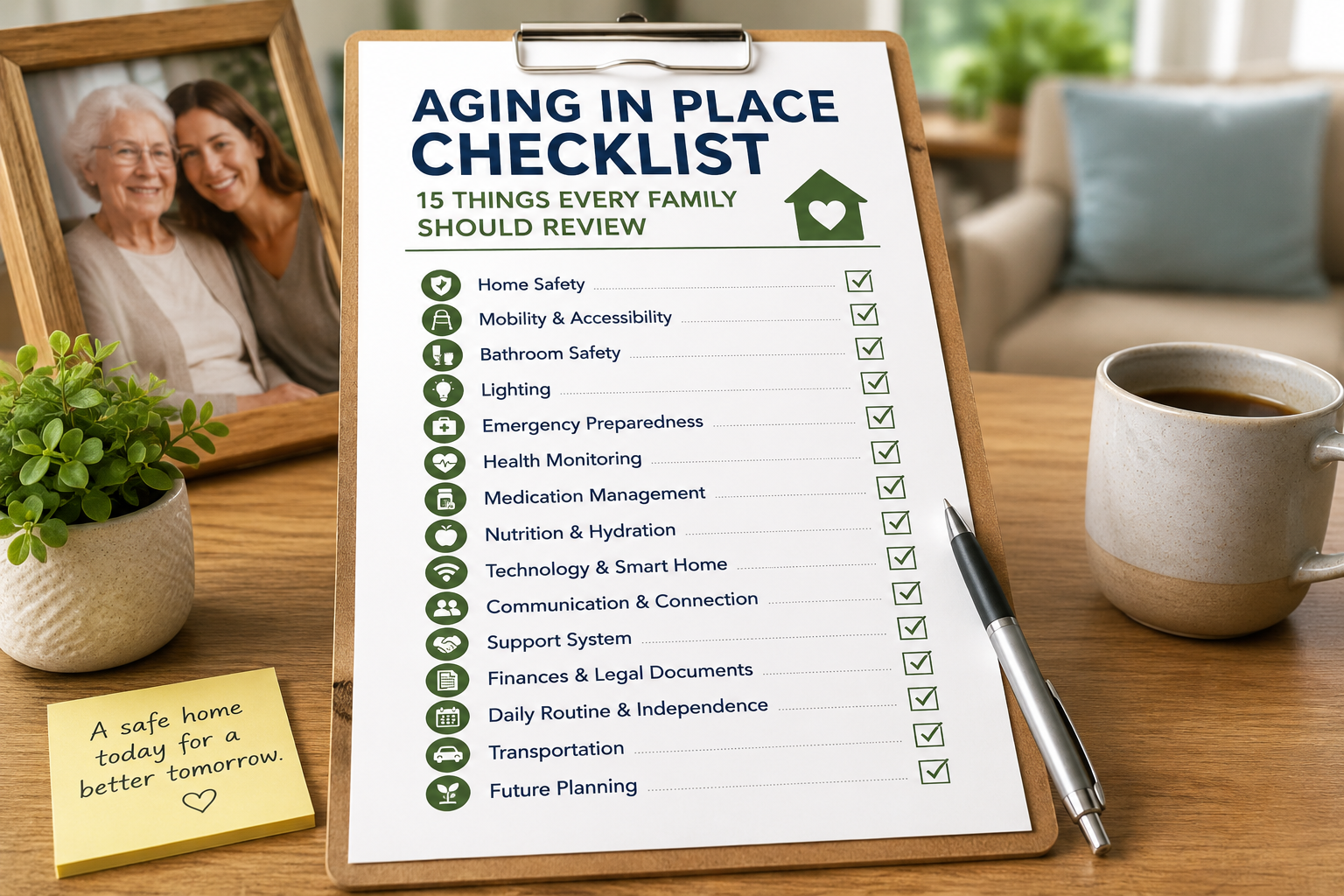
That is what this checklist is for. It is not a crisis document. It is a planning tool for families who want to look at the real conditions around an older adults daily life and figure out what needs strengthening now. Some items are physical, like lighting and stairs. Others are operational, like communication, medications, or who notices when routines start slipping.
If you are new to the topic, this article is the practical companion to What Is Aging in Place and Why More Families Are Choosing It. The earlier article explains the idea. This one helps you review whether the current setup truly supports it.
Table of Contents
- Why every family needs an aging in place checklist
- The 15 areas to review
- How to prioritize what to fix first
- How smart home technology fits into the checklist
- Frequently asked questions
Why every family needs an aging in place checklist
Families often wait too long because daily life still looks mostly fine. The parent is still living at home, meals are happening, and nothing catastrophic has happened yet. But aging in place usually succeeds or fails based on the accumulation of small details. One missed medication, one dark hallway, one hard-to-reach lock, one growing fear of strangers at the door, one week of exhaustion after a minor illness. None of those issues alone may force a move, but together they can make home feel fragile.
A checklist helps families move from vague worry to concrete planning. It turns I think Mom needs more support into specific observations and manageable next steps.
The 15 things every family should review
1. Entryway safety
Can your parent get in and out of the home safely in daylight, after dark, and in poor weather? Look at steps, railings, thresholds, outdoor lighting, uneven surfaces, and how hard the door is to manage physically. If the front door feels stressful, visitors and daily errands become harder immediately.
2. Visitor screening and front-door confidence
How does your parent handle unexpected visitors? Can they see who is there before opening the door? Do they feel pressure to answer quickly? This is where doorbells, locks, and communication habits matter. Families dealing with that issue directly should also review our guide on making a home safer for an elderly parent living alone.
3. Lighting quality throughout the home
Good lighting is not cosmetic. It affects balance, confidence, and whether someone avoids moving around the house at certain times. Review hallways, bathrooms, stair areas, bedside lighting, and the path from bed to toilet at night.
4. Fall-risk areas
Identify where slipping, tripping, or awkward movement is most likely. Rugs, cords, clutter, unstable furniture, steep stairs, low seating, and bathrooms are common problem areas. Families often underestimate how quickly a minor obstacle can become a major issue.
5. Bathroom usability
Bathrooms deserve a separate review because they combine hard surfaces, wet floors, bending, and privacy. Consider shower entry, grab support, lighting, seat height, towel placement, and whether basic supplies are easy to reach.
6. Bedroom setup
Is the bed too low or too high? Is there a clear path for nighttime movement? Is a phone, lamp, or call-for-help option within easy reach? A good bedroom setup reduces risk and also helps a person feel calmer at night.
7. Kitchen routine and appliance safety
Look beyond whether the kitchen is tidy. Can your parent prepare food without overreaching, lifting unsafely, or forgetting what is on the stove? Are the most-used items stored at an easy height? Can they see labels and controls clearly?
8. Medication management
Medication routines are one of the most important parts of staying at home successfully. Review how doses are organized, what happens when schedules change, and whether reminders are actually reliable. If this is becoming the weak point, our article on smart home devices that help seniors stay independent can help you think about support tools more broadly.
9. Communication and emergency contact access
Can your parent easily call or message someone if they are worried, confused, or need help? Is there a system that works from the rooms where they spend the most time? Communication should be easy before an emergency, not just during one.
10. Daily routine reliability
How stable is the day overall? Are meals regular? Are appointments remembered? Are bills, errands, and household tasks staying on track? A stable daily rhythm is often one of the strongest signs that aging in place is still working well.
11. Mobility inside the home
Watch how your parent moves from room to room. Are there places where they brace themselves against furniture? Do they avoid certain parts of the home? Do they move differently when tired? Those details matter more than formal statements like Im doing fine.
12. Comfort with technology
Technology can support independence, but only if it feels understandable. Review whether your parent is open to reminders, voice assistance, smart lighting, or simple monitoring tools. The goal is not to fill the home with devices. The goal is to use the few that solve real daily friction.
13. Family support capacity
Aging in place does not happen in isolation. Even when a parent lives alone, there is usually some form of family or caregiver support behind the scenes. Review who handles what now and whether that arrangement is realistic for the next six to twelve months.
14. Transportation and community access
Can your parent get groceries, attend appointments, and stay socially connected? Independence at home can weaken quickly if the outside world becomes too hard to reach.
15. Future change planning
Finally, ask what happens if one variable changes. What if mobility declines? What if a spouse becomes unavailable? What if medications increase? A strong aging in place plan includes a next step before it becomes urgent.
How to prioritize what to fix first
Not every issue needs to be solved this week. The right way to prioritize is to look for the problems that combine high risk with high frequency. That usually means anything involving falls, medications, nighttime navigation, or front-door safety rises to the top first.
After that, focus on the issues that create daily stress or avoidance. If your parent avoids answering the door, climbing stairs, or using a shower independently, that deserves attention quickly because it affects confidence as much as safety.
How smart home technology fits into the checklist
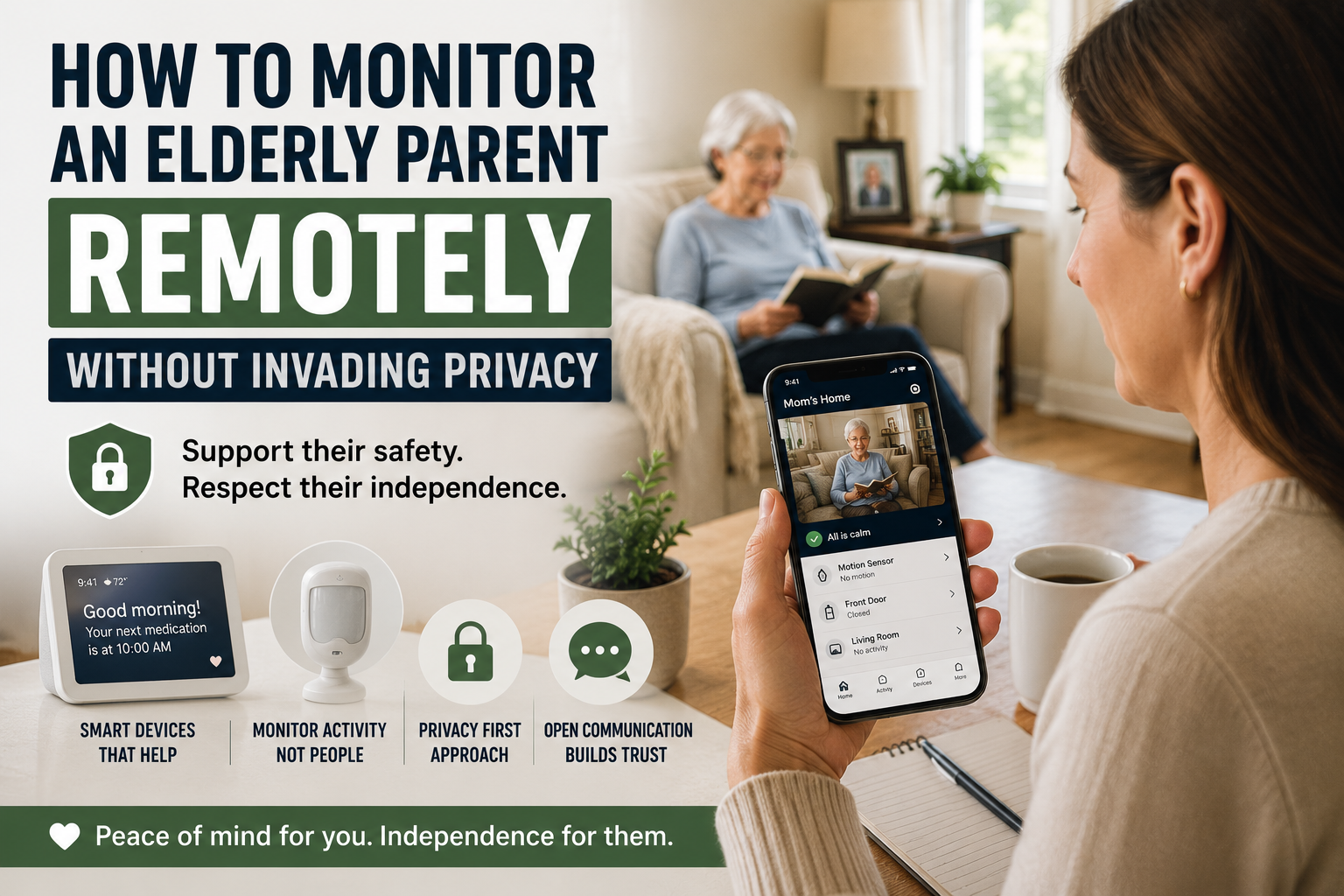
Smart home technology is most useful after the checklist reveals where the routine is weak. It should not lead the conversation. It should support the plan. That may mean better entry awareness, voice-controlled lighting, reminder systems, or easier communication.
For example, if daily routines are becoming harder to manage, voice assistance may help. If your family is considering that route, our beginners guide to Alexa for seniors explains where it tends to fit best. If the bigger issue is a scattered mix of small household risks, a combination of devices may be more effective than any one tool.
The key is not to chase gadgets. It is to remove friction from the exact parts of home life that are becoming harder.
What this checklist tells families
An aging in place checklist does not answer every question, but it tells you where the current setup is strong and where it is thin. That is what families need most. It shifts the conversation away from vague reassurance and toward practical action.
If most of the boxes above look stable, then aging in place may already be working well. If several areas feel shaky, that does not automatically mean a move is necessary. It usually means the plan needs reinforcement.
The best time to do this review is before a crisis. That is when families still have choices, room to test solutions, and the ability to support independence in a way that feels respectful rather than rushed.
FAQ
What is an aging in place checklist?
It is a practical review of the home, routines, risks, and support systems that affect whether an older adult can remain safely and comfortably at home.
How often should families review aging in place needs?
At minimum, review them after any health change, fall, hospitalization, or noticeable shift in routine. Many families also benefit from a simple review every six to twelve months.
What should families fix first?
Prioritize frequent high-risk issues such as falls, poor lighting, medication problems, and front-door safety. Those tend to have the biggest immediate effect.
Can smart home technology help with aging in place?
Yes, when it targets real daily friction. Technology works best when it supports a clear plan rather than acting as a replacement for planning.
Does needing a checklist mean a parent can no longer live independently?
No. In many cases it means the household needs a few targeted improvements so independence can continue more safely and comfortably.