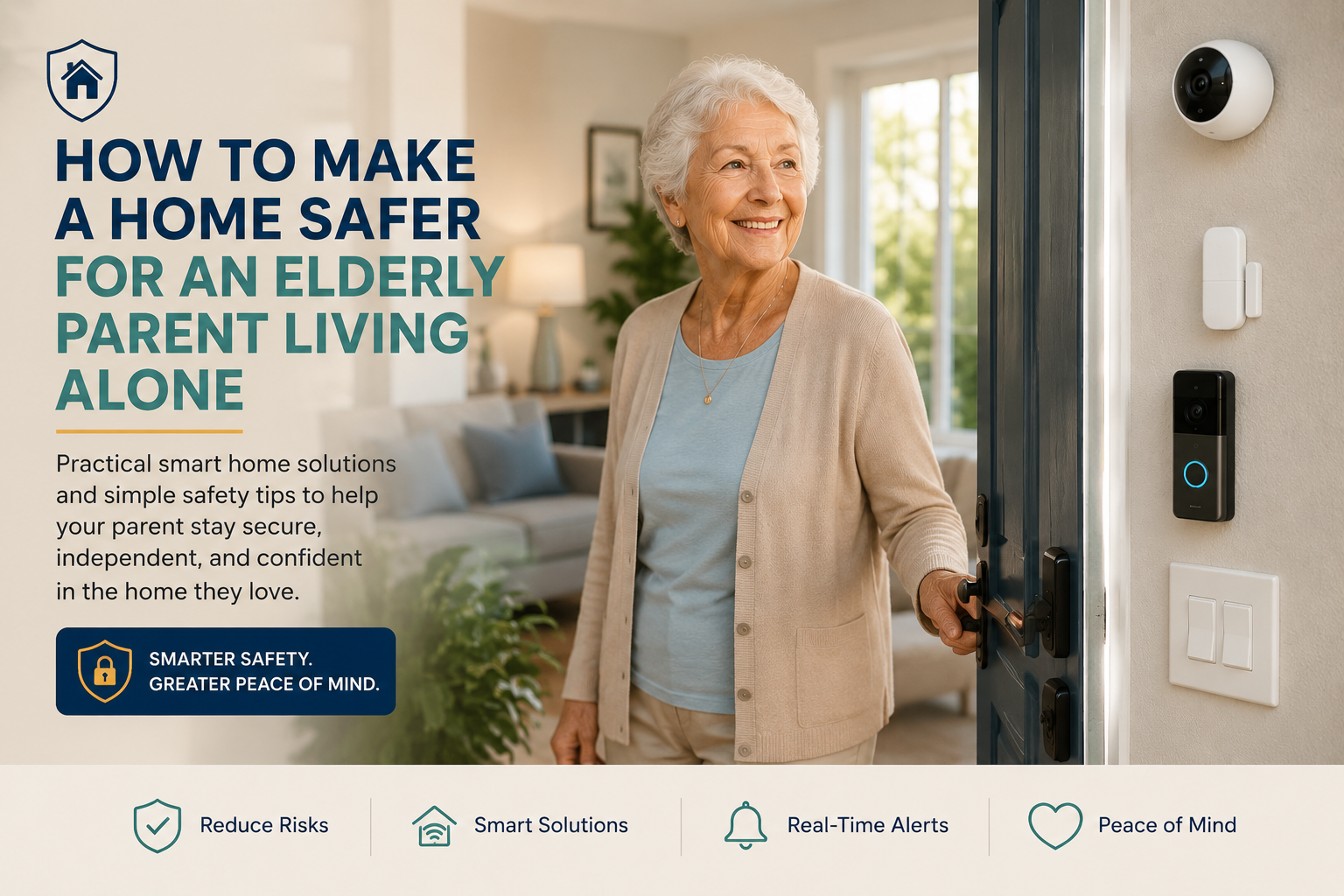
How to Make a Home Safer for an Elderly Parent Living Alone
When an older parent lives alone, safety becomes a daily concern for the whole family. Adult children often find themselves asking the same questions: Is the home still safe? What happens if there is a fall? How can I help without taking away independence? The good news is that home safety for elderly parents does not have to mean turning the house into a hospital-like space.
In many cases, the best approach is a combination of simple home changes, thoughtful routines, and smart home technology that feels easy rather than intimidating. A safer home should support confidence, not create more stress. The goal is to help an older adult stay comfortable, maintain dignity, and keep everyday life manageable.
This guide walks through practical ways to improve safety room by room, explains where smart tools can help, and shows how families can reduce risk without becoming overly controlling. If you are also thinking about long-term independence, our aging in place guide is a helpful next read.
Table of Contents
- Start With the Biggest Risks
- Improve Fall Prevention First
- Make Entry and Exit Safer
- Use Smart Technology With a Clear Purpose
- Create a Simple Safety Routine
- Avoid Common Mistakes
- FAQ
- Conclusion
Start With the Biggest Risks
Before buying any technology, step back and look at the real hazards inside the home. Families sometimes jump straight to cameras or alerts without addressing the obvious issues that create risk every day. Start with the spaces where accidents are most likely to happen: entryways, bathrooms, kitchens, stairs, and bedrooms.
Ask practical questions. Is the lighting strong enough at night? Are there loose rugs? Is the bathroom slippery? Are there cords across walking paths? Is the parent climbing on stools to reach shelves? These small issues are often more urgent than more advanced devices. For a more detailed walkthrough by space, use our room-by-room home safety checklist for seniors while you inspect the house.
It helps to think in terms of daily routines rather than isolated objects. Your parent may be completely steady during the day but less stable at night when walking to the bathroom. They may cook safely most of the time but become distracted when answering the phone or dealing with medication schedules. Understanding the pattern matters more than making assumptions.
Focus on prevention before monitoring
Monitoring tools can help you respond faster when something goes wrong, but prevention lowers the chance of an incident in the first place. The strongest home safety plan starts with reducing hazards, then adds technology to support awareness, reminders, and communication.
Improve Fall Prevention First
If the parent is less steady after dark, it is worth checking how to reduce nighttime fall risks before relying only on daytime safety fixes.
Because bathroom slips are such a common concern, families can also use a senior bathroom safety checklist when that room is the first place that needs attention.
Falls are one of the biggest reasons families start rethinking an aging parent’s living situation. That does not mean every older adult is fragile, but it does mean the home should be set up to support balance, visibility, and easy movement. If you want a more detailed fall prevention checklist for seniors, our room-by-room guide walks through the most common hazards to check first.
Improve lighting in the places people actually walk
Good lighting is one of the simplest upgrades you can make. Focus on hallways, stair edges, bathrooms, bedside areas, and entrances. Motion-activated night lights are especially helpful because they reduce the need to reach for switches in the dark.
Smart bulbs can help here too, especially if they can be set on schedules or controlled by voice. If your parent is open to voice tools, our Alexa for seniors guide explains how voice commands can make everyday tasks easier.
Remove trip hazards without making the home feel unfamiliar
Many families know they should remove clutter or rugs, but older adults may resist if changes feel abrupt or unnecessary. Instead of saying, “This is dangerous,” try framing it around comfort and ease. A flatter rug, a cleaner path, or fewer objects near the bed can feel like a quality-of-life improvement rather than a restriction.
Support safer movement in the bathroom
Bathrooms deserve extra attention because slippery surfaces and fast transitions from sitting to standing can create problems. Non-slip mats, grab bars, a shower seat, and a handheld shower head can all reduce strain. If the toilet is low, a raised seat may make standing easier.
Think about reach and bending
Many falls happen during ordinary tasks such as reaching overhead or bending to lower cabinets. Reorganize the home so frequently used items are stored between waist and shoulder height. If something requires a stool, it probably needs a new location.
Make Entry and Exit Safer
The front door area is often overlooked, but it matters for safety, deliveries, visitors, and emergencies. Good visibility, solid locks, and easy communication can reduce anxiety for both seniors and family members.
Check steps, thresholds, and railings
Even a single uneven step can become a daily risk. Make sure handrails are sturdy, the path is well lit, and the threshold is not creating an unnecessary stumble point. If packages regularly pile up near the entry, clear that space too.
Choose simple access tools
Smart locks, door sensors, and video doorbells can be useful, but only if they solve a real problem. A smart lock may help if a parent often forgets keys or if family caregivers need occasional access. A door sensor may help if wandering, nighttime exits, or missed entries are a concern. The best choice depends on the person, not the trend.
If you want a broader overview of useful tools without jumping into specific product recommendations yet, our article on smart home devices for seniors will help you compare the main categories.
Use Smart Technology With a Clear Purpose
Smart home technology works best when it supports a clear need. Families often feel pressure to “install something” for peace of mind, but random devices can create more confusion than support. Every piece of technology should answer one practical question.
Useful categories to consider
Motion sensors can show whether there is normal activity in key parts of the home. Door sensors can help track entry and exit. Smart lighting can improve nighttime safety. Voice assistants can make reminders and calling easier. Cameras can be helpful in limited, carefully chosen situations, especially near entrances, but privacy should be respected.
Not every home needs every tool. A senior who is mentally sharp but physically slower may benefit from lighting and fall-risk prevention. A parent with memory challenges may benefit more from reminders, door notifications, or daily routine prompts.
Keep the setup invisible when possible
The less complicated the system feels, the more likely it is to be accepted and used. Seniors usually do better with tools that work in the background rather than devices that demand constant app management or technical troubleshooting.
Do not confuse surveillance with support
Family members often worry so much that they lean toward constant visual monitoring. That can damage trust. In many homes, non-camera tools provide enough reassurance without making the parent feel watched. A safer home should still feel like home.
Create a Simple Safety Routine
Technology helps, but routines hold everything together. A home becomes safer when there is a repeatable system for daily check-ins, emergency communication, and maintenance.
Set regular check-in habits
Many families benefit from a simple rhythm such as a morning text, an evening call, or a voice assistant reminder that prompts the parent to check in. The routine should feel supportive, not invasive.
Write down what to do in an emergency
Emergency numbers, medication lists, building access details, and key contacts should be easy to find. Keep a printed copy in the home even if family members also store it digitally.
Test systems occasionally
Smart alerts, voice calling features, and notifications should be tested now and then to make sure they still work. Batteries die, Wi-Fi changes, and routines drift. A quick check every month can prevent surprises later.
Review the home every few months
Needs change over time. A parent who does well today may need more support after an illness, after a fall, or simply with advancing age. Reassessing the home every few months keeps the safety plan realistic.
Avoid Common Mistakes
Families with good intentions still run into avoidable problems. One common mistake is introducing too much technology at once. Another is choosing tools based on what seems impressive instead of what the senior will actually use.
A third mistake is treating safety conversations like a one-time decision. Most older adults want to be heard, and they are far more likely to accept support when they feel included. Ask what worries them, what feels frustrating, and what changes would make daily life easier.
It is also important not to make medical promises about technology. Home tools can improve awareness, convenience, and response time, but they are not a substitute for medical care, diagnosis, or emergency services.
Frequently Asked Questions
What is the first thing to improve in a senior’s home?
Start with the biggest day-to-day hazards: poor lighting, slippery bathrooms, loose rugs, cluttered walkways, and hard-to-reach items. Small physical changes often reduce risk faster than advanced technology alone.
Do elderly parents need cameras inside the home?
Not always. Many families can improve safety with lighting, sensors, reminders, and check-in routines instead of indoor cameras. If cameras are used, they should be limited, clearly discussed, and respectful of privacy.
What smart home tools are most useful for seniors living alone?
It depends on the situation, but common starting points include motion-activated lighting, door sensors, voice assistants, medication reminders, and activity alerts in key areas of the home.
How can I help without making my parent feel controlled?
Frame safety changes around comfort, convenience, and independence. Involve your parent in decisions, explain the purpose of each change, and avoid adding tools that feel excessive or intrusive.
How often should a family review home safety?
Every few months is a good starting point, or sooner if there has been a fall, hospitalization, noticeable memory change, or increasing difficulty with everyday tasks.
Conclusion
Making a home safer for an elderly parent living alone is not about removing independence. It is about protecting it. The best results usually come from simple improvements, consistent routines, and smart tools that quietly reduce risk in the background.
If you begin with fall prevention, lighting, safer entryways, and a clear plan for communication, you will already be making a meaningful difference. From there, smart home technology can add peace of mind without overwhelming the person it is meant to help. Once you are ready to explore the bigger picture, continue with our guides to smart home devices for seniors and aging in place.