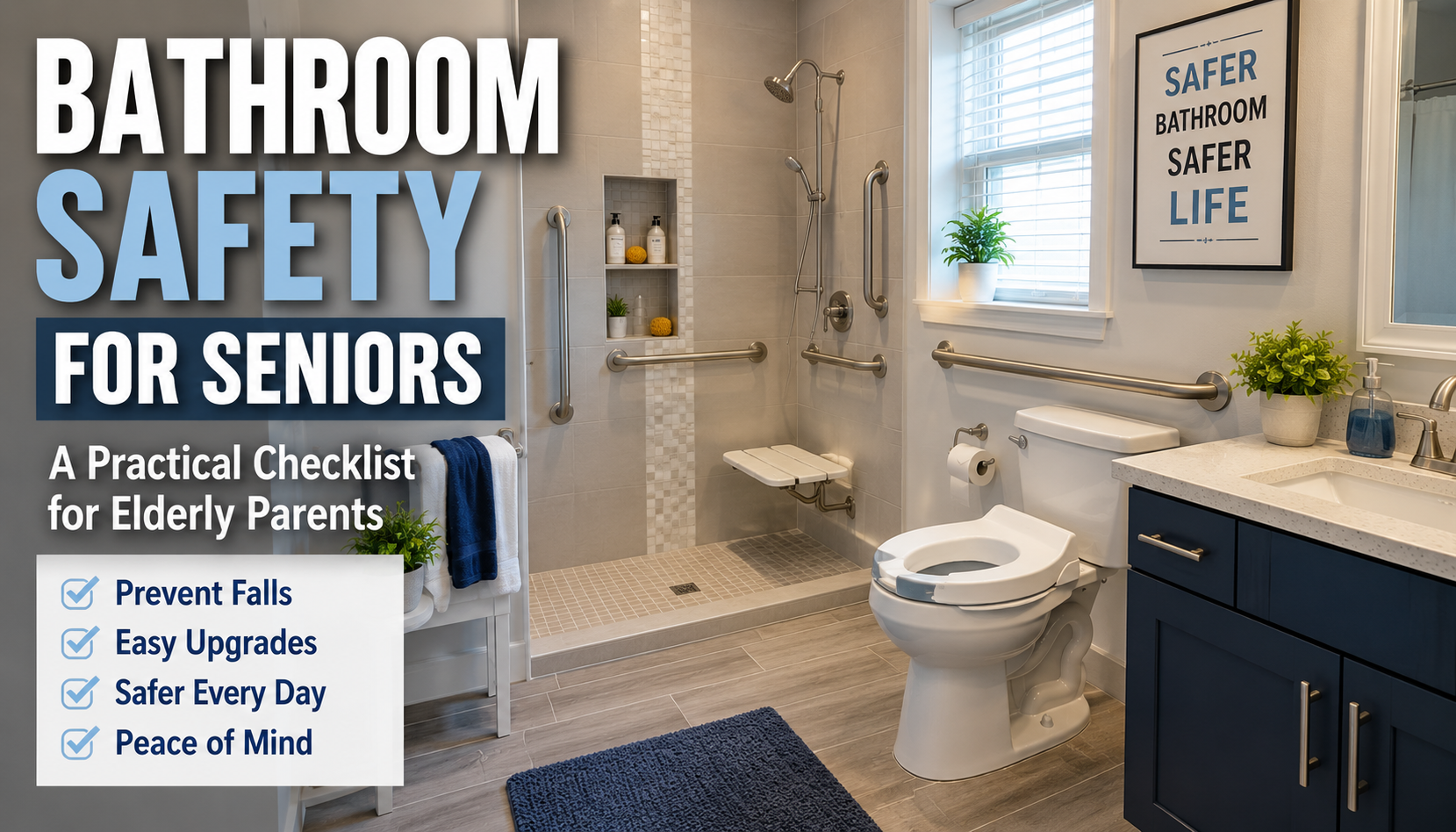
Bathroom Safety for Seniors: A Practical Checklist for Elderly Parents
Quick Answer
Bathroom safety for seniors starts with reducing slips, improving support, making the room easier to see at night, and keeping daily items within easy reach. For many families, the highest-priority changes are properly installed grab bars, non-slip surfaces, a stable shower chair, better lighting, and a clear path in and out of the bathroom.
A family may first notice the problem in small moments. An older parent hesitates before stepping into the tub. Getting up from the toilet takes more effort than it used to. Wet flooring feels more intimidating. A towel, bath mat, or shampoo bottle that once seemed harmless suddenly feels like one more thing that could get in the way.
This guide is for adult children who want to make a bathroom safer for an elderly parent without turning the project into a full remodel. The goal is not to make dramatic promises or create fear. The goal is to identify common bathroom hazards, make practical improvements, and know when a family should ask for professional guidance.
If you are doing a full-home review, start with our room-by-room home safety checklist for seniors. This article goes deeper on one specific room: the bathroom.
Table of Contents
- Why bathrooms are high-risk
- Bathroom safety checklist
- Highest-priority changes
- What to look for
- Room zones to review
- Decision path
- When products may not be enough
- Frequently asked questions
- 30-minute first inspection
Why Bathrooms Are High-Risk for Older Adults
Bathrooms combine several conditions that may increase risk for seniors: water, hard surfaces, tight spaces, changing positions, low lighting, and sometimes rushing. A person may be stepping over a tub wall, turning on a wet floor, reaching for a towel, or standing up from a low toilet in a small area with very little room to recover balance.
That does not mean every bathroom is unsafe. It means the bathroom deserves a careful review. Small changes can add a layer of safety and make everyday routines feel less stressful for an older adult.
Bathroom safety also connects closely with broader fall prevention. If your family is reviewing the whole home, our fall prevention checklist for seniors can help you identify risks beyond the bathroom.
Bathroom Safety Checklist for Seniors
Use this checklist while standing inside the bathroom with your parent if possible. Try to observe the room as it is actually used in the morning, at night, and after bathing.
- Check whether the floor becomes slippery when wet.
- Remove loose rugs or replace them with secure, non-slip options.
- Confirm that bath mats do not slide or bunch up.
- Look for stable grab bars near the shower, tub, and toilet.
- Make sure towel bars are not being used as support handles.
- Check whether the shower or tub entry requires stepping too high.
- Consider whether a shower chair would reduce fatigue while bathing.
- Review whether the toilet is too low for comfortable sitting and standing.
- Improve lighting at the doorway, vanity, shower area, and nighttime route.
- Keep soap, shampoo, towels, and daily items within easy reach.
- Move cords, scales, hampers, and storage baskets away from walking paths.
- Check whether the bathroom door can be opened easily in an urgent situation.
- Review water temperature to reduce the chance of accidental scalding.
- Confirm that frequently used items are not stored too high or too low.
- Ask your parent what feels hardest, most tiring, or most worrying.
Highest-Priority Bathroom Safety Changes
Properly installed grab bars
Grab bars are often one of the most important bathroom safety changes for seniors. They can provide support when stepping into a shower, turning around, standing from the toilet, or stabilizing after bathing.
Important: incorrectly installed grab bars may be more dangerous than none. A bar that pulls loose can create false confidence and lead to a serious fall. Where appropriate, use qualified installation and make sure bars are anchored correctly into suitable wall structure.
Non-slip surfaces
Wet tile, smooth tubs, and loose mats can make slipping more likely. Non-slip bath mats, adhesive strips, textured flooring, or secure shower surfaces can help reduce that risk. The key is stability: anything placed on the floor should stay flat and should not slide when weight shifts.
Shower chair or bath seat
A shower chair can help seniors who become tired while standing, feel unsteady while washing, or need a more controlled bathing routine. It should be stable, sized for the space, and used with a layout that still allows safe entry and exit.
Raised toilet seat when appropriate
If standing up from the toilet has become difficult, a raised toilet seat or toilet safety frame may help. This is most useful when the main issue is the transition from sitting to standing. Families should choose stable options and avoid anything that wobbles.
Better lighting
Bathroom lighting should make the floor, toilet, shower edge, and doorway easy to see. Nighttime lighting matters because many falls happen when someone is tired, half-awake, or trying not to turn on bright lights. Motion night lights can help, but they should be tested to make sure they turn on quickly enough.
Clutter removal
A bathroom does not need to be empty, but walking paths should be clear. Extra baskets, scales, cords, laundry, cleaning supplies, and decorative items can create unnecessary obstacles in a small room.
Accessible storage
Daily items should be easy to reach without bending deeply, stretching overhead, or stepping onto anything. Store shampoo, soap, towels, medication-related supplies, and grooming items at comfortable height.
Water temperature controls
Review whether hot water becomes too hot too quickly. Anti-scald settings or temperature control devices may add a layer of safety, especially if an older adult has slower reaction time or reduced sensation.
Door access
Bathroom doors should be easy to open, and families should think about what would happen if a parent needed help inside. This does not mean removing privacy. It means avoiding locks or layouts that make assistance difficult during a real problem.
What to Look For
| Feature | Why It Matters | What to Check |
|---|---|---|
| Grab bars | Support during transfers and turning | Secure installation, correct placement, no loose movement |
| Flooring | Wet floors can make slipping more likely | Non-slip surface, flat mats, no curling edges |
| Shower or tub entry | Stepping over a high edge can be difficult | Height, available support, fatigue, confidence entering |
| Toilet height | Low seating can make standing harder | Effort needed to sit and stand, nearby support |
| Lighting | Visibility affects balance and confidence | Night route, shower area, doorway, shadows |
| Storage | Reaching and bending can add risk | Daily items at comfortable height and distance |
| Door access | Help may be needed quickly | Door swing, lock type, blocked access, privacy balance |
Room Zones to Review
Bathtub and shower
The bathtub or shower is usually the first area to inspect. Look at how your parent enters, exits, turns, reaches for soap, rinses, and dries off. Watch for hesitation, grabbing towel bars, leaning on glass doors, or avoiding the shower altogether.
Helpful changes may include grab bars, non-slip flooring, a shower chair, a handheld showerhead, or a lower-threshold entry when remodeling is already being considered. Keep the focus on the specific difficulty your parent is experiencing.
Toilet area
The toilet area matters because sitting down and standing up require strength, balance, and confidence. If your parent pushes on the sink, towel rack, or wall to stand, that is a sign the area may need better support.
A raised toilet seat, toilet safety frame, or nearby grab bar may help, depending on the layout and the person’s mobility. Stability is more important than appearance.
Sink and vanity
The sink area should be easy to use without bending, stretching, or leaning heavily on unstable surfaces. Keep daily items close, remove clutter, and make sure the area is well lit.
If your parent takes medication or does grooming tasks at the sink, consider whether they have enough space and support to do those tasks calmly.
Floor and walkway
The walking path should be simple and predictable. Remove laundry piles, scales, trash cans, cords, and loose rugs from the route between the door, toilet, shower, and sink.
Check the floor when it is dry and when it is damp. Some surfaces feel safe until they are wet.
Lighting and entry
Good lighting is especially important at night. The route into the bathroom, the floor, and the toilet area should be visible before a person has to step fully into the room.
Motion lights, brighter bulbs, illuminated switches, or a soft night light may help. Test any lighting change at the actual time your parent normally uses the bathroom overnight.
Bathroom Safety Decision Path
If bathroom changes are part of a wider fall-prevention review, families should also look at stair fall risks before treating one room as the whole problem.
- If the main issue is slipping: start with non-slip surfaces, secure mats, better drying routines, and checking whether the shower or tub floor becomes slick.
- If the main issue is standing up: review toilet height, grab bar placement, shower chair options, and whether a professional should assess transfers.
- If the issue is nighttime visibility: start with the route to the bathroom, motion lighting, door visibility, and removing floor obstacles.
- If the issue is reaching: move daily items to easy height and avoid storage that requires bending, stretching, or stepping on anything.
- If there have already been falls: seek professional assessment rather than relying only on products or quick fixes.
Professional Installation Warning
Some bathroom safety changes are simple. Others should be treated more carefully. Grab bars, wall-mounted supports, shower modifications, and some toilet safety products may need qualified installation or professional advice.
Incorrectly installed grab bars may be more dangerous than none because they can fail exactly when a person depends on them. If you are unsure what is behind the wall, where the bar should go, or whether the product is appropriate, get help from a qualified installer, contractor, occupational therapist, or relevant professional.
When Products May Not Be Enough
Bathroom products can add support, but they cannot solve every situation. If your parent has repeated falls, dizziness, sudden mobility changes, balance problems, confusion, or difficulty transferring safely, the next step should be professional guidance.
An occupational therapist, healthcare professional, or qualified home safety specialist may be able to recommend changes based on how your parent actually moves, not just how the bathroom looks. This article is educational and should not be treated as medical advice.
Bathroom improvements also work best as part of a broader plan. Our aging in place checklist can help families review routines, safety, support, communication, and technology together.
Frequently Asked Questions
What is the most important bathroom safety change for seniors?
For many families, the most important first change is secure support where the parent needs it most, often near the shower, tub, or toilet. Properly installed grab bars, non-slip surfaces, and better lighting are usually high-priority items.
Where should grab bars be installed?
Common locations include the shower or tub entry, inside the shower area, and near the toilet. The right placement depends on the bathroom layout and how the person moves. Grab bars should be properly anchored and installed where they will actually be used.
Are shower chairs safe for elderly adults?
A stable shower chair can be helpful for seniors who tire while standing or feel unsteady while bathing. It should fit the shower area, stay firmly in place, and allow safe entry and exit. If transfers are difficult, ask a professional for guidance.
How can I make a bathroom safer without remodeling?
Start with practical changes: remove loose rugs, improve lighting, add secure non-slip surfaces, keep daily items within reach, clear the walkway, and consider properly installed grab bars. Many useful improvements do not require a full remodel.
What bathroom flooring is safest for seniors?
There is no single perfect flooring for every home, but bathroom flooring should be slip-resistant, even, easy to see, and not covered by loose rugs that slide or curl. Families should test how the surface feels when damp, not only when dry.
How do I talk to an elderly parent about bathroom safety?
Start with comfort and independence, not fear. You might say, “I want to make this room easier and more comfortable for you to use.” Ask what feels difficult before suggesting products. That keeps the conversation respectful and practical.
Final Action Plan: A 30-Minute First Inspection
If you only have half an hour, use this simple first pass:
- Stand at the doorway and check whether the path is clear.
- Look for loose rugs, slippery mats, cords, clutter, or storage on the floor.
- Turn the lights on and check for shadows around the toilet, shower, and walkway.
- Ask your parent to show how they enter the shower or tub, without rushing.
- Check whether they use towel bars, sink edges, or walls for support.
- Review whether soap, shampoo, towels, and daily items are easy to reach.
- Check whether the toilet feels too low or difficult to stand from.
- Look at the door and consider whether help could reach them if needed.
- Write down the top three issues instead of trying to fix everything at once.
- Decide which items are simple family fixes and which need professional help.
Bathroom safety for seniors is not about creating a perfect room overnight. It is about reducing obvious hazards, adding reliable support, and helping an elderly parent use the bathroom with more confidence. Start with the biggest daily friction point, make one improvement, and then review the room again as needs change.
For the next step, compare this bathroom review with our broader guide on how to make a home safer for an elderly parent living alone.