Senior Home Safety Starter Kit
Make Your Parent’s Home Safer This Weekend
A printable safety kit for families caring for an aging parent who lives alone.
Start with practical home safety planning without making the home feel clinical.

You Want to Help — Without Taking Over
You worry. Maybe it’s a phone call that goes unanswered for a few hours. Maybe it’s noticing a new bruise nobody mentioned. Maybe it’s just the quiet feeling that you should be doing more, but you don’t know where to start — and you don’t want to turn their home into something that feels like a hospital, or take away their independence in the process.
You’re not alone in this, and you don’t need a complicated system to start making things safer.
What This Kit Helps You Do
Walk through the home with a clear checklist instead of a vague sense of worry.
Use the kit as a conversation tool, not a way to decide everything for your parent.
Spread practical safety steps across seven days so it feels manageable.
Printable, Simple, and Ready to Use
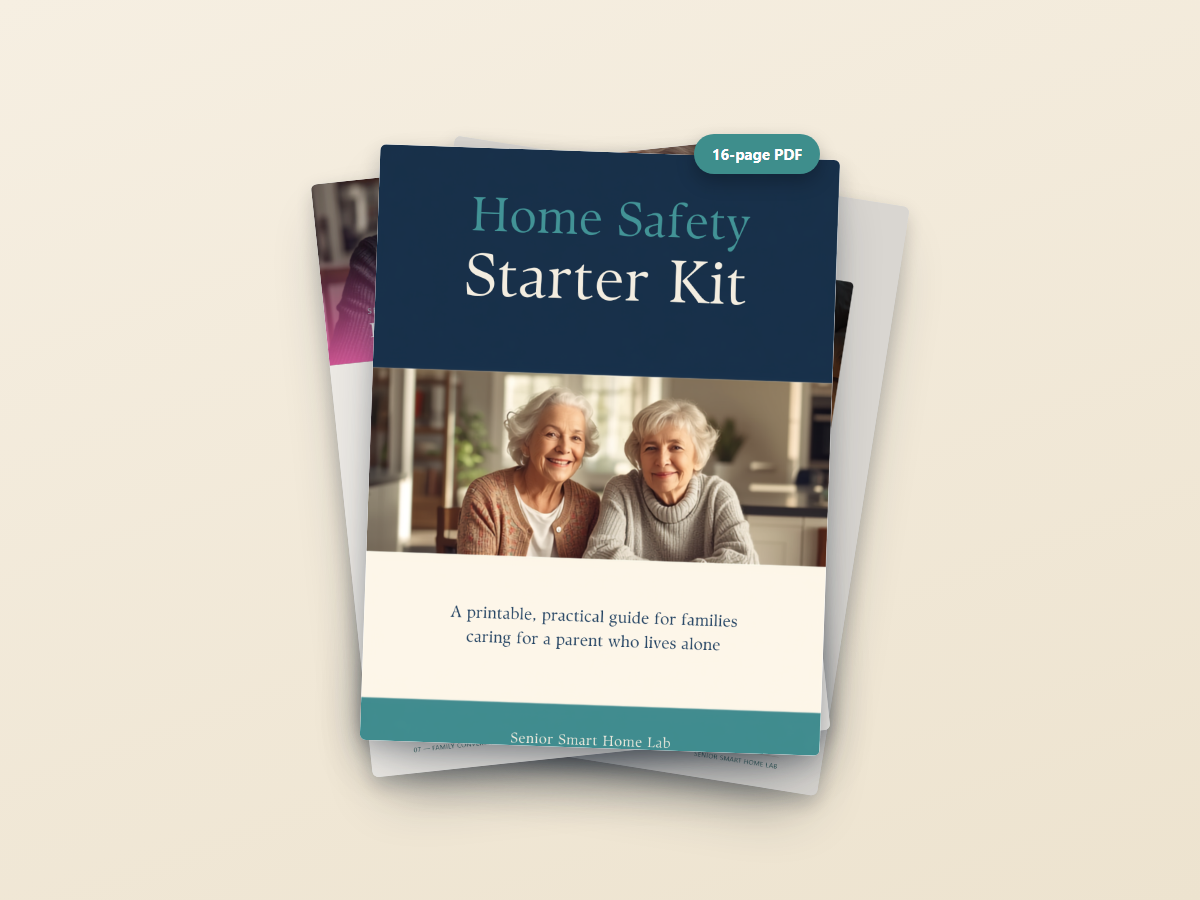
The Senior Home Safety Starter Kit is a printable PDF designed for adult children and family caregivers who want a practical starting point, not another overwhelming research project.
Print it once, walk through the home, and use the worksheets to identify what matters most this week.
What’s Included
- Room-by-Room Safety ChecklistBathroom, bedroom, stairs, kitchen, and entry, covered clearly and simply.
- Fall Risk Quick-MapFind the two or three spots that matter most in this home, not a hundred things to worry about.
- Emergency Information SheetEverything a family member or first responder would need, in one place.
- 7-Day Action PlanOne small step a day, so this never feels overwhelming.
- Device Decision GuideHow to think clearly about any smart or connected device, without the sales pitch.
- Family Conversation ScriptA gentle way to open the conversation, even if it feels hard.
Preview the Kit
A look inside: printable checklists with real checkboxes, writable spaces, and a clean, senior-readable layout — designed to be used, not just filed away.

Who It’s For
This kit is for adult children and family caregivers who want to help a parent, in-law, or older relative stay safe and independent at home — without a complicated system, a big renovation, or a difficult confrontation.
- Your parent lives alone, or spends significant time alone.
- You’ve been thinking about safety but haven’t known where to start.
- You want something practical you can actually use this week, not just read.
What This Kit Is Not
- It’s not medical advice, and it doesn’t replace a conversation with a doctor or occupational therapist.
- It’s not a smart-home product, an app, or a subscription — it’s a printable, one-time guide.
- It’s not a renovation plan or a checklist that has to be finished in one sitting.
How to Use It
- Walk through the home together, one room at a time.
- Fill in the Emergency Information Sheet and mark your top 2–3 priorities.
- Spread the rest out over the 7-Day Action Plan.
FAQ
Is this medical advice?
No — this is a practical planning tool, not medical guidance. For any medical or health concern, please talk to a doctor or qualified professional.
Do I need to be tech-savvy to use this?
Not at all. The kit is designed to be printed and used with a pen — no app, account, or software required.
Will this work for any home?
Most homes, yes. The Fall Risk Quick-Map is specifically designed to help you focus on what matters in your parent’s specific home, rather than a generic list.
What if my parent doesn’t want to talk about this?
The Family Conversation Script is built for exactly that — a gentle way to open the conversation without it feeling like an intervention.
Is this a one-time purchase?
Yes. $19, one time, instant download. No subscription.
How do I get the kit after I pay?
You’ll get instant access to download the PDF right after checkout.
Start With One Clear Safety Plan
You don’t need to fix everything today. You just need a place to start.
Instant PDF download · US Letter · 16 pages
Disclosure
This kit is a practical planning tool, not medical advice. It doesn’t replace a conversation with a doctor, occupational therapist, or other qualified professional.