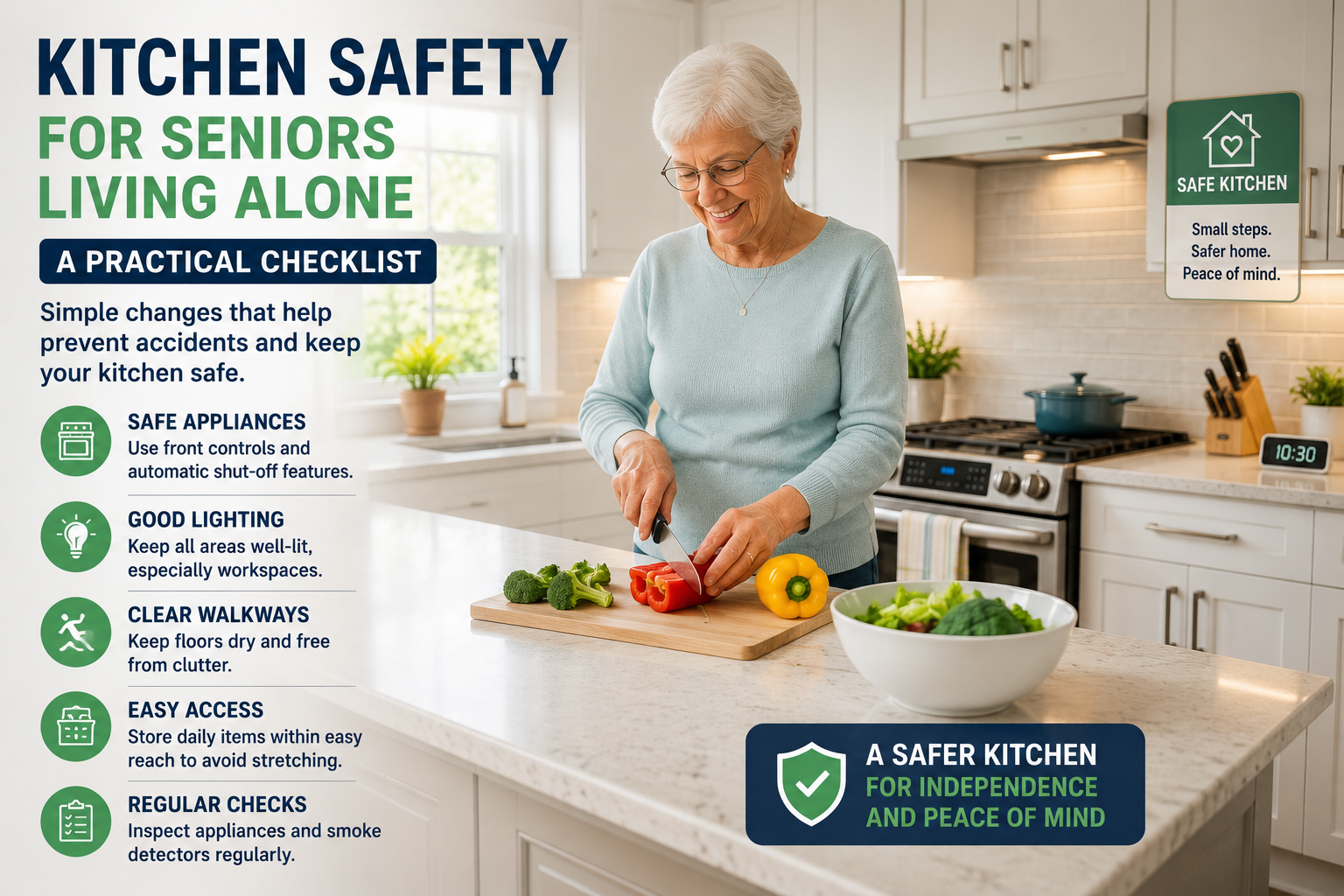
Kitchen Safety for Seniors Living Alone: A Practical Family Checklist
Quick Answer
Kitchen safety for seniors starts with clear counters, good lighting, easy-reach storage, safer cooking routines, stable flooring, working smoke alarms, and reducing the need to bend, stretch, or rush. Families should focus first on the tasks an elderly parent actually does every day.
The kitchen is often the room where independence matters most. It is where a parent makes coffee, prepares meals, takes medication with breakfast, washes dishes, and keeps daily routines. That is why kitchen safety should feel supportive, not restrictive.
This article focuses on kitchen-only risks. For a wider safety review, see our guide to making a home safer for an elderly parent living alone, or use this room-by-room home safety checklist to review the whole house.
Table of Contents
- Why kitchen safety matters
- Kitchen safety checklist
- What to look for
- Highest-priority changes
- Decision path
- FAQ
Why Kitchen Safety Matters
Kitchens combine heat, water, sharp tools, heavy items, slippery floors, and time pressure. A senior may be perfectly capable of cooking but still benefit from a safer layout and simpler routines.
The goal is to reduce friction around daily meals while preserving independence.
Start With Simple, Predictable Kitchen Safety
Before adding devices, make the kitchen easier to use on an ordinary day. Keep the most-used pans, mugs, plates, and medication-related supplies within easy reach. Clear the counters enough that hot items do not need to be carried across clutter. Make sure the main light switch is easy to find, the floor is dry, and the path from stove to sink is free of rugs or cords.
A safer kitchen often starts with fewer obstacles and fewer decisions, not more technology. For many seniors living alone, simple physical changes are easier to trust than a new app, alert, or routine.
Kitchen Safety Checklist
- Clear walkways between sink, stove, refrigerator, and table.
- Move daily items to waist-to-shoulder height.
- Remove step stools unless a professional recommends otherwise.
- Check that floors are not slippery when wet.
- Keep cords away from walking paths and water.
- Review stove and oven habits.
- Confirm smoke and carbon monoxide alarms work.
- Improve task lighting at counters and stove.
- Use lightweight cookware when possible.
- Keep emergency contacts visible and easy to access.
What to Look For
| Area | Why It Matters | What to Check |
|---|---|---|
| Storage | Reaching and bending can add risk | Daily items within comfortable reach |
| Flooring | Spills can make slipping more likely | Wet areas, rugs, mats, transitions |
| Stove | Heat and distraction can create hazards | Controls, routines, forgotten burners |
| Lighting | Food prep needs clear visibility | Counter shadows, stove lighting, night access |
| Walkway | Kitchens are high-traffic rooms | Pet bowls, trash cans, cords, stools |
Highest-Priority Changes
Make daily items easy to reach
Move coffee, bowls, plates, medication-related supplies, and favorite foods to comfortable shelves. Avoid high cabinets and low storage for daily items.
Improve lighting
Under-cabinet or task lighting can make cutting, pouring, reading labels, and checking food easier.
Reduce floor hazards
Remove loose mats or use secure non-slip options. Clean spills quickly and review whether pet bowls create obstacles.
Review cooking routines
Look for forgotten burners, heavy pans, or tasks that require rushing. A simpler routine may be safer than a new gadget.
If your parent sometimes forgets whether an appliance is still on, start with a routine that does not depend on an app. Use a loud kitchen timer, a written “stove off?” note near the exit, and a habit of checking the stove before leaving the room. If the appliance already has a built-in auto-shutoff feature, make sure your parent understands it and that the family has tested it together.
Avoid using ordinary smart plugs with stoves, ovens, ranges, or other high-power cooking appliances unless the manufacturer clearly says that use is safe. This kind of setup needs careful technical and safety review, not guesswork.
Use reminders carefully
Voice reminders can help with timers and routines. For basic phrases, see our Alexa commands for seniors guide.
If you use reminders, lights, sensors, or voice assistants in the kitchen, keep a manual backup. A physical timer, reachable switch, written checklist, and clear family routine still matter because Wi-Fi, apps, batteries, and voice recognition can fail. The safest setup is the one your parent can still use when the smart part does not respond.
Cooking Fire Safety That Smart Devices Cannot Replace
The U.S. Fire Administration advises staying in the kitchen when frying, grilling, boiling, or broiling, checking food regularly when simmering, baking, or roasting, and using a timer as a reminder. Its fire-safety guidance for older adults also recommends keeping items that can burn away from the stove and turning pot handles toward the back.
Alexa timers and reminders can support those habits, but they do not detect every unsafe condition and should not be used as permission to leave active cooking unattended. Keep ordinary smart plugs away from stoves, ovens, ranges, and other high-power cooking appliances unless the appliance and control manufacturer explicitly approve that exact use.
Decision Path
- If the issue is reaching: reorganize storage first.
- If the issue is slipping: review mats, spills, footwear, and flooring.
- If the issue is forgotten cooking: simplify routines and consider timers or supervised planning.
- If the issue is low vision: improve task lighting and label readability.
- If there have been fires, burns, or major confusion: seek professional guidance.
When Products May Not Be Enough
Kitchen tools can help, but repeated burns, unsafe stove use, confusion, dizziness, or major mobility changes need a larger safety conversation. This article is educational and not medical advice.
For broader planning, use our aging in place checklist.
Frequently Asked Questions
What is the biggest kitchen risk for seniors?
It depends on the person, but common issues include slipping, reaching, heavy cookware, poor lighting, and forgotten stove use.
Should seniors living alone keep using the stove?
Many can, but families should review habits honestly. If there are repeated safety concerns, seek professional guidance.
How can I make kitchen storage safer?
Keep daily items at easy height and avoid storage that requires bending deeply or climbing.
Are smart devices useful in the kitchen?
Timers, reminders, and smart plugs may help some routines, but they should not replace safe habits or supervision where needed.
What should I check first?
Start with walkways, lighting, storage, stove habits, and floor surfaces.
30-Minute Kitchen Review
- Walk the main route from refrigerator to sink to stove.
- Remove obstacles from the floor.
- Move three daily items to easier storage.
- Check task lighting.
- Review stove and timer habits.
- Ask your parent what feels hardest during meal prep.