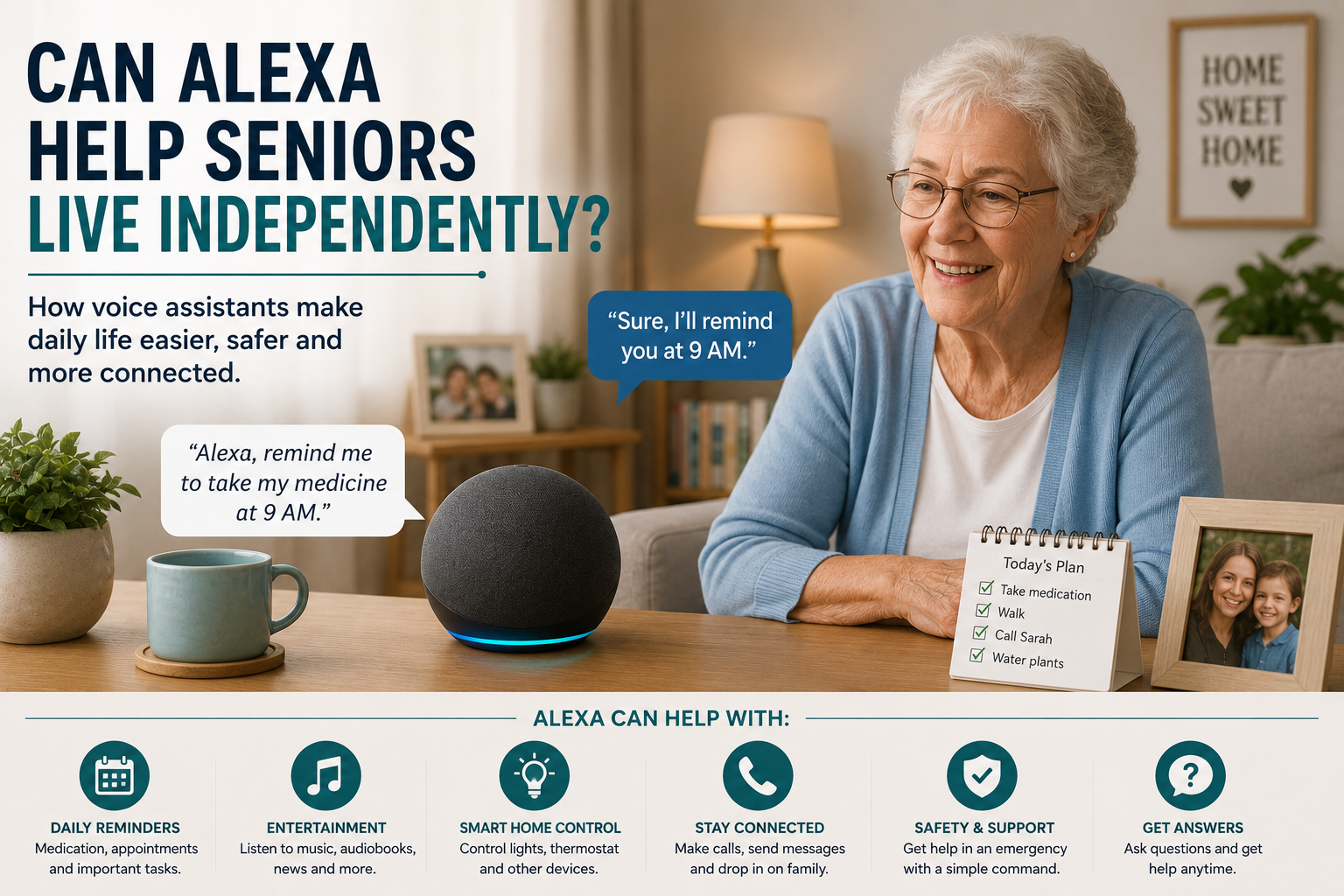
Can Alexa Help Seniors Live Independently?
Alexa can absolutely help some seniors live more independently, but it helps in specific ways. It does not replace family support, medical care, or home safety planning. What it can do is remove friction from everyday tasks that gradually become more tiring or easier to forget. That is where voice assistants often prove their value.
For older adults, independence is not always about doing everything alone. More often, it is about staying in control of daily routines, maintaining confidence at home, and needing less help for small repetitive tasks. When Alexa is set up carefully, it can support that kind of independence surprisingly well.
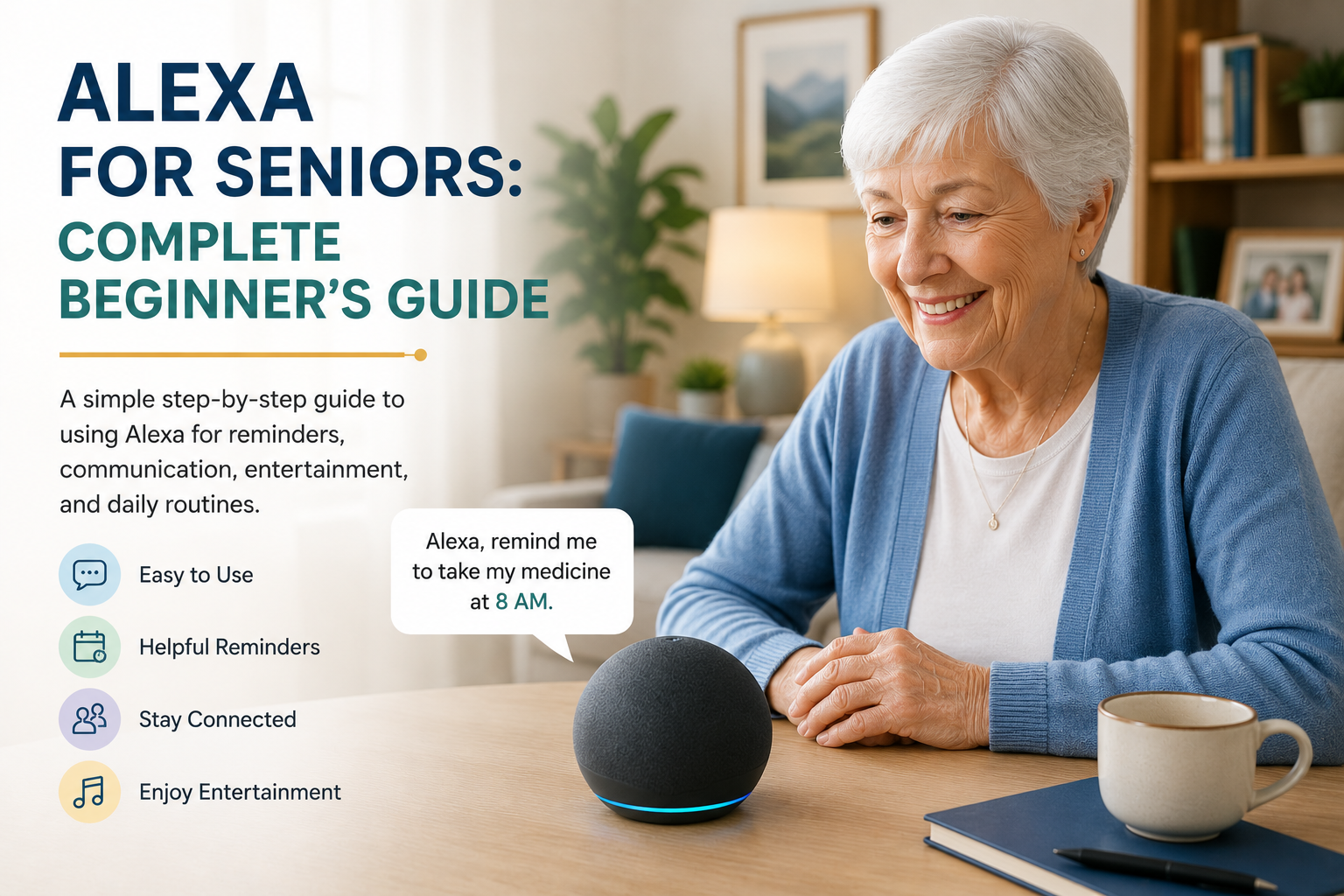
This guide looks at the practical side of the question: where Alexa genuinely helps, where it falls short, and how families can decide whether it belongs in an aging-in-place plan. If you want the setup basics, start with Alexa for Seniors: Complete Beginner’s Guide. Here, the focus is independence rather than first-time setup.
Table of Contents
- What independence means at home
- How Alexa helps with daily routines
- Where Alexa helps families as well as seniors
- What Alexa cannot do well
- Who is a good candidate for Alexa support
- How to set Alexa up for real-world success
- Frequently asked questions
What independence really means for older adults
When families talk about independence, they often mean different things. One person means staying in the same home. Another means remembering appointments without reminders. Another means being able to contact family quickly when something feels off. Alexa fits into independence best when those goals are made concrete.
Voice assistants are most useful for tasks that happen often, require small bursts of effort, and do not justify a full caregiver intervention. That includes setting reminders, turning lights on, asking for weather updates, playing music, making simple calls, or controlling a few connected devices without getting up.
Seen that way, Alexa is less about novelty and more about reducing the number of small obstacles in a normal day. Those small obstacles are exactly what can make a person feel older, less confident, or more dependent than they want to be.
How Alexa helps seniors live independently
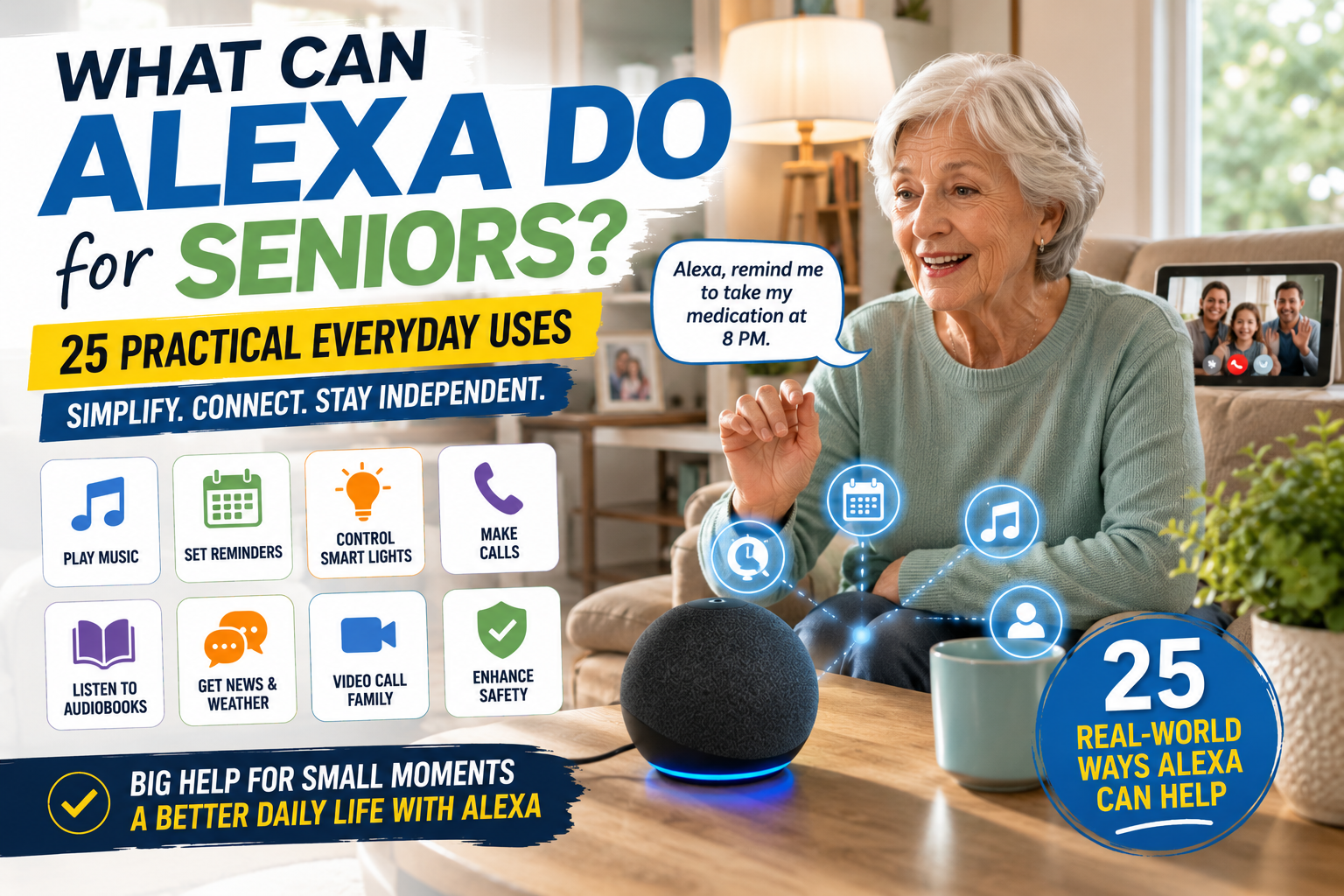
For a broader list of everyday examples, families can compare practical Alexa uses for older adults before deciding which features matter most.
1. It reduces the need to remember everything
Reminders are one of Alexas most practical strengths. Seniors can use voice prompts for medication times, hydration breaks, appointments, garbage day, locking up at night, or calling a family member. A spoken reminder feels less intrusive than constant phone alarms and can blend more naturally into daily life.
That matters because independence often weakens through routine friction, not through one dramatic event. A person who misses appointments, forgets to switch off a light, or loses track of the day can begin to feel less confident at home. Regular voice prompts help stabilize those patterns.
2. It makes common tasks easier without extra physical effort
Getting up to adjust lights, check the time, or hear the weather forecast may not sound significant to a younger adult. For an older person with arthritis, balance concerns, or fatigue, those repeated small tasks add up. Voice control reduces those extra steps.
This is one reason Alexa often pairs well with broader smart home devices for seniors. It becomes the simple control layer for other tools that support daily living.
3. It supports communication
Many seniors feel more independent when reaching family is easy. Voice assistants can help with hands-free calling, announcements, or simple check-ins. That does not just help in emergencies. It also reduces the emotional barrier around asking for help with small things.
4. It can improve consistency at night
Evening is often when routines get less predictable. Alexa can help with bedtime reminders, voice-controlled lamps, white noise, or simple good night routines that turn off supported devices. For some households, that predictability improves confidence more than families expect.
5. It can support safer movement at home
Alexa itself does not prevent falls, but it can make the environment easier to manage. Voice-controlled lighting is a good example. If a senior does not need to walk across a dark room to find a switch, that is a practical independence benefit. The same logic applies to linked plugs, lamps, and simple routines that reduce unnecessary movement.
Where Alexa helps the family too
Families usually ask whether Alexa helps the senior, but that is only half the picture. It can also reduce caregiver load in subtle but important ways.
- Adult children spend less time making reminder calls for small routine items.
- There is a clearer structure for daily prompts and check-ins.
- Connected smart devices become easier to manage because voice control lowers the learning curve.
- Households can build routines without installing complex systems everywhere at once.
For families trying to support independence from a distance, Alexa often works best as a bridge. It does not replace human involvement, but it reduces how often that involvement has to be manual.
What Alexa cannot do well
This is the part families need to be honest about. Families should understand the important limits of Alexa for seniors.
It does not replace judgment
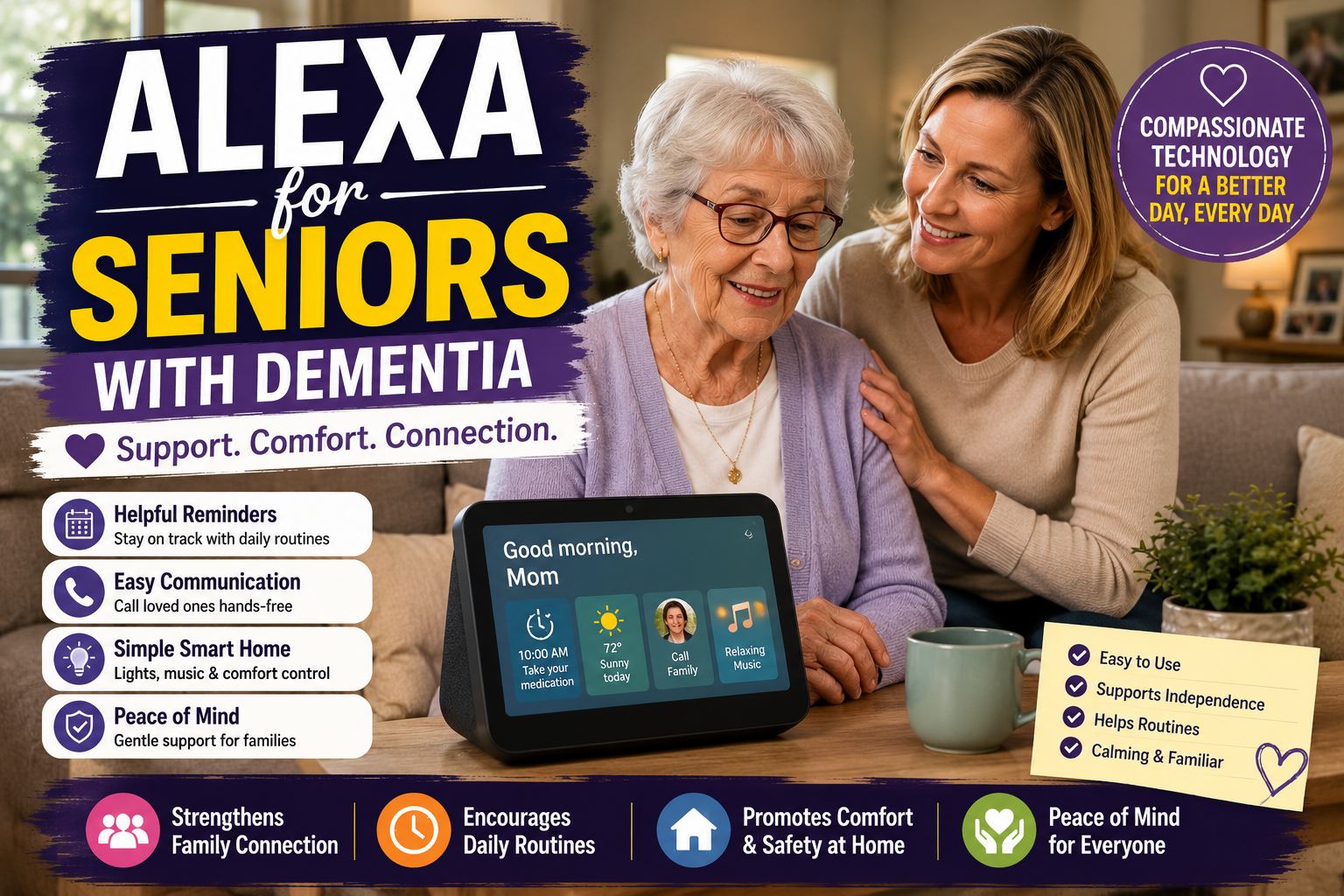
Alexa can remind someone to take medication, but it cannot verify that the correct dose was taken. It can announce a visitor, but it cannot decide whether opening the door is wise. It can support routines, but it does not replace decision-making.
It is not enough for high-risk situations by itself
If a senior has significant memory impairment, frequent falls, or a complex medical routine, Alexa may still help, but it should not be the only support layer. In those households, voice assistance needs to be part of a broader safety plan that may also involve better entry protection, medication systems, or routine monitoring. If reminders are becoming more complex, our guide to medication reminder devices for seniors explains when a dedicated system may be a better fit than voice prompts alone.
It depends on thoughtful setup
Alexa becomes less helpful when families overload it with skills, alerts, or scattered routines. Too many prompts feel noisy. Too many commands feel forgettable. Independence improves when the setup stays simple and purposeful.
Who is a good candidate for Alexa support?
Alexa usually works best for seniors who can speak clearly enough to use voice commands, want help with reminders or lights, and are open to learning a few simple routines. It is especially effective when a person values staying in control of their space but appreciates convenience.
It can also work well for seniors who are a bit hesitant about technology, provided the family introduces it gradually. Many older adults do not need to understand every feature. They just need to know what a few commands can do for them consistently.
Families who are still figuring out whether their parent wants to remain at home long term may also find Alexa useful as an early support layer. That bigger decision is explored in our guide to aging in place. For a more practical next step, our aging in place checklist helps families review what still needs attention around the home.
How to set Alexa up so it actually helps
For families starting from zero, introducing Alexa gradually to an older parent often works better than enabling every feature at once.
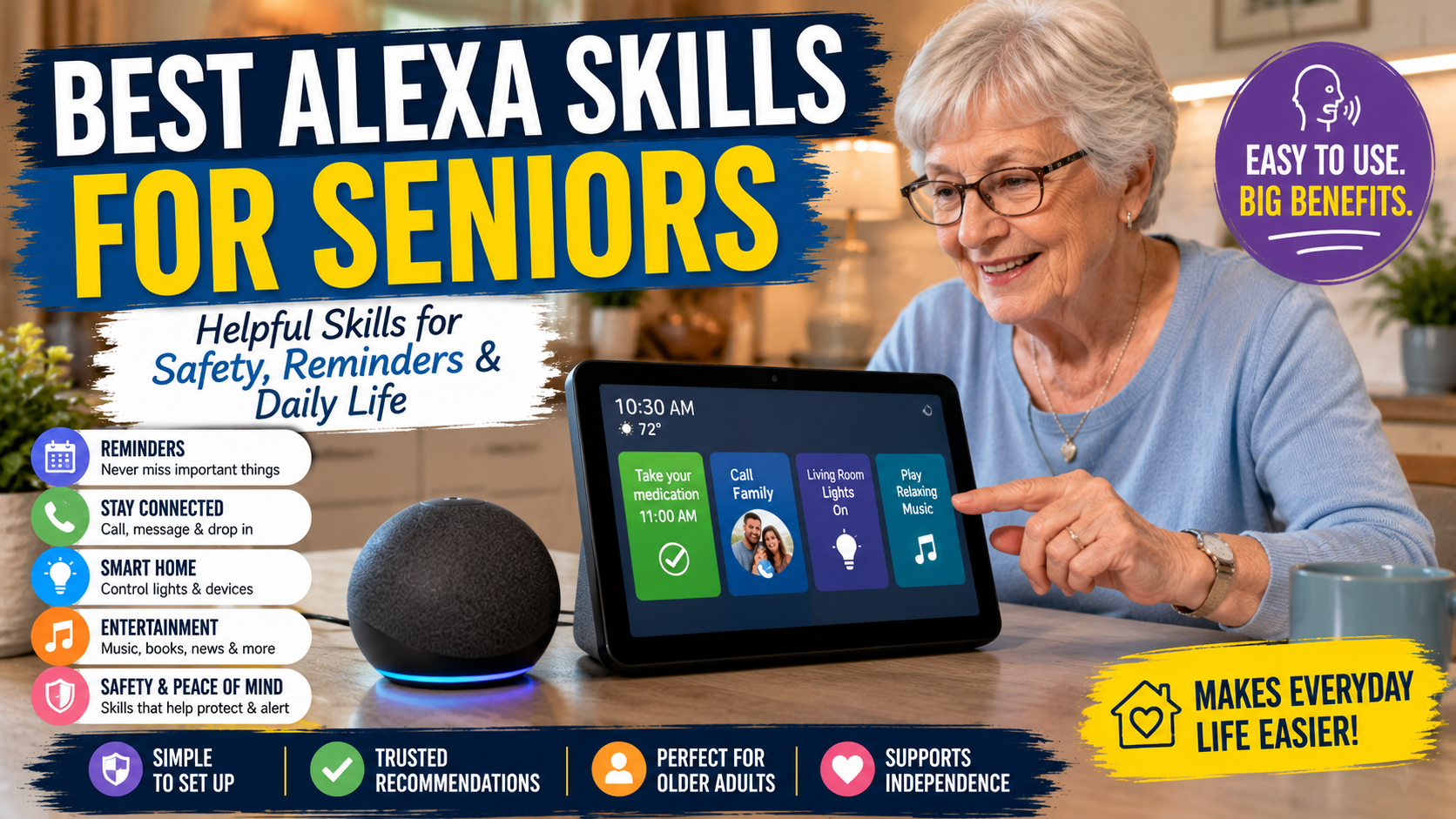
Once the main needs are clear, it helps to compare which Alexa skills are most useful for seniors before enabling too many extras at once.
Start with three or four real needs
Do not begin with everything Alexa can do. Start with the problems your parent already mentions. Maybe they forget afternoon medication, dislike walking to switch off lamps, or want easy music and weather updates in the morning. Build around those real needs first.
Use natural phrasing
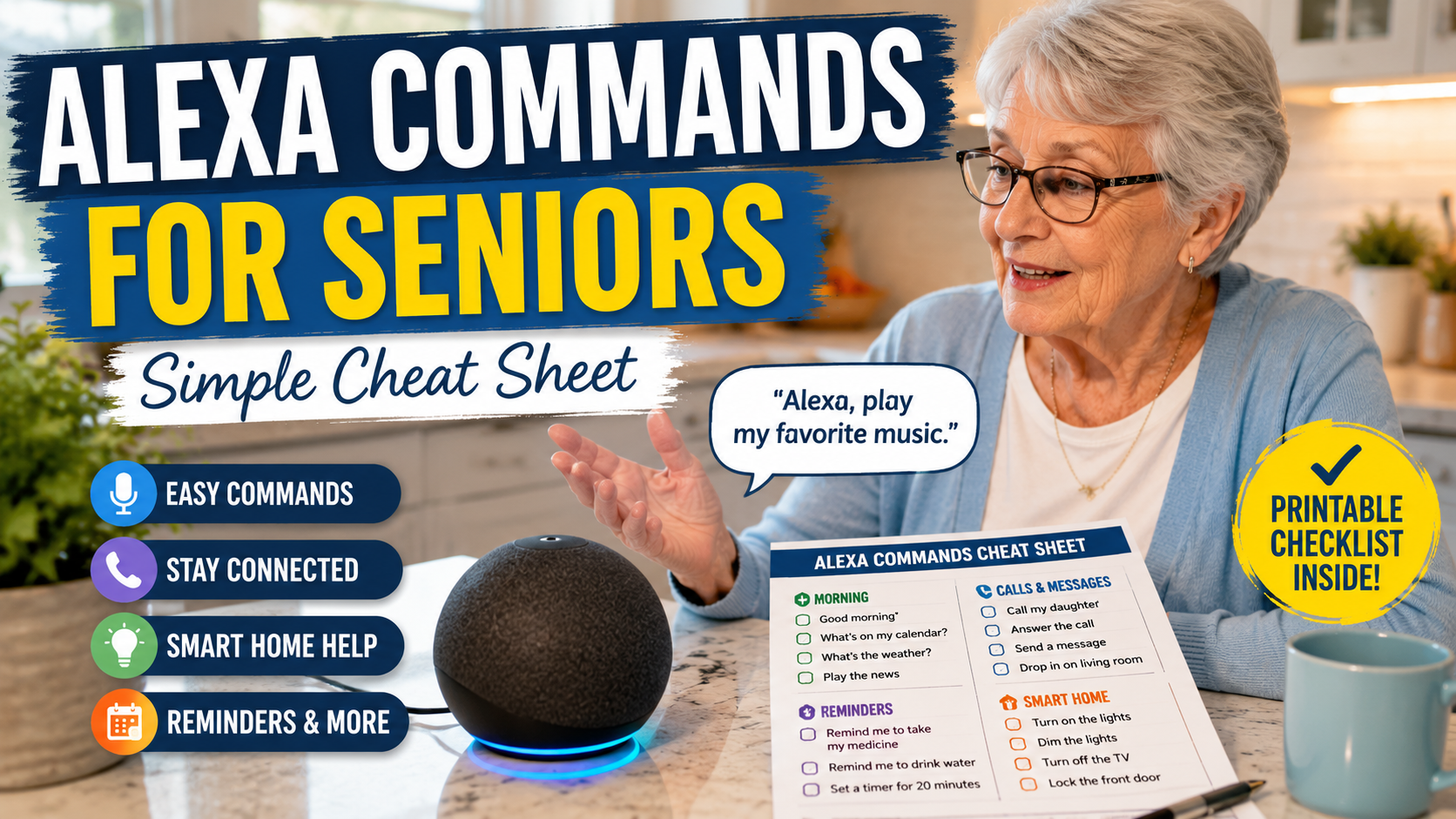
The commands should sound like things your parent would actually say. Simple, memorable language is far more important than clever automation. A short Alexa commands for seniors list can make those first routines easier to practice.
Link it to useful devices, not random devices
Alexa becomes more valuable when it controls practical household tools. Lamps, smart plugs, and selected safety devices usually matter more than novelty accessories. This is why Alexa often belongs in the same conversation as home safety improvements outlined in our home safety guide.
Review the routine after two weeks
Families should ask: Which reminders are actually helping? Which ones are being ignored? Does anything feel repetitive or annoying? Refining the setup is part of making it supportive rather than noisy.
Can Alexa help seniors live independently? The practical answer
Yes, Alexa can help seniors live independently when independence depends on better reminders, easier communication, simpler control of lights and devices, and lower daily effort around routine tasks. It is most effective for households where the goal is to reduce friction, not eliminate family involvement altogether.
Alexa is not a complete safety system and it is not a substitute for judgment, medication supervision, or fall prevention. But as one layer in an aging-in-place plan, it can make a meaningful difference in comfort, confidence, and day-to-day control.
If your family is deciding whether to try it, the right question is not Can Alexa do a lot? The right question is Will Alexa make this specific home easier to live in every day? When the answer is yes, it is often worth adding.
FAQ
Can Alexa really help older adults stay independent?
Yes, especially with reminders, communication, lighting control, and routine tasks that become tiring or easy to forget. Its value is practical rather than dramatic.
Is Alexa good for seniors who live alone?
It can be, particularly when it is used for reminders, check-ins, and easy control of household devices. It is most helpful when paired with other safety tools where needed.
Can Alexa replace caregiver support?
No. It can reduce the need for constant small reminders, but it does not replace human judgment, medication oversight, or in-person help when those are needed.
What is the best Alexa feature for seniors?
For many families, reminders and voice-controlled lights provide the biggest day-to-day benefit because they reduce routine friction immediately.
Should families start with lots of Alexa features?
No. Starting with a few useful routines usually leads to better adoption and less confusion.