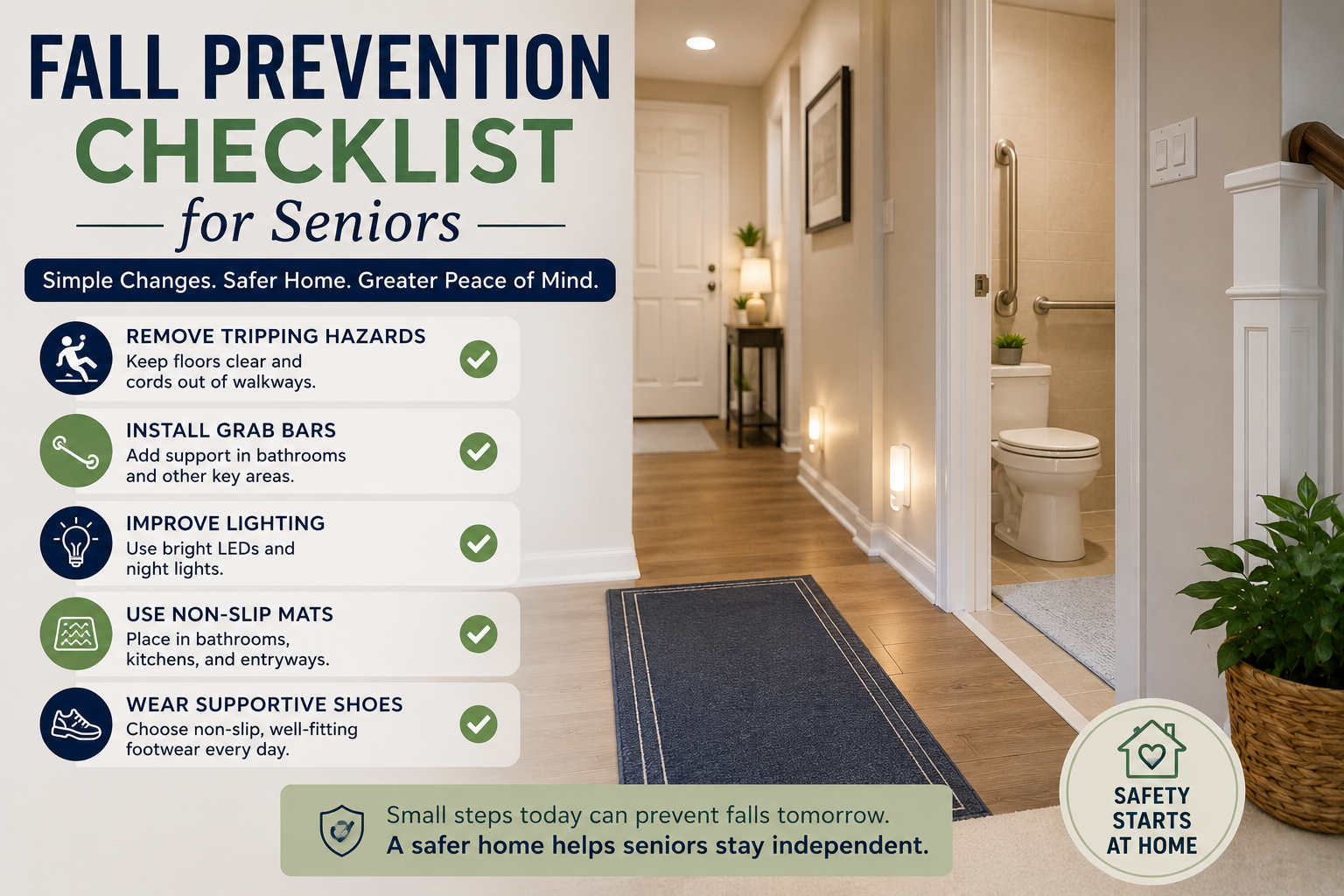
Fall Prevention Checklist for Seniors: A Room-by-Room Safety Guide
Quick Answer
A good fall prevention checklist for seniors should focus on the places where falls are most likely to happen: entrances, bathrooms, bedrooms, kitchens, hallways, stairs, and outdoor walkways. Families should look for loose rugs, poor lighting, clutter, slippery floors, missing handrails, unstable furniture, high thresholds, and items stored out of easy reach.
The safest approach is simple: remove trip hazards, improve lighting, add hand support where needed, keep everyday items within reach, and review the home room by room. Fall prevention does not have to make a home feel clinical. Small, practical changes can make a parent’s home safer while still helping them feel independent.
For a broader safety review beyond falls, start with our room-by-room home safety checklist for seniors. This guide goes deeper on one specific issue: preventing falls at home.
Table of Contents
- Why falls are a major home safety risk
- Common causes of falls at home
- Room-by-room fall prevention checklist for seniors
- Simple safety products that can help
- Printable fall prevention checklist
- Frequently asked questions
Why Falls Are One of the Biggest Risks for Older Adults
Falls are one of the most common safety concerns for older adults living at home. The goal is not to scare families. The goal is to notice small hazards before they turn into emergencies.
A fall can happen during ordinary moments:
- Walking to the bathroom at night
- Reaching for a pan in the kitchen
- Stepping over a threshold
- Carrying laundry down stairs
- Getting out of bed too quickly
- Walking across a wet bathroom floor
- Opening the front door while holding bags
Many fall risks are not dramatic. They are small, repeated friction points in the home. A rug corner curls up. A hallway is too dim. A towel is stored too high. A parent keeps using a wobbly chair for support because it has always been there.
That is why a room-by-room fall prevention checklist can help. It gives families a calm way to review the home, make simple changes, and support aging in place without turning the house upside down.
If your family is planning long-term home safety, pair this checklist with our aging in place checklist.
Common Causes of Falls at Home
Most falls at home are not caused by one single problem. They often happen when several small risks come together.
| Fall Risk | Why It Matters | First Fix to Consider |
|---|---|---|
| Poor lighting | Makes steps, rugs, pets, cords, and thresholds harder to see | Add night lights or motion sensor lights |
| Loose rugs | Edges can curl or slide | Remove rugs or secure them with non-slip backing |
| Clutter | Creates obstacles in walking paths | Clear floors and simplify layouts |
| Slippery floors | Bathrooms, kitchens, and entryways can become slick | Use non-slip mats and clean spills quickly |
| Missing hand support | Seniors may grab unstable furniture | Add grab bars or handrails where appropriate |
| Items stored too high or low | Reaching and bending can affect balance | Move daily items to waist-to-shoulder height |
| Pets and cords | Easy to trip over unexpectedly | Reroute cords and create safer pet routines |
| Rushing | Urgency increases risk, especially at night | Improve access, lighting, and bathroom paths |
Families should also consider health, vision, footwear, medications, and mobility changes. This article focuses on the home environment, not medical advice. If falls, dizziness, balance changes, or medication side effects are a concern, speak with a qualified professional.
Room-by-Room Fall Prevention Checklist for Seniors
Bathroom checks often deserve extra attention, so families should also review how to reduce bathroom fall risks before treating the checklist as complete.
Use this checklist slowly. You do not have to fix everything in one day. Start with the rooms your parent uses most often and the paths they walk every day.
Entrance
The entrance is often overlooked, but it can be risky because people are carrying keys, mail, groceries, bags, or packages.
Risks
- Uneven thresholds
- Loose mats
- Poor lighting
- Wet or slippery flooring
- Shoes left near the door
- Packages blocking the walkway
- No place to sit while removing shoes
What to check
- Can your parent enter without stepping over clutter?
- Is the doorway bright enough at night?
- Does the doormat slide?
- Is there a stable surface for balance?
- Are shoes stored safely, not scattered on the floor?
Easy improvements
- Use a low-profile, non-slip mat.
- Add a motion sensor porch light.
- Keep the entry floor clear.
- Place a sturdy chair or bench nearby if your parent changes shoes.
- Make sure packages are moved quickly.
- Repair or mark uneven thresholds if needed.
Example: If your mother carries groceries inside and sets them near the door, create a small landing spot at waist height. That may reduce bending, twisting, and stepping around bags.
Living Room
The living room should be comfortable, but comfort can create hidden fall risks: low tables, cords, soft rugs, pets, and furniture arranged too tightly.
Risks
- Coffee tables in walking paths
- Extension cords
- Loose rugs
- Low furniture
- Poor lighting near seating
- Unstable chairs used for support
- Pet toys on the floor
What to check
- Is there a clear path from the chair to the hallway?
- Can your parent stand up from their favorite chair without pulling on a table?
- Are cords tucked away?
- Are rugs flat and secure?
- Is there enough light near the chair?
Easy improvements
- Remove unnecessary small tables from walking paths.
- Route cords behind furniture.
- Use lamps that are easy to turn on, or add smart plugs.
- Choose stable seating with arms.
- Keep remote controls, glasses, and phones within reach.
- Remove or secure loose rugs.
Smart plugs and voice-controlled lights can help if your parent has trouble reaching switches. For broader technology ideas, see our guide to smart home devices that help seniors stay independent.
Kitchen
Kitchen falls often happen because of reaching, bending, spills, or moving too quickly while cooking.
Risks
- Wet floors
- Items stored too high
- Heavy pots in low cabinets
- Step stools
- Poor lighting under cabinets
- Loose floor mats
- Cluttered counters
What to check
- Can your parent reach everyday dishes without stretching?
- Are heavy items stored at a safe height?
- Are spills cleaned quickly?
- Are mats flat and non-slip?
- Is the path between sink, stove, and refrigerator clear?
Easy improvements
- Move daily items to waist-to-shoulder height.
- Store heavy cookware where it can be lifted safely.
- Avoid step stools unless specifically recommended and safely used.
- Use non-slip mats only if they stay flat.
- Add under-cabinet lighting if the counter area is dim.
- Keep commonly used items on lower shelves, not top cabinets.
Example: If your father uses a chair to reach a high cabinet, that is a major warning sign. Move the items he uses most often to a safe shelf immediately.
Bathroom
The bathroom is one of the most important rooms to review because water, hard surfaces, and movement in small spaces can increase fall risk.
Risks
- Wet floors
- Slippery tub or shower
- No grab bars
- Low toilet height
- Poor nighttime lighting
- Towels or toiletries out of reach
- Loose bath mats
What to check
- Is there a secure handhold near the shower or tub?
- Does the bath mat slide?
- Can your parent reach soap and towels without bending or twisting?
- Is the toilet easy to sit on and stand from?
- Is the bathroom path lit at night?
Easy improvements
- Install properly mounted grab bars.
- Use non-slip strips or mats in the shower.
- Add a night light or motion sensor light.
- Keep towels and toiletries within easy reach.
- Remove loose rugs.
- Consider a shower chair if recommended by a professional.
Do not rely on towel bars as grab bars. They are not designed to hold body weight.
Bedroom
Many falls happen at night or early morning when a person is sleepy, the room is dark, or they stand up too quickly.
Risks
- No light within reach
- Clutter near the bed
- Loose slippers
- Bed height too high or too low
- Cords near the nightstand
- Rugs beside the bed
- Urgent trips to the bathroom
What to check
- Can your parent turn on a light before getting up?
- Is there a clear path from bed to bathroom?
- Are slippers supportive and easy to put on?
- Is the bed stable?
- Are phone, glasses, and water within reach?
Easy improvements
- Add a bedside lamp or voice-controlled light.
- Use motion sensor night lights.
- Remove rugs beside the bed if they slide.
- Keep the floor clear.
- Place essentials on a stable nightstand.
- Make sure footwear has a non-slip sole.
Example: A simple motion light between the bedroom and bathroom may be more useful than an expensive gadget if nighttime bathroom trips are the biggest concern.
Hallways
Hallways connect the home. If they are narrow, dim, or cluttered, they can become fall-risk zones.
Risks
- Poor lighting
- Clutter along the wall
- Loose runners
- Uneven flooring
- Pets lying in the path
- Laundry baskets or boxes
What to check
- Is the hallway bright from end to end?
- Are there any cords crossing the path?
- Are rugs or runners secure?
- Can your parent walk through without turning sideways?
- Are handrails needed in long hallways?
Easy improvements
- Add plug-in or motion sensor night lights.
- Remove hallway runners if they curl or slide.
- Keep laundry and boxes out of walking paths.
- Repair uneven flooring.
- Add contrast tape to thresholds if visibility is poor.
Hallway lighting is one of the simplest upgrades for aging in place fall prevention.
Stairs
Stairs deserve special attention because a small misstep can have serious consequences.
Risks
- Missing or loose handrails
- Poor lighting
- Items left on steps
- Worn carpeting
- Uneven stair edges
- No contrast between steps
- Carrying too much at once
What to check
- Is there a sturdy handrail?
- Is lighting strong at top and bottom?
- Are steps clear every day?
- Are stair edges easy to see?
- Is carpet secure?
- Does your parent avoid stairs because they feel unsafe?
Easy improvements
- Install or repair handrails.
- Add bright lighting at both ends.
- Keep stairs completely clear.
- Use contrast strips if step edges are hard to see.
- Avoid storing items on stairs.
- Consider whether important items can be moved to one level.
If stairs are becoming a daily concern, it may be time to discuss larger home modifications with a professional.
Garage
Garages often combine poor lighting, uneven surfaces, tools, boxes, and steps.
Risks
- Clutter
- Oil or water on the floor
- Poor lighting
- Uneven steps into the house
- Tools or cords
- Heavy storage items
What to check
- Is the path from car to door clear?
- Is there enough light?
- Are tools stored safely?
- Is the step into the house easy to see?
- Are floors dry and clean?
Easy improvements
- Clear a wide walking path.
- Add brighter overhead lighting.
- Mark steps with contrast tape.
- Store tools on shelves or wall hooks.
- Keep frequently used items at easy height.
- Clean spills quickly.
Example: If your parent parks in the garage and walks through a narrow path between boxes, that path should be widened before adding any new technology.
Outdoor Areas
Outdoor falls can happen because of weather, uneven ground, steps, poor lighting, or rushed movement.
Risks
- Uneven walkways
- Wet leaves
- Ice or snow
- Poor porch lighting
- Loose railings
- Garden hoses
- Cracked pavement
What to check
- Is the walkway even?
- Are railings secure?
- Is the porch bright at night?
- Are hoses or tools stored away?
- Are steps easy to see?
- Is there a plan for leaves, rain, ice, or snow?
Easy improvements
- Add outdoor motion lighting.
- Repair cracks and uneven surfaces.
- Keep hoses and tools out of paths.
- Add or repair railings.
- Use non-slip outdoor mats.
- Arrange help for snow, ice, or heavy yard tasks if needed.
Outdoor safety is especially important for seniors who still drive, garden, walk the dog, or get the mail independently.
Simple Safety Products That Can Help
Products do not replace judgment, but the right simple tools can reduce risk.
| Product | What It Helps With | Best Place to Use It |
|---|---|---|
| Grab bars | Stable support near wet areas | Bathroom, shower, toilet |
| Motion sensor lights | Better visibility without reaching for switches | Hallways, bedroom, bathroom, entry |
| Non-slip mats | Reducing slipping on wet floors | Shower, tub, entry |
| Night lights | Safer nighttime movement | Bedroom, bathroom path, hallway |
| Handrails | Support on stairs or steps | Stairways, outdoor steps |
| Medical alert devices | Calling for help after a fall or emergency | Worn by the senior |
| Smart lights | Voice or scheduled lighting | Bedroom, hallway, living room |
Grab bars
Grab bars should be properly installed into secure supports. Do not rely on towel bars, shower doors, or furniture for body weight.
Motion sensor lights
Motion sensor lights are helpful because they work even when someone forgets to turn on a switch. They are especially useful between bedroom and bathroom.
Non-slip rugs and mats
If a rug cannot be secured, remove it. A beautiful rug is not worth keeping if it creates daily fall risk.
Night lights
Night lights are inexpensive and practical. Use them in hallways, bathrooms, bedrooms, and entry areas.
Handrails
Handrails should be sturdy, easy to grip, and placed where the person naturally reaches.
Medical alert devices
For seniors with higher fall risk, a medical alert device may be more appropriate than relying on phones, voice assistants, or family calls alone.
Smart cameras as support
Smart cameras may help some families monitor entrances or shared areas, but they raise privacy concerns. They should be used carefully, with consent, and never as a substitute for human care.
Printable Fall Prevention Checklist
This section is designed so families can later turn it into a printable PDF.
Quick home review
- Remove loose rugs or secure them properly
- Clear all walking paths
- Add night lights between bedroom and bathroom
- Improve lighting at entrances and stairs
- Move daily items to easy reach
- Check bathroom grab bars and non-slip surfaces
- Keep floors dry
- Remove cords from walkways
- Make stair edges visible
- Keep phones or help options accessible
Entrance
- Non-slip mat
- Clear doorway
- Bright light
- Stable place for bags or shoes
- No packages blocking path
Living room
- Clear path to seating
- Cords tucked away
- Stable chair with arms
- Rugs removed or secured
- Lamp or smart light easy to use
Kitchen
- Heavy items stored safely
- No step stool dependence
- Spills cleaned quickly
- Non-slip mat if needed
- Good counter lighting
Bathroom
- Grab bars installed where needed
- Non-slip shower surface
- Night light
- Towels and toiletries within reach
- No loose bath rugs
Bedroom
- Light reachable from bed
- Clear path to bathroom
- Supportive footwear nearby
- No loose rugs
- Essentials on stable nightstand
Hallways and stairs
- Bright lighting
- No clutter
- Secure handrails
- Step edges visible
- No items stored on stairs
Outdoors
- Walkways even and clear
- Railings secure
- Porch light working
- Hoses and tools stored away
- Weather plan for ice, snow, leaves, or rain
Common Mistakes Families Make
Mistake 1: Only checking the bathroom
Bathrooms are important, but falls can happen anywhere. Bedrooms, hallways, stairs, and entrances also matter.
Mistake 2: Leaving rugs because they look nice
If a rug slides, bunches, curls, or catches a foot, it is a risk. Secure it properly or remove it.
Mistake 3: Buying gadgets before fixing basics
Smart lights are helpful, but they will not fix a cluttered hallway or loose stair rail.
Mistake 4: Forgetting nighttime routines
Many falls happen when someone is tired or walking in low light. Check the path from bed to bathroom first.
Mistake 5: Not involving the parent
Your parent needs to feel respected. Walk through the home together when possible. Ask what feels difficult, slippery, dark, or frustrating.
Mistake 6: Ignoring medication-related fall risk
Some medication schedules or side effects may affect alertness, dizziness, or bathroom urgency. Do not make medical assumptions, but do talk with a qualified professional if you notice changes. For reminder tools, see our guide to medication reminder devices for seniors.
Mistake 7: Treating fall prevention as a one-time project
Homes change. Health changes. Habits change. Review the checklist again every few months or after any fall, illness, hospital stay, or mobility change.
Voice assistants are not fall detection systems, but simple voice commands that may help in urgent situations can be useful as an extra support layer when a senior already feels comfortable using Alexa.
Quick Tips for Families
- Start with the bedroom-to-bathroom path.
- Remove one fall hazard today, even if the full project takes longer.
- Improve lighting before buying complicated devices.
- Put daily items within easy reach.
- Watch how your parent actually moves through the home.
- Ask what feels unsafe instead of assuming.
- Keep safety changes subtle and respectful.
- Revisit the home after any change in mobility, vision, medication, or confidence.
For a wider home safety strategy, read how to make a home safer for an elderly parent living alone.
Frequently Asked Questions
How can seniors reduce the risk of falling?
Seniors can reduce fall risk by keeping walkways clear, improving lighting, removing loose rugs, using stable footwear, adding grab bars or handrails where needed, keeping daily items within reach, and reviewing the home regularly. Families should also discuss balance, vision, medication, or dizziness concerns with qualified professionals.
What room causes the most falls?
Bathrooms are often one of the highest-risk rooms because of water, hard surfaces, and movement in small spaces. However, falls can also happen in bedrooms, hallways, stairs, kitchens, entrances, and outdoor areas. The safest approach is to check the entire home.
Should older adults remove rugs?
Older adults should remove rugs that slide, curl, bunch, or create a tripping edge. If a rug is important, it should be low-profile and securely backed. When in doubt, removing a risky rug is usually safer than trying to work around it.
What lighting is best for fall prevention?
The best lighting is bright, even, and easy to activate. Motion sensor lights, night lights, bedside lamps, and smart lights can help seniors see paths clearly, especially from bedroom to bathroom, at entrances, and near stairs.
When should I consider home modifications?
Consider home modifications when your parent has trouble using stairs, getting in or out of the shower, standing from the toilet, walking through the home, or recovering after a fall. Larger modifications may require advice from an occupational therapist, contractor, or qualified professional.
What causes most falls in seniors at home?
Falls often happen because of a mix of factors: poor lighting, loose rugs, clutter, slippery floors, stairs, reaching or bending, pets, cords, medication effects, vision changes, balance issues, or rushing. Home changes can reduce environmental risks, but health-related concerns should be reviewed professionally.
What should I remove from the house to prevent falls?
Start with loose rugs, clutter in walking paths, cords across floors, unstable furniture, slippery mats, and items stored on stairs. Also remove or relocate anything your parent has to step over, reach awkwardly for, or walk around every day.
What safety devices really help prevent falls?
Simple devices often help most: grab bars, night lights, motion sensor lights, handrails, non-slip shower surfaces, stable seating, and medical alert devices for higher-risk seniors. Smart lights and smart plugs can also help by making lighting easier to control.
A home walkthrough can help families identify everyday hazards and decide what to address first. Our printable Senior Home Safety Starter Kit ($19) is an optional planning companion—not a medical assessment or a guarantee against falls.
Conclusion
Fall prevention for seniors is not about making a home feel restrictive. It is about helping an older adult move through familiar spaces with more confidence.
Start with the highest-risk paths: entrance, bedroom to bathroom, stairs, hallway, and shower. Remove loose rugs, improve lighting, add stable support, and keep everyday items within easy reach.
Then review the home again over time. A fall prevention checklist is not a one-time task. It is part of supporting safer aging in place.
For the next step, use this article alongside our room-by-room home safety checklist for seniors and the broader aging in place checklist.