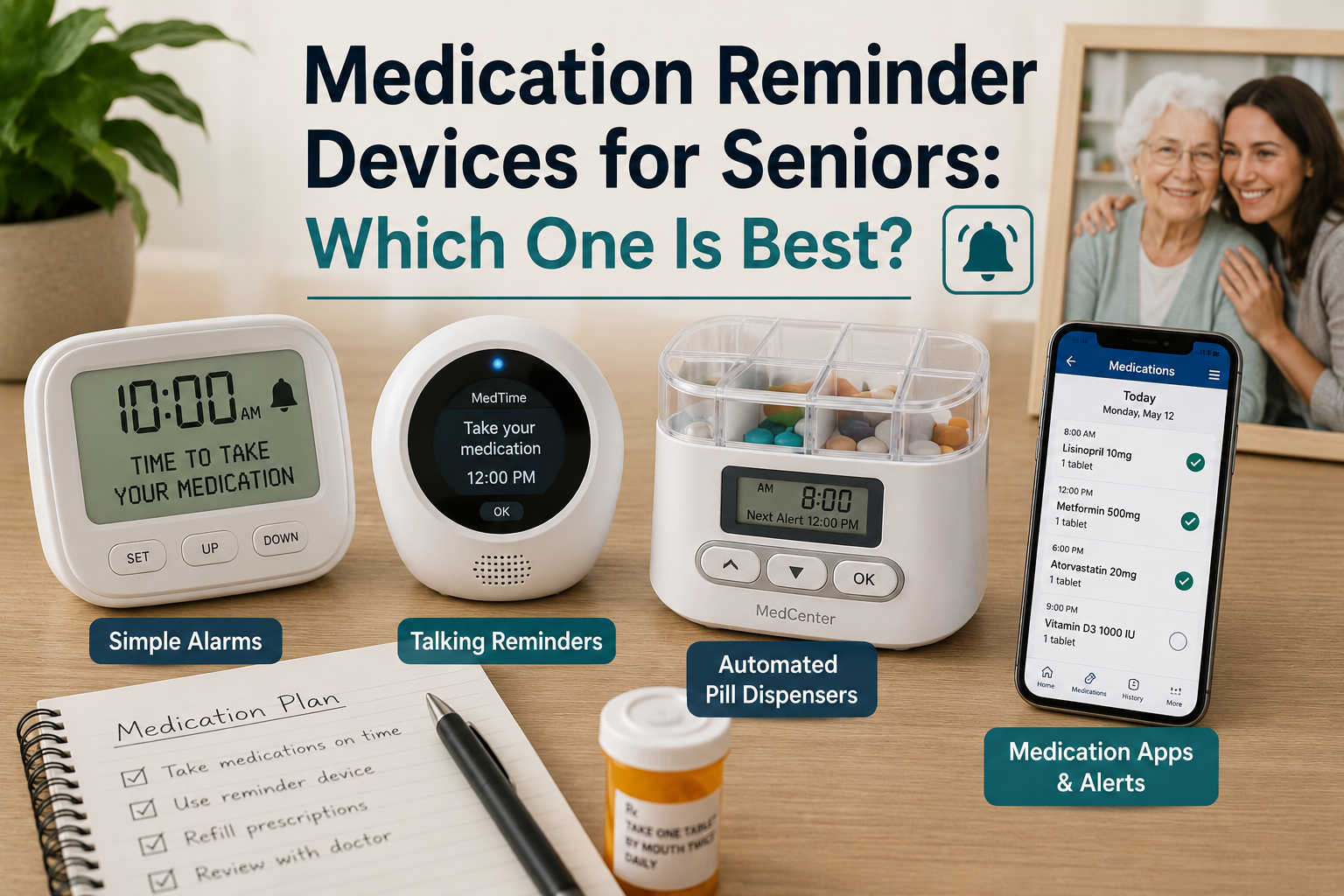
Medication reminder devices for seniors comparing alarms, pill dispensers and medication apps

Medication Reminder Devices for Seniors: Which One Is Best?

Medication Reminder Devices for Seniors: Which One Is Best?

Medication management looks simple from the outside. In reality, it is one of the most stressful parts of helping an older parent stay independent. Many families are not dealing with a refusal to take medicine. They are dealing with real-life friction: similar pill bottles, changing schedules, missed afternoon doses, confusion after a poor night of sleep, or the simple fact that aging hands and eyes make routines harder than they used to be.

That is why the best medication reminder device for seniors is not one universal product. It is the device type that matches the person, the number of medications involved, and the level of family support available. Some older adults only need a gentle prompt. Others need a system that dispenses pills, sends caregiver alerts, and reduces the chance of double dosing.

This guide explains the major categories of medication reminder devices, who each type is best for, and how families can choose without overbuying. If you are building a broader independence plan, this topic connects closely with 10 Smart Home Devices That Help Seniors Stay Independent and What Is Aging in Place and Why More Families Are Choosing It.

Table of Contents

  • Why medication routines break down at home
  • The main types of medication reminder devices
  • Which type is best for different situations
  • Features that matter most
  • Common mistakes families make
  • How to choose a device that will actually be used
  • Frequently asked questions

Why medication routines break down at home

Most missed doses are not caused by carelessness. They happen because life gets noisy. A parent falls asleep in a chair. A meal runs late. The pill organizer was filled correctly, but the box looks the same as yesterday. A refill schedule changes. Vision, hearing, and memory all influence whether a routine stays stable.

Medication support is also emotionally sensitive. Many older adults want to remain in control of their own care, and they are right to feel that way. The best reminder devices respect that independence while giving just enough structure to prevent small mistakes from becoming patterns.

Families often notice this issue at the same time they start thinking more broadly about home safety and daily support. If that sounds familiar, it may help to review How to Make a Home Safer for an Elderly Parent Living Alone, because medication routines are part of the same larger independence picture.

The main types of medication reminder devices

Most devices fall into five practical categories. Each one solves a slightly different problem.

1. Basic alarm reminders

These are the simplest devices. They beep, flash, or vibrate at a scheduled time to prompt a dose. They work best for seniors who are still very capable of organizing medication but occasionally lose track of time.

Best for: straightforward schedules, one or two daily reminders, and people who want minimal technology.

Weak point: the device reminds, but it does not confirm whether the medication was actually taken.

2. Smart pill boxes with timed compartments

These systems add structure by pairing reminders with labeled or timed compartments. Instead of asking the person to remember which bottle and how much, the device helps organize the dose ahead of time.

Best for: seniors who can self-manage but benefit from better visual organization.

Weak point: the box still needs to be filled correctly and consistently.

3. Automatic dispensers

Automatic dispensers release the right dose at the right time and often lock the remaining medication between scheduled windows. This reduces the risk of double dosing or confusion between pills.

Best for: more complex schedules, memory concerns, or households where a caregiver wants better dose control.

Weak point: these systems are more expensive and may require a setup routine the family can maintain.

4. Connected caregiver-alert systems

Some medication devices send alerts to an adult child or caregiver if a dose is missed. This can be a strong middle ground between independence and oversight because it supports autonomy while still giving the family a way to notice problems early.

Best for: families supporting a parent from another home, another city, or another state.

Weak point: too many alerts can create fatigue if the system is not tuned carefully.

5. Voice-assistant-based reminders

Voice assistants can handle recurring reminders and verbal prompts, which is why some families use them as part of a medication routine. This approach can work surprisingly well when the schedule is simple and the person responds well to spoken prompts.

Best for: seniors already comfortable with voice routines and households that want a low-barrier starting point.

Weak point: voice prompts alone do not organize pills or confirm the dose was taken.

Which medication reminder device is best?

The best medication reminder device depends on the level of support required. There is no honest way around that.

For a senior who is mostly independent

A basic alarm reminder or a well-organized smart pill box is often enough. These tools support the routine without making the person feel managed. If the goal is simply to reduce occasional forgetfulness, starting simple is usually the right call.

For a senior with several medications each day

A smart pill box with strong visual organization or an automatic dispenser is usually the better choice. Once medication schedules become more layered, the risk comes less from forgetting the time and more from confusion about the dose itself.

For a parent living alone with adult children checking in remotely

A connected system that can alert a caregiver about missed doses may be the most useful. Families in this position are often trying to balance respect for privacy with a need to know when a pattern is slipping.

For a parent already using Alexa or another voice tool

Voice reminders can be an excellent support layer, but not always the full solution. They work best when combined with a simple physical organization method. If your family is exploring that route, use the dedicated tutorial to set up Alexa medication reminders, then compare whether a voice reminder is enough or a dedicated device is safer.

Features that matter more than marketing

Families can save time by focusing on the features that improve daily reliability rather than the features that sound futuristic.

Clear reminders

Audible alerts should be easy to hear, but they should also be distinctive enough to stand out from background noise. Flashing lights help when hearing loss is a factor.

Simple refill workflow

If refilling the device takes too long or feels error-prone, the system may not last. The best tool is one your family can maintain consistently.

Visible compartments or dose confirmation

Many families need a quick way to answer the question, Was that dose taken already? Devices that reduce ambiguity are usually worth the extra thought.

Remote alerts only when they matter

Caregiver notifications are useful, but too many nonessential alerts make families tune out. The best systems let you send attention only to missed doses or higher-risk situations.

Low cognitive load

The device should not require your parent to remember a dozen steps. Technology is helpful only when it reduces the mental load of staying on schedule.

Common mistakes families make

The first mistake is assuming that a more advanced device is automatically safer. Complex devices can solve real problems, but they can also introduce friction if the person using them feels confused or controlled.

The second mistake is buying a reminder tool when the real problem is regimen complexity. If there are many medications, multiple dose times, and frequent changes, the family may need a better workflow, not just a louder alarm.

The third mistake is ignoring how medication support fits into the rest of the home. A person who struggles with daily routines may also need better lighting, easier communication tools, or a simpler path to asking for help. That is why medication systems often belong inside a wider plan for independence, not as an isolated fix.

How to choose a device your parent will actually use

Medication routines can reveal when smart home help may be needed, especially if reminders, refills, or family check-ins keep breaking down.

Start with a conversation, not a purchase. Ask what feels difficult now. Is it remembering the time? Opening containers? Knowing whether a dose was already taken? Feeling rushed? Once the real friction is clear, the right device type becomes easier to spot.

Then test for fit:

  • Can your parent understand what the device is asking them to do at the exact moment an alert happens?
  • Can the family refill or manage it without creating a complicated maintenance burden?
  • Does it preserve independence instead of taking over unnecessarily?
  • Will it still make sense if routines change in six months?

In many homes, the best answer is not the smartest device. It is the device your parent feels comfortable with and your family can support consistently.

How medication reminder devices support aging in place

Medication routines are one of the quiet foundations of aging in place. When they stay stable, people feel more confident. Families worry less. Daily life stays predictable. When they break down, the household often feels fragile very quickly.

That is why medication support deserves the same thoughtful approach as smart lighting, door safety, and communication tools. It is not about turning the home into a clinic. It is about giving the person enough structure to stay independent safely for longer. If you are reviewing several risk areas at once, our aging in place checklist can help you step back and assess the bigger picture.

For families thinking beyond one device, the bigger framework in our aging in place guide can help connect the dots.

Final answer: which type is best?

If the question is which medication reminder device is best for seniors, the most accurate answer is this: simple alarms are best for straightforward routines, smart pill boxes are best for people who need organization, automatic dispensers are best for more complex or higher-risk schedules, and caregiver-connected systems are best when the family needs visibility from a distance. Voice reminders can be very useful, but they work best as part of a broader routine rather than the only safety net.

Choosing the right category first will usually matter more than comparing brands too early. Match the device to the real problem, and you are much more likely to end up with something that genuinely helps.

FAQ

What is the best medication reminder device for seniors living alone?

It depends on the medication schedule and the seniors comfort level. Many people living alone do well with a smart pill box or a caregiver-connected reminder system because those options balance independence with structure.

Are voice reminders enough for medication management?

They can help with simple routines, but they are usually not enough for complex medication schedules or for situations where dose confirmation matters.

Do automatic dispensers help prevent double dosing?

They can reduce that risk because they release medication only at the scheduled time and keep other doses unavailable in the moment.

Should families choose the most advanced device available?

Not necessarily. The best device is the one that fits the persons routine and can be maintained reliably by the family or caregiver.

Can medication reminder devices support aging in place?

Yes. They can reduce missed doses, add structure to the day, and help older adults remain independent at home with more confidence.
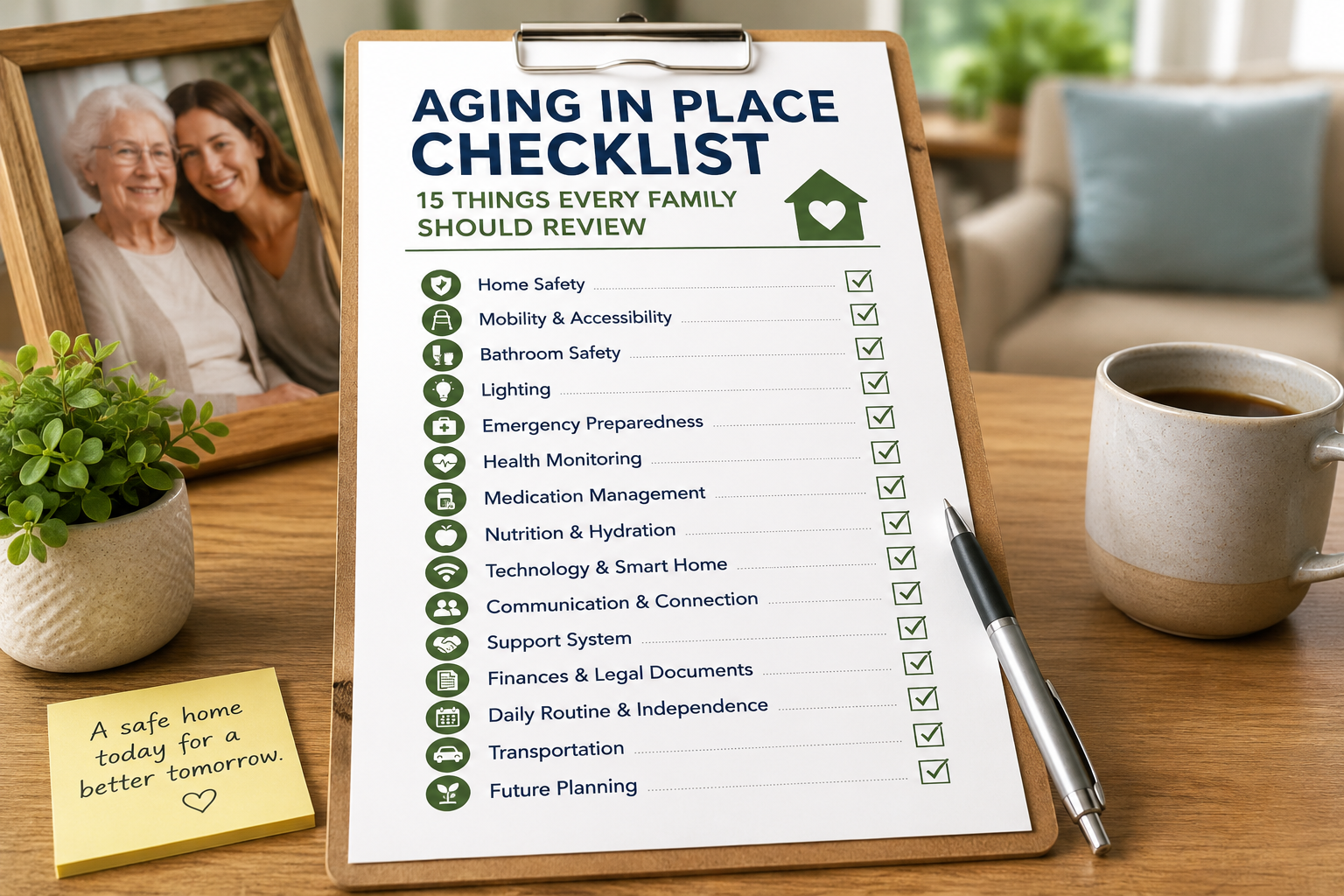

Aging in place checklist for families reviewing home safety and senior independence

Aging in Place Checklist: 15 Things Every Family Should Review

Aging in Place Checklist: 15 Things Every Family Should Review

Aging in place sounds simple when people say it out loud. Most families hear the phrase and think it means staying at home longer. That is true, but it is only the surface of the decision. In practice, aging in place works best when families review the home, the routine, the risks, and the support system before something urgent forces a rushed decision.

That is what this checklist is for. It is not a crisis document. It is a planning tool for families who want to look at the real conditions around an older adults daily life and figure out what needs strengthening now. Some items are physical, like lighting and stairs. Others are operational, like communication, medications, or who notices when routines start slipping.

If you are new to the topic, this article is the practical companion to What Is Aging in Place and Why More Families Are Choosing It. The earlier article explains the idea. This one helps you review whether the current setup truly supports it.

Table of Contents

  • Why every family needs an aging in place checklist
  • The 15 areas to review
  • How to prioritize what to fix first
  • How smart home technology fits into the checklist
  • Frequently asked questions

Why every family needs an aging in place checklist

Families often wait too long because daily life still looks mostly fine. The parent is still living at home, meals are happening, and nothing catastrophic has happened yet. But aging in place usually succeeds or fails based on the accumulation of small details. One missed medication, one dark hallway, one hard-to-reach lock, one growing fear of strangers at the door, one week of exhaustion after a minor illness. None of those issues alone may force a move, but together they can make home feel fragile.

A checklist helps families move from vague worry to concrete planning. It turns I think Mom needs more support into specific observations and manageable next steps. If you want a more tactical walkthrough by space, our room-by-room home safety checklist for seniors can help you inspect entryways, bathrooms, bedrooms, and stairs in a more structured way.

The 15 things every family should review

Night routines deserve their own review, so families should include nighttime safety for seniors when checking lighting, bathroom access, and response plans.

1. Entryway safety

Can your parent get in and out of the home safely in daylight, after dark, and in poor weather? Look at steps, railings, thresholds, outdoor lighting, uneven surfaces, and how hard the door is to manage physically. If the front door feels stressful, visitors and daily errands become harder immediately.

2. Visitor screening and front-door confidence

How does your parent handle unexpected visitors? Can they see who is there before opening the door? Do they feel pressure to answer quickly? This is where doorbells, locks, and communication habits matter. Families dealing with that issue directly should also review our guide on making a home safer for an elderly parent living alone.

3. Lighting quality throughout the home

Good lighting is not cosmetic. It affects balance, confidence, and whether someone avoids moving around the house at certain times. Review hallways, bathrooms, stair areas, bedside lighting, and the path from bed to toilet at night.

4. Fall-risk areas

Identify where slipping, tripping, or awkward movement is most likely. Rugs, cords, clutter, unstable furniture, steep stairs, low seating, and bathrooms are common problem areas. Families often underestimate how quickly a minor obstacle can become a major issue.

5. Bathroom usability

Bathrooms deserve a separate review because they combine hard surfaces, wet floors, bending, and privacy. Consider shower entry, grab support, lighting, seat height, towel placement, and whether basic supplies are easy to reach.

6. Bedroom setup

Is the bed too low or too high? Is there a clear path for nighttime movement? Is a phone, lamp, or call-for-help option within easy reach? A good bedroom setup reduces risk and also helps a person feel calmer at night.

7. Kitchen routine and appliance safety

Look beyond whether the kitchen is tidy. Can your parent prepare food without overreaching, lifting unsafely, or forgetting what is on the stove? Are the most-used items stored at an easy height? Can they see labels and controls clearly?

8. Medication management

Medication routines are one of the most important parts of staying at home successfully. Review how doses are organized, what happens when schedules change, and whether reminders are actually reliable. If this is becoming the weak point, our article on smart home devices that help seniors stay independent can help you think about support tools more broadly.

9. Communication and emergency contact access

Can your parent easily call or message someone if they are worried, confused, or need help? Is there a system that works from the rooms where they spend the most time? Communication should be easy before an emergency, not just during one.

10. Daily routine reliability

How stable is the day overall? Are meals regular? Are appointments remembered? Are bills, errands, and household tasks staying on track? A stable daily rhythm is often one of the strongest signs that aging in place is still working well.

11. Mobility inside the home

Watch how your parent moves from room to room. Are there places where they brace themselves against furniture? Do they avoid certain parts of the home? Do they move differently when tired? Those details matter more than formal statements like Im doing fine.

12. Comfort with technology

Technology can support independence, but only if it feels understandable. Review whether your parent is open to reminders, voice assistance, smart lighting, or simple monitoring tools. The goal is not to fill the home with devices. The goal is to use the few that solve real daily friction.

13. Family support capacity

Aging in place does not happen in isolation. Even when a parent lives alone, there is usually some form of family or caregiver support behind the scenes. Review who handles what now and whether that arrangement is realistic for the next six to twelve months.

14. Transportation and community access

Can your parent get groceries, attend appointments, and stay socially connected? Independence at home can weaken quickly if the outside world becomes too hard to reach.

15. Future change planning

Finally, ask what happens if one variable changes. What if mobility declines? What if a spouse becomes unavailable? What if medications increase? A strong aging in place plan includes a next step before it becomes urgent.

How to prioritize what to fix first

Not every issue needs to be solved this week. The right way to prioritize is to look for the problems that combine high risk with high frequency. That usually means anything involving falls, medications, nighttime navigation, or front-door safety rises to the top first.

After that, focus on the issues that create daily stress or avoidance. If your parent avoids answering the door, climbing stairs, or using a shower independently, that deserves attention quickly because it affects confidence as much as safety.

How smart home technology fits into the checklist

Smart home technology is most useful after the checklist reveals where the routine is weak. It should not lead the conversation. It should support the plan. That may mean better entry awareness, voice-controlled lighting, reminder systems, or easier communication.

For example, if daily routines are becoming harder to manage, voice assistance may help. If your family is considering that route, our beginners guide to Alexa for seniors explains where it tends to fit best. If the bigger issue is a scattered mix of small household risks, a combination of devices may be more effective than any one tool.

The key is not to chase gadgets. It is to remove friction from the exact parts of home life that are becoming harder.

What this checklist tells families

An aging in place checklist does not answer every question, but it tells you where the current setup is strong and where it is thin. That is what families need most. It shifts the conversation away from vague reassurance and toward practical action.

If most of the boxes above look stable, then aging in place may already be working well. If several areas feel shaky, that does not automatically mean a move is necessary. It usually means the plan needs reinforcement.

The best time to do this review is before a crisis. That is when families still have choices, room to test solutions, and the ability to support independence in a way that feels respectful rather than rushed.

FAQ

What is an aging in place checklist?

It is a practical review of the home, routines, risks, and support systems that affect whether an older adult can remain safely and comfortably at home.

How often should families review aging in place needs?

At minimum, review them after any health change, fall, hospitalization, or noticeable shift in routine. Many families also benefit from a simple review every six to twelve months.

What should families fix first?

Prioritize frequent high-risk issues such as falls, poor lighting, medication problems, and front-door safety. Those tend to have the biggest immediate effect.

Can smart home technology help with aging in place?

Yes, when it targets real daily friction. Technology works best when it supports a clear plan rather than acting as a replacement for planning.

Does needing a checklist mean a parent can no longer live independently?

No. In many cases it means the household needs a few targeted improvements so independence can continue more safely and comfortably.

Older man living independently at home as part of an aging in place lifestyle

What Is Aging in Place and Why More Families Are Choosing It

What Is Aging in Place and Why More Families Are Choosing It

The phrase aging in place has become much more common in recent years, and for good reason. More families are trying to help older adults stay in their own homes for longer instead of moving immediately into assisted living or other care settings. For many people, home represents familiarity, dignity, routine, and comfort. Leaving it can feel emotionally difficult even when the move is well intended.

But aging in place is not simply about staying put. It is about making sure an older adult can live safely, comfortably, and realistically in the place they call home. That includes the physical home itself, the daily support available, the person’s health and mobility, and the tools that can help reduce friction in everyday life.

When families understand what aging in place actually means, they can make better decisions. Instead of treating it as an emotional debate between “stay home” and “move out,” they can evaluate whether the current setup truly supports safety, independence, and quality of life.

Table of Contents

What Aging in Place Means

Aging in place means an older adult continues living in their own home or a familiar home environment as they age, rather than relocating simply because they are getting older. The idea is not that nothing changes. In fact, successful aging in place usually requires thoughtful changes over time.

Those changes may include safer lighting, fewer fall hazards, support from family or caregivers, simpler technology, and routines that match changing physical or cognitive needs. In other words, aging in place is not passive. It is an active plan.

That is an important distinction, because some families treat staying at home as the default simply because no one is ready to make a different decision. True aging in place involves preparation, not avoidance.

Why Families Choose It

Families often choose aging in place because home carries emotional value. A parent may know the neighborhood, trust the local routines, and feel calmer in a familiar space. That comfort can support confidence and independence in ways that are hard to measure.

There are practical reasons too. Moving can be expensive, stressful, and disruptive. In some cases, a parent may not need a full care setting and may do very well with a safer home, better routines, and occasional outside help.

Independence matters

Many older adults want control over their own schedule, meals, sleep, and daily routines. Aging in place often preserves more of that autonomy than a major move does.

Familiarity reduces stress

Even simple tasks become harder when someone is adjusting to a new environment. Familiar spaces can reduce confusion and emotional strain, especially when routines are already well established.

Family support can be built around the home

Some families live nearby, visit regularly, or already help with groceries, appointments, and check-ins. In those situations, supporting a parent at home may feel more natural than a sudden transition elsewhere.

Benefits and Limitations

Aging in place offers real benefits, but it is not always the right fit forever. The most helpful conversations are the honest ones.

Benefits

Older adults may feel more comfortable, more in control, and more emotionally settled in familiar surroundings. Families may also find that a parent does better at home when support is added gradually and thoughtfully.

Limitations

Home can still become unsafe. Stairs, bathrooms, clutter, isolation, memory issues, and emergency response concerns can all change the equation. A home that was manageable last year may not be realistic after a fall, illness, or noticeable decline in mobility.

This is why aging in place should never be framed as an all-or-nothing promise. It works best when families treat it as a plan that can be adjusted as needs change.

How the Home Needs to Change

As mobility changes, stair safety for elderly parents may need its own review because steps, lighting, handrails, and fatigue can create risk together.

A safer home is often the foundation of successful aging in place. In many cases, simple upgrades make a major difference. Better lighting, non-slip bathroom changes, grab bars, easier storage, cleaner walkways, and more predictable routines can all improve daily life. Families who want more practical fall prevention steps can use our room-by-room guide to review those risks more closely.

Families should think in terms of friction. What makes daily life harder than it needs to be? Is it poor visibility at night? Hard-to-reach shelves? A front step that feels unstable? A confusing thermostat? Once those friction points are identified, the path forward becomes clearer.

If you want a full home-focused checklist, our guide on how to make a home safer for an elderly parent living alone goes deeper into specific home safety priorities.

Where Smart Home Technology Fits

Smart home technology does not create successful aging in place by itself, but it can support it in very practical ways. The right tools can reduce physical effort, improve reminders, support communication, and add reassurance for families.

Lighting and visibility

Motion-triggered or scheduled lighting can make nighttime movement safer and reduce the need to search for switches in the dark.

Reminders and voice support

Voice assistants can help with routines, reminders, music, calling, and home control. For some seniors, this is one of the simplest ways to make daily life feel easier. Our Alexa for seniors guide explains how that works in practice.

Awareness and peace of mind

Door sensors, activity notifications, and simple check-in tools can help families feel more confident without making the home feel heavily monitored. Families who need a more privacy-first setup can also review how to monitor an elderly parent remotely without invading privacy.

Gradual adaptation

One of the best things about smart home tools is that they can be added gradually. A family does not need to rebuild the entire home at once. They can solve one daily problem at a time. If you want an overview of useful device categories, see our guide to smart home devices for seniors.

When to Reassess

Aging in place should be revisited regularly, not only when there is a crisis. Reassessment becomes especially important after a fall, hospitalization, increasing confusion, wandering, medication issues, or caregiver burnout.

Families should ask practical questions. Is the current setup still safe? Is the parent managing daily routines with confidence? Are support needs increasing faster than the home can reasonably accommodate? Are family members becoming overwhelmed?

Reassessment is not a failure. It is responsible planning. A parent may continue living at home for years with modest changes, or they may reach a point where a different environment is kinder and safer. Both outcomes can be thoughtful and respectful.

Frequently Asked Questions

What does aging in place mean in simple terms?

It means an older adult continues living at home as they age, with whatever support, home changes, and routines are needed to do that safely and comfortably.

Is aging in place always the best option?

No. It can be an excellent option in the right situation, but it depends on the person’s needs, the safety of the home, available support, and how realistic the arrangement remains over time.

How does smart home technology help with aging in place?

It can improve lighting, reminders, communication, and general awareness. The right tools may reduce stress and support independence, especially when they solve specific daily problems.

When should families stop trying to make aging in place work?

When the home becomes unsafe, the parent’s needs change significantly, or the support required is no longer realistic or healthy for everyone involved, it is time to reassess.

Is aging in place only about safety?

No. Safety is essential, but comfort, dignity, routine, emotional wellbeing, and connection all matter too.

Conclusion

Aging in place is not just a housing choice. It is a care strategy that tries to preserve independence, familiarity, and quality of life while adapting to changing needs over time. For many families, it can be a thoughtful and realistic path forward when it is supported with honesty, planning, and the right tools.

The most successful aging-in-place plans combine safer home design, clear routines, communication, and smart technology that removes friction instead of adding it. If you are building that foundation now, continue with our guides to home safety for elderly parents and smart home devices for seniors.

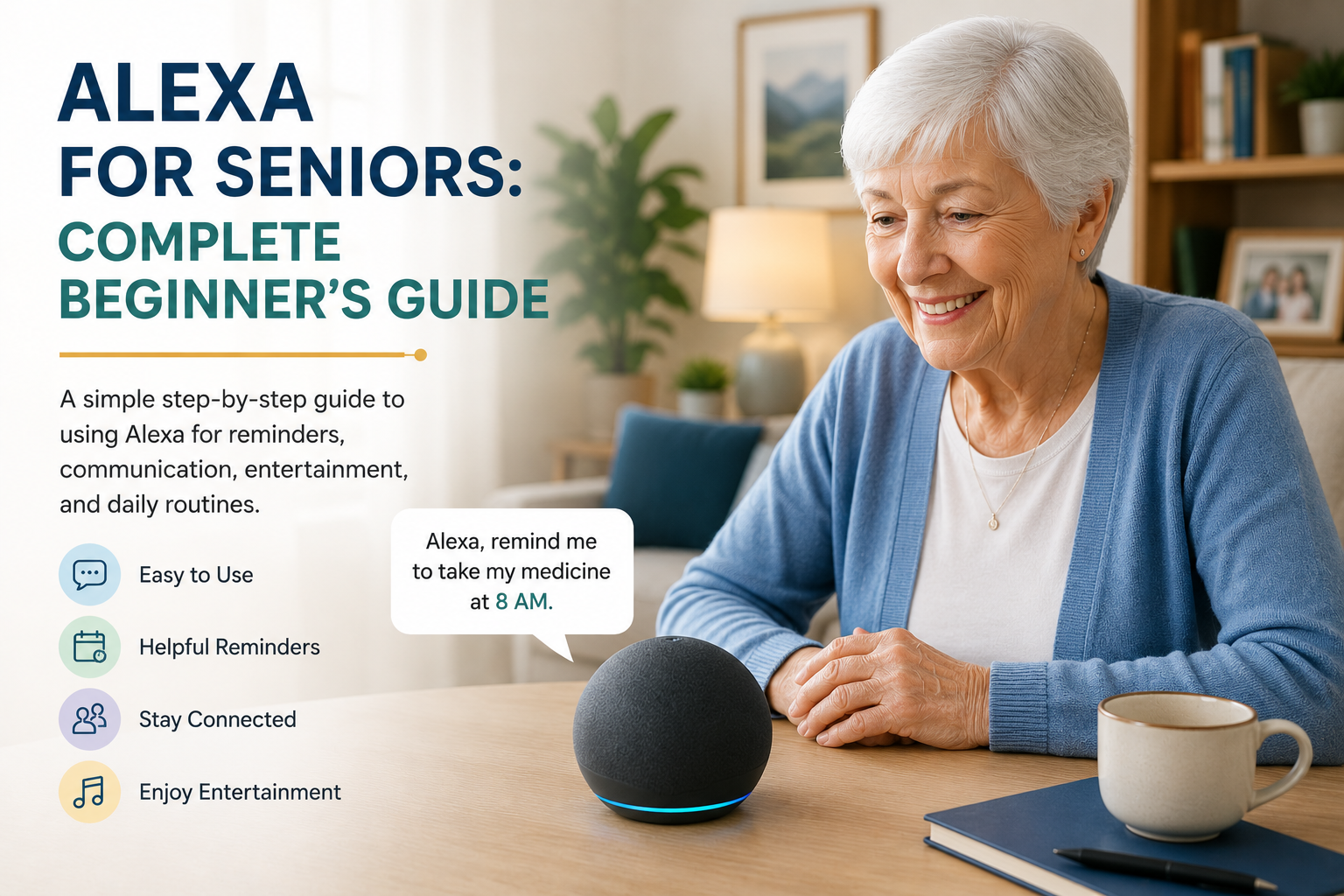
Senior woman using Alexa voice assistant for reminders communication and daily tasks

Alexa for Seniors: Complete Beginner’s Guide

Alexa for Seniors: Complete Beginner’s Guide

If you are helping an older parent get started with Alexa, this guide is for the practical first steps: what Alexa does, which features are easiest to use, what to set up first, and where its limits are. Alexa for seniors can support reminders, calls, simple routines, music, weather updates, and hands-free smart home control when it is introduced calmly and configured around real daily needs.

It is not a replacement for family support, caregivers, emergency services, or medical advice. But for many families, Alexa can be a simple voice-first tool that makes daily living easier and helps an older adult feel more connected at home.

Quick Answer

Alexa is Amazon’s voice assistant. Seniors can ask it for reminders, calls, weather, music, simple answers, and smart home control without opening an app or using small buttons.

Families should usually start with three basics: medication or appointment reminders, easy family calling, and one or two daily routines such as morning weather or bedtime lights. Keep the setup simple first, then add more features only when your parent feels comfortable.

Table of Contents

What Is Alexa?

Alexa is a voice assistant that responds to spoken commands through compatible smart speakers and displays. Instead of tapping through a screen, a person can say things like, “Alexa, what’s the weather?” or “Alexa, remind me to take my pills at 8 PM.”

That voice-first approach is exactly why it can be so useful for older adults. It removes many of the frustrating steps that come with smartphones, tiny buttons, or complicated remote controls. A senior does not need to remember where an app is or navigate a menu. They can simply ask.

When connected to other smart home tools, Alexa can also help control lights, plugs, thermostats, and routines. That makes it a strong anchor device for families who are just beginning to explore smart home devices for seniors.

What Alexa Can Help Seniors Do

Use Example Command Family Benefit
Reminders “Alexa, remind me to take my medicine at 8 PM.” Helps create structure around important daily tasks.
Calls “Alexa, call Sarah.” Makes family contact easier without searching through a phone.
Weather “Alexa, what’s the weather today?” Helps a senior plan clothing, errands, or outdoor walks.
Music “Alexa, play relaxing music.” Adds comfort, entertainment, and familiar routines at home.
Routines “Alexa, start my morning routine.” Combines simple actions like weather, reminders, and lights.
Smart lights “Alexa, turn on the living room light.” Reduces walking in the dark and makes the home easier to use.

Why Alexa Can Help Seniors

The biggest benefit is ease. Many older adults do not need more technology in their lives. They need less friction. Alexa reduces the steps required to do ordinary things, and that can make a surprising difference.

It supports memory without pressure

Reminders for medication, appointments, hydration, meals, or phone calls can be scheduled and repeated. That helps seniors who want structure without relying on sticky notes or trying to remember everything at once.

It reduces physical effort

Voice control is especially useful when walking is slower, standing up is harder, or reaching across a room is inconvenient. Turning on lights, listening to the news, or checking the time does not have to involve extra movement.

It can support connection

For some seniors, using a phone or video calling app feels like work. A voice assistant can lower that barrier and make communication feel more natural. That can be valuable for families who are supporting a parent from a distance.

Best First 5 Alexa Features for Seniors

The best beginner setup is usually not the most advanced one. Start with features that solve real daily friction and are easy to explain in one sentence.

1. Reminders

Reminders are useful for medication times, appointments, trash day, drinking water, or calling a family member. They are a strong first feature because the benefit is obvious and the setup does not require extra devices.

2. Family calls

Voice calling can help a parent contact family without scrolling through contacts or remembering where the phone is. It is especially useful for seniors who already like regular check-ins but find smartphones frustrating.

3. Weather and daily information

Weather, time, date, and simple questions are low-pressure ways to practice using Alexa. These small wins help an older adult build confidence before relying on more important features.

4. Music, radio, and familiar audio

Music can make Alexa feel friendly instead of technical. For some seniors, hearing a favorite station, artist, or playlist is the feature that makes the device feel worth keeping.

5. One simple smart light

A single lamp or hallway light is often enough for a first smart home connection. It shows how voice control can reduce physical effort without making the home feel complicated.

Best Uses for Daily Life

Families who want a practical overview can also review what Alexa can do for seniors before choosing which daily uses to set up first.

Families who want to go beyond the basics can also review our guide to the best Alexa skills for seniors to choose practical options for reminders, communication, routines, and daily support.

Reminders and routines

This is often the most useful feature. Alexa can say things like, “It’s time to take your afternoon medication,” or “Don’t forget your physical therapy exercises.” It can also combine actions into routines, such as turning on a lamp, giving the weather, and reading out the day’s schedule each morning.

Hands-free calls and communication

Calling family by voice can make staying in touch feel less complicated. For seniors who do not like typing or scrolling through contacts, this can remove a lot of unnecessary effort.

Music, radio, and entertainment

Entertainment matters more than people sometimes realize. Music, radio, audiobooks, and simple trivia can reduce loneliness and create more enjoyable daily routines. A voice-first interface also makes these activities easier to access.

Smart home control

Alexa works particularly well with lighting and smart plugs. A senior can say, “Turn on the bedroom light,” or “Turn off the lamp in the living room,” which is helpful both for convenience and for safety. That can fit nicely into a broader home safety plan, especially if you are already thinking about home safety for elderly parents.

Simple information without screens

Time, weather, calendar details, timers, and basic questions become easier to access. This may sound small, but small conveniences add up and make a device feel worth keeping.

How to Set It Up Simply

If your parent is nervous about the device, a slower guide to introducing Alexa to an elderly parent without frustration can help families avoid turning setup into a technology lesson.

The worst way to introduce Alexa is to demonstrate twenty features in one sitting. The best way is to set up two or three useful habits and let those become familiar first.

Start with one device in one room

A kitchen, living room, or bedroom is usually enough to begin. Pick the room where reminders, lights, or voice help would be most useful.

Choose a few high-value commands

Start with basics such as reminders, music, weather, lights, and one calling feature. Write them down on a simple card near the device. Families who want a printable starting point can use this Alexa commands for seniors cheat sheet to keep the first phrases simple. Familiarity builds confidence.

Create routines that reflect real life

Good routines match an existing habit. A morning routine might include the date, weather, and a reminder to take medication. An evening routine might remind a parent to lock the door, turn off lights, and charge a phone.

Test volume and clarity

Some seniors need the device louder, closer, or in a less noisy room. Small setup details make a big difference in whether Alexa feels frustrating or helpful.

Echo Dot vs Echo Show for Beginners

For a beginner, the main difference is simple: an Echo Dot is voice-only, while an Echo Show adds a screen. A voice-only speaker can be enough for reminders, music, weather, and simple commands. It is usually less visually distracting and easier to place in a bedroom, kitchen, or living room.

An Echo Show can be helpful when a parent benefits from seeing information on screen, such as the time, weather, reminders, family photos, or video calls. The screen can also make some tasks feel clearer, but it may be too much for someone who wants the simplest possible setup.

Rather than choosing based on features alone, families should ask: will my parent prefer hearing the answer, or would seeing it make Alexa easier to trust?

What Alexa Cannot Replace

Alexa can support daily life, but it should not be treated as a safety system by itself. It does not replace emergency services, professional monitoring, caregivers, medical advice, or regular family involvement.

Families should also think carefully about privacy. Voice assistants work best when everyone understands what the device can hear, what features are enabled, and which routines or contacts have been set up. The goal is support, not surveillance.

If the household will depend on Alexa for daily tasks, also plan for connectivity failures. Our guide to what happens when the internet or power goes out explains which functions may stop and which manual fallbacks should remain available.

Privacy and Boundaries

Families should talk openly about what the device does and does not do. Some seniors are comfortable with voice assistants right away. Others feel uneasy about a device that is always listening for a wake word.

Trust improves when everyone is clear. Explain where the device is placed, what kinds of reminders or calls it handles, and whether it connects to any other smart home tools. Use the least complicated setup that still provides value.

It is also wise to avoid loading the device with too many family expectations. Alexa can support independence, but it should not become a way to constantly monitor someone without their understanding.

Common Challenges

Forgetting the wake word or commands

This is common at first. A short printed prompt card helps. Over time, most people develop a few favorite commands and use those repeatedly.

Speaking too quietly or from too far away

Sometimes the problem is not the senior but the room. Background TV noise, long distance, or device placement can make Alexa seem unreliable when the issue is really setup.

Expecting it to solve everything

Alexa is helpful, but it is not a complete care plan. It works best as one tool inside a broader strategy that may include safer lighting, communication routines, and thoughtful aging-in-place planning. Our aging in place guide explains that bigger picture.

Frequently Asked Questions

Is Alexa easy for seniors to use?

It can be, especially for seniors who prefer speaking over navigating phones or apps. The key is starting with a few helpful features instead of too many at once.

Can Alexa remind seniors to take medication?

Yes, Alexa can provide recurring reminders. Families should still make sure the reminder system is realistic and easy to follow, since reminders are not the same as medical supervision.

Can Alexa call family members?

Yes, Alexa can support voice calling features when set up correctly. This can make communication easier for seniors who dislike dealing with phones or small screens.

Which Alexa device is easiest for a beginner?

The easiest choice depends on the person. A voice-only Echo device can be simpler for reminders, music, and questions. An Echo Show may be easier for someone who benefits from seeing reminders, the clock, weather, photos, or video calls on a screen.

Can Alexa help seniors live independently?

Alexa can support independent living by making reminders, calls, lights, music, and routines easier to use. It works best as one part of a broader family plan, not as a replacement for caregiving, emergency help, or home safety planning.

Is Alexa safe for elderly parents?

Alexa can be safe and useful when it is set up with clear privacy boundaries, simple commands, trusted contacts, and realistic expectations. Families should review calling, purchasing, voice history, and smart home settings before relying on it for daily routines.

Does Alexa work with other smart home devices?

Yes. It can often work with lights, plugs, and other simple smart home tools, which is why it is often a strong starting point for seniors.

Is Alexa a replacement for emergency services?

No. Alexa can help with reminders, communication, and convenience, but it should never be treated as a substitute for medical care, professional support, or emergency response.

Conclusion

Alexa can be a very useful tool for seniors when it is introduced with care and connected to real daily needs. It works best when it makes life simpler, not busier. For many families, it becomes a low-stress way to support reminders, communication, and basic home control.

If you start with a few simple routines and keep expectations realistic, Alexa can support independence without overwhelming the person using it. To see where it fits in a bigger plan, continue with our guides to smart home devices for seniors and making the home safer.

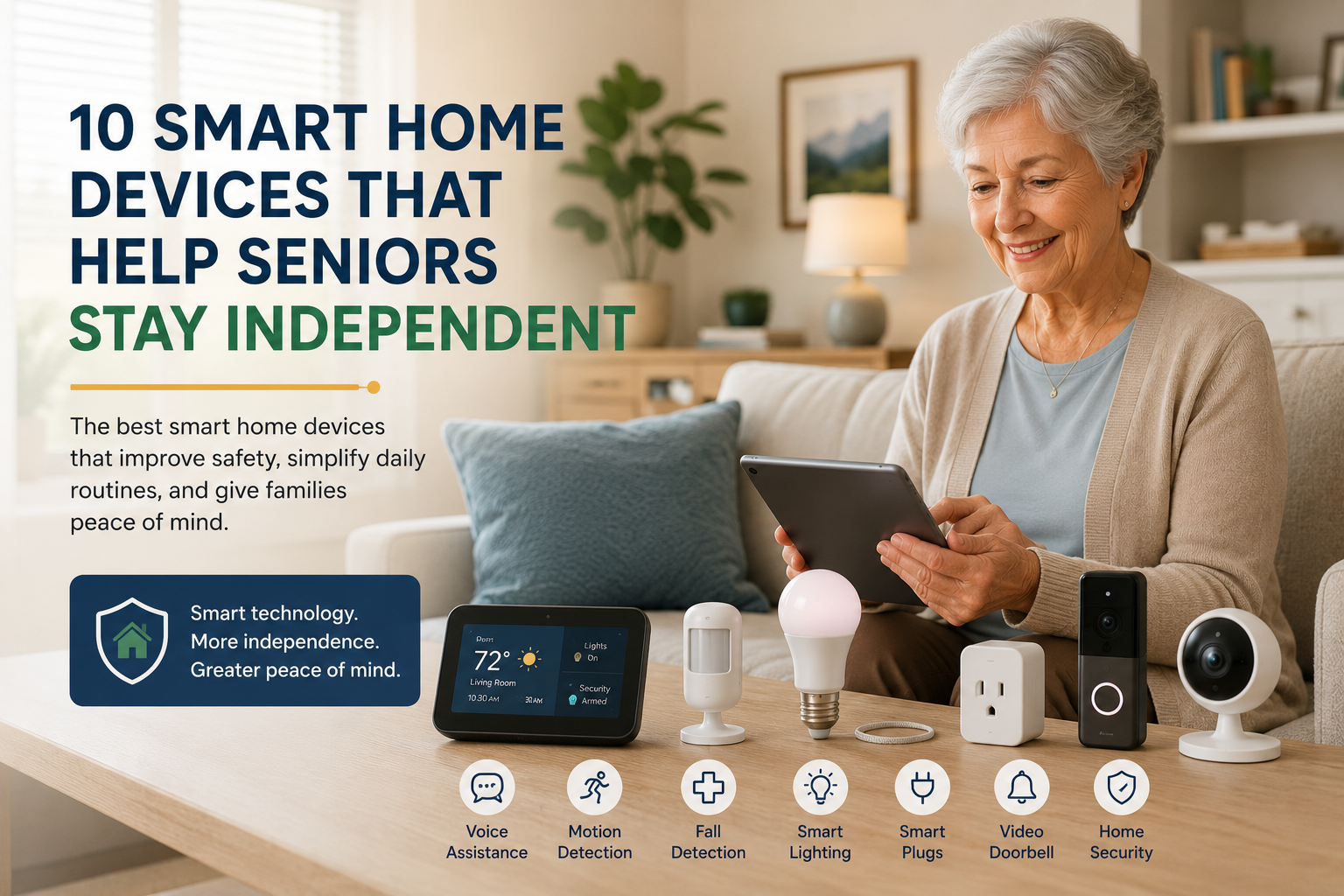
Senior woman using smart home devices that help older adults stay independent

10 Smart Home Devices That Help Seniors Stay Independent

10 Smart Home Devices That Help Seniors Stay Independent

When families start exploring smart home devices for seniors, they are usually trying to solve a very practical problem. They want an older parent to stay safe, keep more independence, and continue living at home with less daily stress. They also want tools that make life easier, not more confusing.

The challenge is that the phrase “smart home” can sound bigger and more technical than it needs to be. In reality, many helpful devices are simple. Some add reminders, some improve lighting, some make communication easier, and some quietly reduce risk in the background. The best options are the ones that fit naturally into a senior’s routine.

This guide walks through ten categories of smart home devices that can support independence without turning the home into a complicated tech project. We are not focusing on brands yet. Instead, we are looking at what each device type actually does and who it may help most.

Table of Contents

How to Think About Smart Home Tools

Not every senior needs the same setup. A parent who is active and socially engaged may want convenience and communication tools. Another may need stronger support around mobility, reminders, or home security. Start with daily challenges, not with shopping lists.

A good smart device should do at least one of these things: reduce risk, save physical effort, support memory, improve communication, or give family members more confidence without being intrusive. If a tool does not clearly help in one of those areas, it may not be worth adding.

It also helps to think about comfort with technology. Some older adults will gladly use voice commands, routines, and notifications. Others will do better with devices that work quietly in the background. If you are building the larger safety picture, our article on home safety for elderly parents is a useful companion.

10 Smart Home Device Types

1. Voice assistants

Voice assistants can make a home feel easier to manage. They allow seniors to set reminders, make calls, ask about the weather, listen to music, and control other connected devices without walking across the room or using a phone menu. For many households, this is one of the best starting points because it reduces friction in everyday tasks.

If you want a full walkthrough of how voice tools fit into a senior’s life, read our Alexa for seniors beginner’s guide.

2. Smart lights and motion-activated lighting

Lighting matters more than many families realize. Better lighting can reduce fall risk, improve visibility at night, and make the home feel calmer and safer. Smart bulbs or motion-triggered lights work especially well in hallways, bathrooms, and bedrooms. For families who also want to reduce fall risks at home beyond lighting alone, our room-by-room checklist is a practical next step.

This device type is helpful for seniors who wake up during the night, move more slowly in dim spaces, or simply forget to turn lights off and on.

3. Smart plugs

Smart plugs are small but useful. They allow lamps, fans, coffee makers, or other simple devices to run on schedules or be turned on remotely. For seniors, they can reduce bending, reaching, and the mental load of remembering small routines.

They are especially helpful for adding convenience without changing a familiar household item. A favorite bedside lamp can stay the same while becoming easier to control.

4. Video doorbells

Many older adults feel uneasy answering the door, especially if they live alone. A video doorbell can make visitors more predictable and help screen unexpected knocks. Family members may also feel better knowing that package deliveries and front-door activity are easier to track.

The key is to use it for confidence and communication, not to create a sense of constant surveillance.

5. Door and window sensors

Door and window sensors are quiet background tools that can help families notice unusual patterns. They may be useful if an older adult sometimes forgets to close a door, goes outside late at night, or needs general entry alerts for safety reasons.

These sensors are often more acceptable than cameras because they give information without recording private spaces.

6. Fall detection or activity monitoring devices

Some families want support that goes beyond basic home automation. Fall detection wearables or simple activity monitoring tools can help create awareness when routine patterns suddenly change. These tools can be especially useful when a parent lives alone and family members are trying to balance support with distance.

They should never be presented as medical guarantees, but they may improve response time and peace of mind.

7. Medication reminder tools

Missing or delaying medication can affect daily wellbeing and routine. Smart reminder systems can provide voice prompts, timed alerts, or structured schedules that make medication routines easier to follow. For some seniors, a reminder alone is enough. For others, a more visible cue works better.

This kind of support can be especially useful when memory is mostly good but routines are becoming harder to keep consistent.

8. Smart thermostats or climate controls

Temperature is not just a comfort issue. It affects sleep, daily energy, and general wellbeing. Smart thermostats can reduce the need to adjust settings constantly, maintain steady temperatures, and help family members monitor unusual heating or cooling patterns when appropriate.

This is often a good option for seniors who forget settings or who find older thermostats confusing.

9. Indoor cameras for limited situations

Indoor cameras are not right for every home, but in certain situations they can be useful. For example, one camera near an entrance or in a common area may help when there is a safety concern, frequent confusion, or a need to check on a specific issue. Privacy should always come first, and bedrooms and bathrooms should remain off limits.

Families should discuss camera use openly. A helpful tool should not damage trust.

10. Smart speakers or displays for communication

Devices with screens can make video calls, family photo sharing, reminders, and simple communication easier. For seniors who feel isolated, these tools can support connection in a way that feels more natural than a complicated tablet or smartphone interface.

They can also work as a central point for routines, calendars, or voice help with everyday tasks.

How to Introduce New Technology

The way a device is introduced matters almost as much as the device itself. Families get better results when they solve one problem at a time. Instead of saying, “We’re turning your home into a smart home,” it is usually better to say, “This will make the hallway safer at night,” or, “This can remind you about your afternoon medication.”

Start small. One voice assistant, one smart light routine, or one front-door tool is easier to accept than a full system all at once. Let your parent build confidence before adding more.

It also helps to keep familiar routines intact. Technology should support the way a person already lives whenever possible. The goal is not to force a new lifestyle. The goal is to reduce friction inside the current one.

When Less Tech Is Better

Sometimes families assume more devices always mean more safety. That is not true. Too many notifications, too many apps, and too many changes can overwhelm both the senior and the family caregiver. In some homes, three well-chosen tools are more useful than ten devices that no one enjoys using.

It is also important to remember that smart devices do not replace human support, good home design, or honest conversations about changing needs. If you are thinking more broadly about whether staying at home is the right long-term choice, our article on aging in place gives useful context.

Frequently Asked Questions

What is the best first smart home device for a senior?

A voice assistant or better smart lighting is often the easiest place to start because both offer clear benefits without requiring a lot of technical skill.

Are smart home devices hard for older adults to use?

Some are, but many are not. The best devices for seniors are the ones that solve one problem simply and do not require constant app management or confusing setup.

Can smart home devices really help seniors stay independent?

They can support independence by reducing physical effort, improving reminders, increasing communication, and making the home safer. They are most effective when matched to a real daily need.

Should families install cameras everywhere?

No. Cameras should be used carefully and only when there is a clear reason. In many cases, lighting, sensors, voice tools, and check-in routines provide enough support without reducing privacy.

Do seniors need a full smart home system?

Usually not. Most families do best by starting with one or two useful devices and expanding only if those tools genuinely help.

Conclusion

The best smart home devices for seniors are not the flashiest ones. They are the ones that make daily life feel easier, safer, and more manageable. A good device can support independence, reduce family worry, and remove small points of stress that add up over time.

Start with the real need, keep the setup simple, and build slowly. That approach creates more trust and better long-term results than trying to “tech-proof” a home overnight. For next steps, explore our guides to making a home safer and using Alexa with seniors.

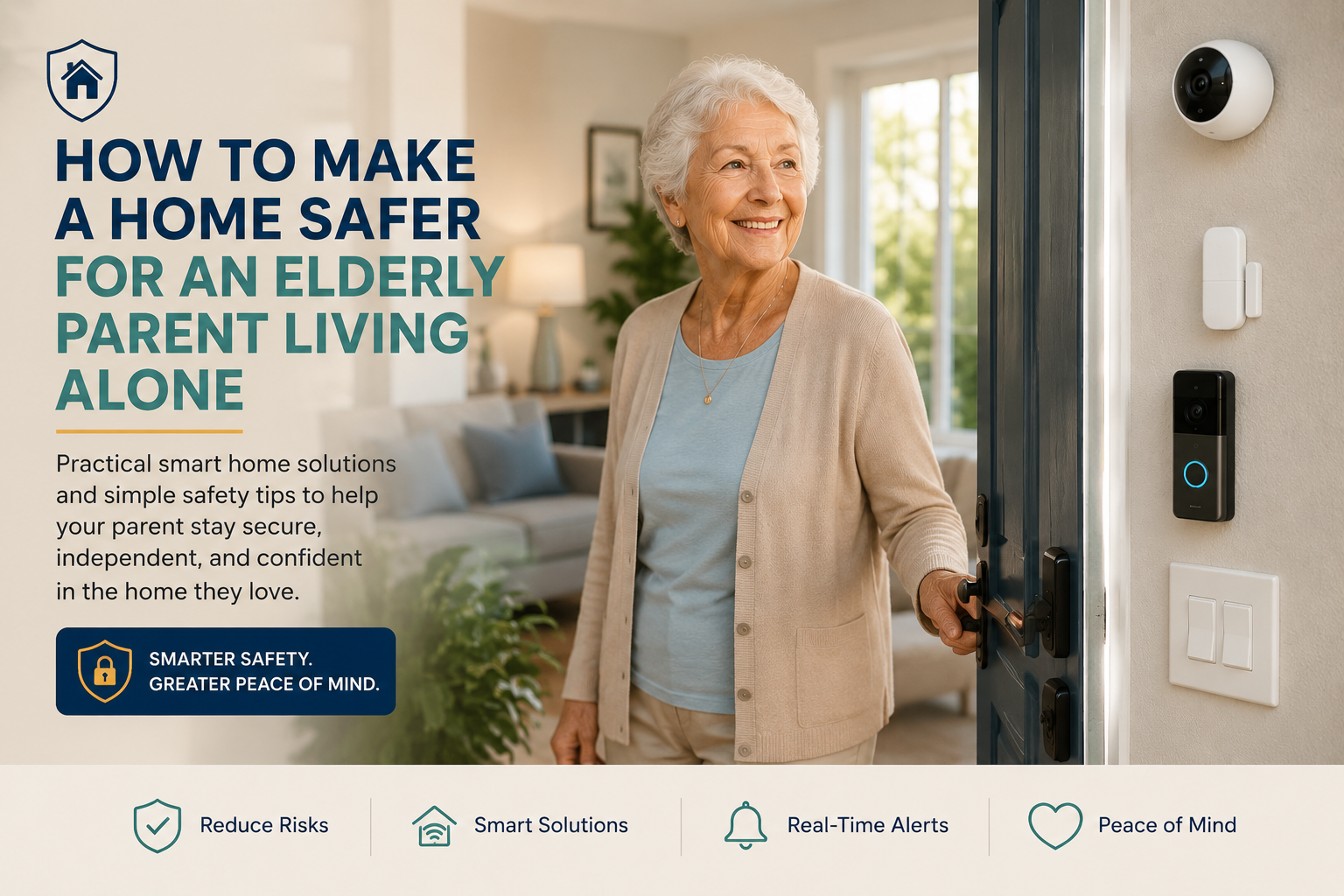
Elderly woman safely living alone at home with smart home security devices

How to Make a Home Safer for an Elderly Parent Living Alone

How to Make a Home Safer for an Elderly Parent Living Alone

When an older parent lives alone, safety becomes a daily concern for the whole family. Adult children often find themselves asking the same questions: Is the home still safe? What happens if there is a fall? How can I help without taking away independence? The good news is that home safety for elderly parents does not have to mean turning the house into a hospital-like space.

In many cases, the best approach is a combination of simple home changes, thoughtful routines, and smart home technology that feels easy rather than intimidating. A safer home should support confidence, not create more stress. The goal is to help an older adult stay comfortable, maintain dignity, and keep everyday life manageable.

This guide walks through practical ways to improve safety room by room, explains where smart tools can help, and shows how families can reduce risk without becoming overly controlling. If you are also thinking about long-term independence, our aging in place guide is a helpful next read.

Table of Contents

Start With the Biggest Risks

Before buying any technology, step back and look at the real hazards inside the home. Families sometimes jump straight to cameras or alerts without addressing the obvious issues that create risk every day. Start with the spaces where accidents are most likely to happen: entryways, bathrooms, kitchens, stairs, and bedrooms.

Ask practical questions. Is the lighting strong enough at night? Are there loose rugs? Is the bathroom slippery? Are there cords across walking paths? Is the parent climbing on stools to reach shelves? These small issues are often more urgent than more advanced devices. For a more detailed walkthrough by space, use our room-by-room home safety checklist for seniors while you inspect the house.

It helps to think in terms of daily routines rather than isolated objects. Your parent may be completely steady during the day but less stable at night when walking to the bathroom. They may cook safely most of the time but become distracted when answering the phone or dealing with medication schedules. Understanding the pattern matters more than making assumptions.

Focus on prevention before monitoring

Monitoring tools can help you respond faster when something goes wrong, but prevention lowers the chance of an incident in the first place. The strongest home safety plan starts with reducing hazards, then adds technology to support awareness, reminders, and communication.

Improve Fall Prevention First

If the parent is less steady after dark, it is worth checking how to reduce nighttime fall risks before relying only on daytime safety fixes.

Because bathroom slips are such a common concern, families can also use a senior bathroom safety checklist when that room is the first place that needs attention.

Falls are one of the biggest reasons families start rethinking an aging parent’s living situation. That does not mean every older adult is fragile, but it does mean the home should be set up to support balance, visibility, and easy movement. If you want a more detailed fall prevention checklist for seniors, our room-by-room guide walks through the most common hazards to check first.

Improve lighting in the places people actually walk

Good lighting is one of the simplest upgrades you can make. Focus on hallways, stair edges, bathrooms, bedside areas, and entrances. Motion-activated night lights are especially helpful because they reduce the need to reach for switches in the dark.

Smart bulbs can help here too, especially if they can be set on schedules or controlled by voice. If your parent is open to voice tools, our Alexa for seniors guide explains how voice commands can make everyday tasks easier.

Remove trip hazards without making the home feel unfamiliar

Many families know they should remove clutter or rugs, but older adults may resist if changes feel abrupt or unnecessary. Instead of saying, “This is dangerous,” try framing it around comfort and ease. A flatter rug, a cleaner path, or fewer objects near the bed can feel like a quality-of-life improvement rather than a restriction.

Support safer movement in the bathroom

Bathrooms deserve extra attention because slippery surfaces and fast transitions from sitting to standing can create problems. Non-slip mats, grab bars, a shower seat, and a handheld shower head can all reduce strain. If the toilet is low, a raised seat may make standing easier.

Think about reach and bending

Many falls happen during ordinary tasks such as reaching overhead or bending to lower cabinets. Reorganize the home so frequently used items are stored between waist and shoulder height. If something requires a stool, it probably needs a new location.

Make Entry and Exit Safer

The front door area is often overlooked, but it matters for safety, deliveries, visitors, and emergencies. Good visibility, solid locks, and easy communication can reduce anxiety for both seniors and family members.

Check steps, thresholds, and railings

Even a single uneven step can become a daily risk. Make sure handrails are sturdy, the path is well lit, and the threshold is not creating an unnecessary stumble point. If packages regularly pile up near the entry, clear that space too.

Choose simple access tools

Smart locks, door sensors, and video doorbells can be useful, but only if they solve a real problem. A smart lock may help if a parent often forgets keys or if family caregivers need occasional access. A door sensor may help if wandering, nighttime exits, or missed entries are a concern. The best choice depends on the person, not the trend.

If you want a broader overview of useful tools without jumping into specific product recommendations yet, our article on smart home devices for seniors will help you compare the main categories.

Use Smart Technology With a Clear Purpose

Smart home technology works best when it supports a clear need. Families often feel pressure to “install something” for peace of mind, but random devices can create more confusion than support. Every piece of technology should answer one practical question.

Useful categories to consider

Motion sensors can show whether there is normal activity in key parts of the home. Door sensors can help track entry and exit. Smart lighting can improve nighttime safety. Voice assistants can make reminders and calling easier. Cameras can be helpful in limited, carefully chosen situations, especially near entrances, but privacy should be respected.

Not every home needs every tool. A senior who is mentally sharp but physically slower may benefit from lighting and fall-risk prevention. A parent with memory challenges may benefit more from reminders, door notifications, or daily routine prompts.

Keep the setup invisible when possible

The less complicated the system feels, the more likely it is to be accepted and used. Seniors usually do better with tools that work in the background rather than devices that demand constant app management or technical troubleshooting.

Do not confuse surveillance with support

Family members often worry so much that they lean toward constant visual monitoring. That can damage trust. In many homes, non-camera tools provide enough reassurance without making the parent feel watched. A safer home should still feel like home.

Create a Simple Safety Routine

Technology helps, but routines hold everything together. A home becomes safer when there is a repeatable system for daily check-ins, emergency communication, and maintenance.

Set regular check-in habits

Many families benefit from a simple rhythm such as a morning text, an evening call, or a voice assistant reminder that prompts the parent to check in. The routine should feel supportive, not invasive.

Write down what to do in an emergency

Emergency numbers, medication lists, building access details, and key contacts should be easy to find. Keep a printed copy in the home even if family members also store it digitally.

Test systems occasionally

Smart alerts, voice calling features, and notifications should be tested now and then to make sure they still work. Batteries die, Wi-Fi changes, and routines drift. A quick check every month can prevent surprises later.

Review the home every few months

Needs change over time. A parent who does well today may need more support after an illness, after a fall, or simply with advancing age. Reassessing the home every few months keeps the safety plan realistic.

Avoid Common Mistakes

Families with good intentions still run into avoidable problems. One common mistake is introducing too much technology at once. Another is choosing tools based on what seems impressive instead of what the senior will actually use.

A third mistake is treating safety conversations like a one-time decision. Most older adults want to be heard, and they are far more likely to accept support when they feel included. Ask what worries them, what feels frustrating, and what changes would make daily life easier.

It is also important not to make medical promises about technology. Home tools can improve awareness, convenience, and response time, but they are not a substitute for medical care, diagnosis, or emergency services.

Frequently Asked Questions

What is the first thing to improve in a senior’s home?

Start with the biggest day-to-day hazards: poor lighting, slippery bathrooms, loose rugs, cluttered walkways, and hard-to-reach items. Small physical changes often reduce risk faster than advanced technology alone.

Do elderly parents need cameras inside the home?

Not always. Many families can improve safety with lighting, sensors, reminders, and check-in routines instead of indoor cameras. If cameras are used, they should be limited, clearly discussed, and respectful of privacy.

What smart home tools are most useful for seniors living alone?

It depends on the situation, but common starting points include motion-activated lighting, door sensors, voice assistants, medication reminders, and activity alerts in key areas of the home.

How can I help without making my parent feel controlled?

Frame safety changes around comfort, convenience, and independence. Involve your parent in decisions, explain the purpose of each change, and avoid adding tools that feel excessive or intrusive.

How often should a family review home safety?

Every few months is a good starting point, or sooner if there has been a fall, hospitalization, noticeable memory change, or increasing difficulty with everyday tasks.

Conclusion

Making a home safer for an elderly parent living alone is not about removing independence. It is about protecting it. The best results usually come from simple improvements, consistent routines, and smart tools that quietly reduce risk in the background.

If you begin with fall prevention, lighting, safer entryways, and a clear plan for communication, you will already be making a meaningful difference. From there, smart home technology can add peace of mind without overwhelming the person it is meant to help. Once you are ready to explore the bigger picture, continue with our guides to smart home devices for seniors and aging in place.